Gyampo Describes Ghana As A Transitional Democracy
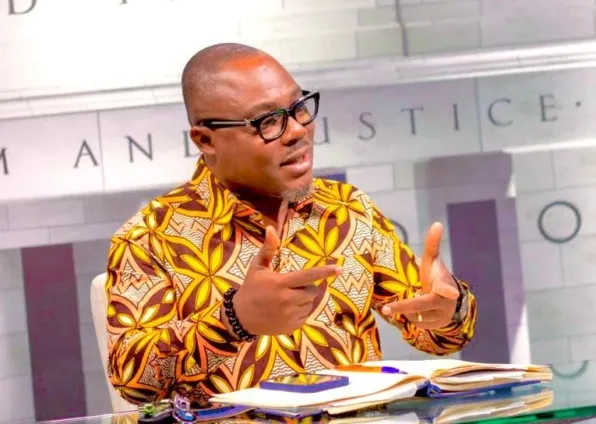
Political scientist Ransford Gyampo has described Ghana as a transitional democracy, arguing that some rights frameworks seen in advanced democracies, including on LGBT issues, cannot fully apply at Ghana’s current stage of development.
Speaking on JoyNews’ Newsfile programme, the University of Ghana professor argued that democracies develop in stages, with each stage shaping which rights become enforceable and which remain contested. His comments have reignited a debate that has simmered for years: whether Ghana’s democratic institutions are mature enough to extend the full spectrum of rights recognised in Western liberal democracies.
Gyampo’s framing is not new in political science. The concept of transitional democracy — a system that has moved beyond authoritarian rule but has not yet consolidated the institutions and norms of a fully liberal state — has been applied to dozens of countries across Africa, Asia, and Latin America. What makes his intervention notable is the specificity of his argument: that Ghana’s democratic journey requires patience, and that imposing external rights benchmarks risks undermining the very social cohesion that holds the democratic project together.
Ghana is widely regarded as one of Africa’s most stable democracies. Since the return to multiparty politics in 1992, the country has held eight consecutive general elections, with power transferring peacefully between the two major parties — the New Patriotic Party and the National Democratic Congress — on multiple occasions. The Electoral Commission, the judiciary, and the media all enjoy a degree of independence that remains rare on the continent.
Yet beneath this veneer of institutional strength lie significant tensions. Constitutional rights, while formally enshrined, are unevenly enforced. Bail conditions, pretrial detention, and access to legal representation remain areas of concern for human rights organisations. The gap between the constitution’s promise and its lived reality is a recurring theme in Ghanaian public discourse.
The LGBT question, which Gyampo explicitly raised, is perhaps the most visible fault line. Ghana’s parliament passed the Promotion of Proper Human Sexual Rights and Ghanaian Family Values Bill in 2024, criminalising the promotion of LGBT rights and imposing penalties on advocacy. The bill drew sharp condemnation from international human rights groups but enjoyed broad public support domestically. President Nana Akufo-Addo’s refusal to assent to the bill before leaving office left the legislation in limbo, but the underlying sentiment remains powerful.
Critics of Gyampo’s position argue that framing Ghana as a “transitional” democracy provides cover for the selective application of rights. If democracy is always in transition, they contend, then the extension of rights can always be deferred — and those who are denied those rights are told to wait for a maturity that never quite arrives.
Supporters, however, argue that Gyampo is making a pragmatic observation rather than an ideological one. Democracies, they note, are not built overnight. The United States took centuries to extend voting rights to women and African Americans. The United Kingdom only decriminalised homosexuality in 1967. Expecting Ghana to leapfrog these historical processes, they argue, is both unrealistic and counterproductive.
The debate touches on a broader question about the relationship between democracy and rights. Are rights prerequisites for democracy, or products of it? The liberal tradition holds that certain inalienable rights — freedom of expression, equality before the law, protection from discrimination — are foundational to any democratic order. A more communitarian view, which Gyampo appears to favour, suggests that rights emerge from social consensus, and that consensus must be built over time.
Neither position is without complications. The liberal view risks imposing a universalist framework that ignores local contexts and historical trajectories. The communitarian view risks allowing majorities to deny minorities their fundamental dignity.
What is clear is that Ghana’s democratic experiment remains a work in progress. The country’s political parties continue to grapple with internal democracy, while citizens increasingly demand accountability from leaders who campaign on transformation but deliver incremental change.
Gyampo’s description of Ghana as a transitional democracy is, at its core, an argument for realism. Whether that realism serves as a foundation for progress or an excuse for stagnation will depend on what Ghanaians do with it.
Image Source: GHANAMMA