Bank of Ghana Holds Policy Rate at 14% as MPC Unanimously Flags Inflation Risks
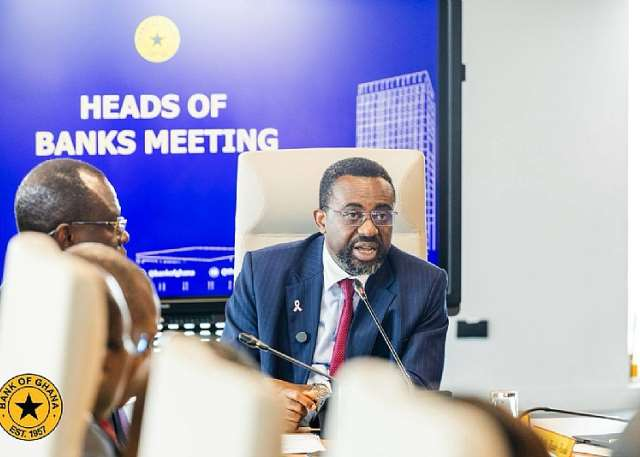
All six voting members of the Bank of Ghana’s Monetary Policy Committee have agreed to keep the benchmark policy rate unchanged at 14 per cent, a decision that reflects deep uncertainty about the country’s inflation trajectory amid escalating tensions in the Middle East.
The committee met from May 18 to 20, 2026, to assess economic conditions over the preceding two months. In a notable departure from recent meetings where dissent was common, every voting member lined up behind the hold decision — the first time in the current cycle that the MPC has spoken with a single voice.
The unanimity, however, should not be mistaken for complacency. Members made clear in their individual submissions that the decision to hold rather than cut was driven by anxiety over where inflation is heading, not satisfaction with where it stands. Several committee members warned that consumer prices could breach the 10 per cent threshold by year-end if global disruptions persist, a prospect that would reverse the hard-won gains of the past two years.
The wait-and-see approach was deliberate. Members chose to preserve the current stance and react later if conditions deteriorate, rather than risk a premature easing that could reignite price pressures.
The Middle East conflict loomed large in the committee’s deliberations. Rising oil prices, supply chain disruptions and their cascading effects on transport costs, utility tariffs and import bills were cited as the primary external risks. One member specifically flagged the likelihood of higher utility tariffs in the coming months and rising transport fares as domestic amplifiers of imported inflation.
Ghana’s heavy reliance on imports for essential goods means that any sustained increase in global commodity prices feeds quickly into domestic inflation. The committee’s caution reflects an understanding that the economy’s external vulnerabilities remain significant, even as fiscal and monetary reforms have strengthened its foundations.
The decision carries implications beyond the inflation outlook. A 14 per cent policy rate keeps borrowing costs elevated for businesses and consumers, constraining the kind of private sector credit growth that the government has been counting on to drive economic expansion. For an economy that attracted record foreign direct investment last year, the challenge now is translating that external confidence into domestic productive capacity without stoking inflation.
The Monetary Policy Committee comprises seven members, with Bank of Ghana Governor Dr Johnson Asiama serving as chairman. Under the committee’s rules, the governor does not vote except to break a tie. In this case, his casting vote was unnecessary — the six voting members were already united.
The MPC’s next meeting will be closely watched for signals about whether the hold can be maintained or whether deteriorating global conditions will force a more hawkish stance. For now, the committee’s message is clear: the economy is in a strong position, but the outlook is clouded by forces beyond Ghana’s borders, and prudence demands patience.
Image Source: MYJOYONLINE