Mahama Leads Global Call for Reparatory Justice at Landmark Accra Conference
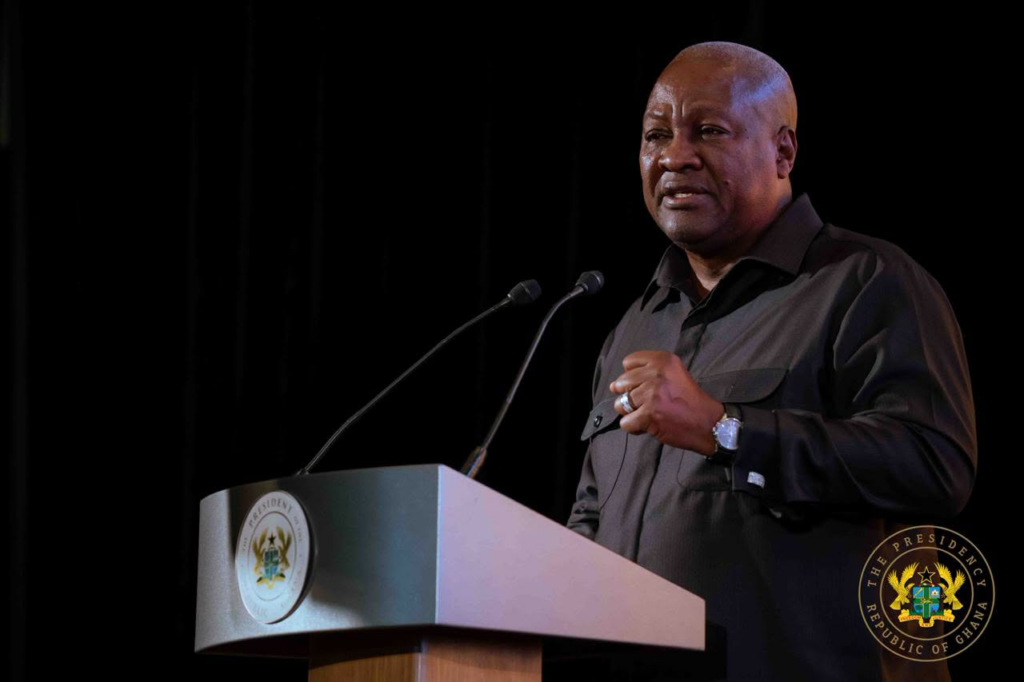
President John Dramani Mahama has positioned Ghana at the centre of one of the most consequential moral debates of the 21st century, calling on the international community to move beyond acknowledgment of historical injustices and toward meaningful action on reparatory justice.
Speaking at the Next Steps High-Level Consultative Conference on Reparatory Justice in Accra, Mahama argued that while today’s generation did not commit the atrocities of the transatlantic slave trade, it bears a collective responsibility to address the enduring consequences of that history through justice, dialogue, remembrance, and partnership.
“The transatlantic slave trade remains one of the gravest crimes against humanity, with consequences that continue to shape societies, institutions, and inequalities across generations,” the President told a gathering that included heads of state, prime ministers, and senior government officials from more than 80 countries.
The conference drew an extraordinary assembly of leaders: the presidents of Senegal, Namibia, Liberia, and São Tomé and Príncipe; the Prime Minister of Barbados; the Vice President of Equatorial Guinea; the Speaker of the Algerian Parliament; and former Ghanaian President John Agyekum Kufuor, among others.
Mahama used the occasion to announce the establishment of three high-level international panels designed to translate the growing global consensus on reparations into concrete policy outcomes. The panels, which will tackle different dimensions of the reparations question, represent the most structured institutional effort to date on the issue.
The President’s approach distinguished itself by framing the reparations debate not as an exercise in guilt attribution but as a call for shared responsibility. He emphasised truth-telling and reconciliation as prerequisites for genuine healing, arguing that nations must confront uncomfortable historical facts before meaningful progress can be made.
Ghana’s role as host underscores its longstanding position as a leading voice in the reparatory justice movement. The country’s historical significance as a departure point for millions of enslaved Africans gives it both moral authority and a unique stake in the outcome of these discussions.
The conference comes at a moment of growing international momentum. Several Caribbean nations have advanced reparations claims through the CARICOM Reparations Commission, and academic institutions in Europe and the Americas have begun reckoning with their historical ties to the slave trade. The Accra gathering sought to bring these disparate threads into a more coordinated global framework.
Critics of reparatory justice initiatives have long argued that the passage of time makes redress impractical or that contemporary populations should not be held accountable for historical wrongs. Mahama’s framing of collective responsibility — as distinct from individual guilt — represents a deliberate attempt to address these objections while maintaining moral clarity.
The establishment of the three international panels signals that the conversation is moving from aspiration to institutional action. Whether these panels can produce proposals with genuine political traction remains to be seen, but the breadth of representation at the Accra conference suggests that reparatory justice has moved decisively from the margins of international diplomacy toward its centre.
Image Source: MYJOYONLINE