New Doha Museum Honors Indian Art Icon M.F. Husain
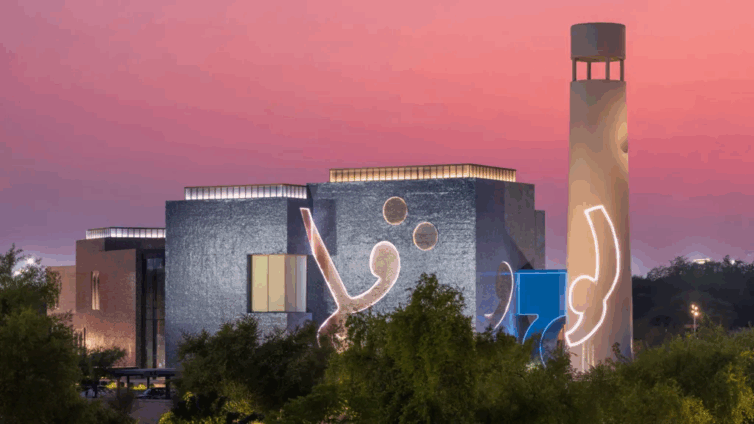
The world’s first museum dedicated to Indian maestro M.F. Husain opened its doors last week in Qatar’s Education City, showcasing over 150 of his works and marking a milestone for art lovers worldwide.
Lawh Wa Qalam, spanning roughly 3,000 square metres, sits within the Qatar Foundation campus and offers visitors a rare glimpse into the artist’s later‑life reflections, from paintings and sculptures to films, tapestries and photographs.
“We want visitors to experience the world as he did, in an intimate, playful and reflective manner,” says Noof Mohammed, the museum’s curator. “Each gallery opens with a Husain quote to invite his thoughts.”
Husain, often called “the Picasso of India”, was renowned for his dynamic horses, vibrant mythological scenes and a bohemian ethos that saw him travel from Delhi to Doha. His bold canvases sold for millions, yet he also faced fierce controversy over nude depictions of Hindu deities, prompting a self‑imposed exile.
In Qatar, the artist found a sanctuary. “He was deeply engaged here, charmed and inspired by the Arab civilisation and culture,” remarks Yousef Ahmad, a Qatar‑based artist who knew Husain in his final years. The museum highlights this Gulf chapter, including a series commissioned by Sheikh Moza bint Nasser that celebrates Islamic history with Husain’s signature kinetic lines.
Architect Martand Khosla, who translated Husain’s 2008 sketch into a functional building, explains the challenge: “A sketch does not have scale. It is an intent. Converting that intent into a museum was a different ballgame.” He added that the design balances literal and metaphorical elements, creating a labyrinthine layout that mirrors the artist’s brushstrokes.
One of the standout installations is “Seeroo fi al ardh” (Walk In The Land), a multimedia project that blends movement, sound and mechanical choreography – the very concept Husain envisioned for his later years.
For Ghanaian readers, the museum offers a fresh perspective on cross‑cultural creativity. Ghana’s own contemporary artists, such as El Anatsui and Ablade Glover, have spoken about the importance of dialogue between African and Asian artistic traditions. A visit to Lawh Wa Qalam could inspire local creators to explore similar intersections.
“We have tried to gather oral histories from people who knew Husain – his driver, collaborators and friends – to give a personal sense of who he was,” Ms Mohammed explains. This approach aims to move beyond controversy and present the artist as a storyteller of mythology, modernity and memory.
Husain was commissioned to produce 99 works for Qatar but completed only 35 before his death; the museum plans to rotate these pieces over time, allowing visitors to gradually experience the full breadth of his oeuvre.
Lawh Wa Qalam is more than a tribute; it is a living space where Husain’s multiple identities – Indian, Arab, global nomad – converge. As Khosla notes, “He had multiple identities simultaneously. And that layering is what makes this project incredibly rich.”
Visitors can expect the museum to evolve, with new exhibitions and educational programmes slated for the coming months, ensuring that Husain’s legacy continues to inspire future generations.
Image Source: MYJOYONLINE