Kenyasi No.1 Omanhene funds and commissions new classroom block for Roman Catholic JHS
In the Asutifi North District of Ghana’s Ahafo Region, a long-standing crisis at the Kenyasi No.1 Roman Catholic Junior High School has found resolution through the intervention of traditional leadership.
For years, students and teachers navigated a perilous learning environment. The school’s infrastructure was in a state of disrepair: weak roofing posed collapse risks, cracked walls compromised structural integrity, broken window frames left classrooms exposed to the elements, and severely damaged floors created hazardous walking surfaces. These conditions transformed routine educational activities into safety concerns, with educators like headteacher Samuel Boadi reporting persistent anxiety that undermined teaching effectiveness and student outcomes.
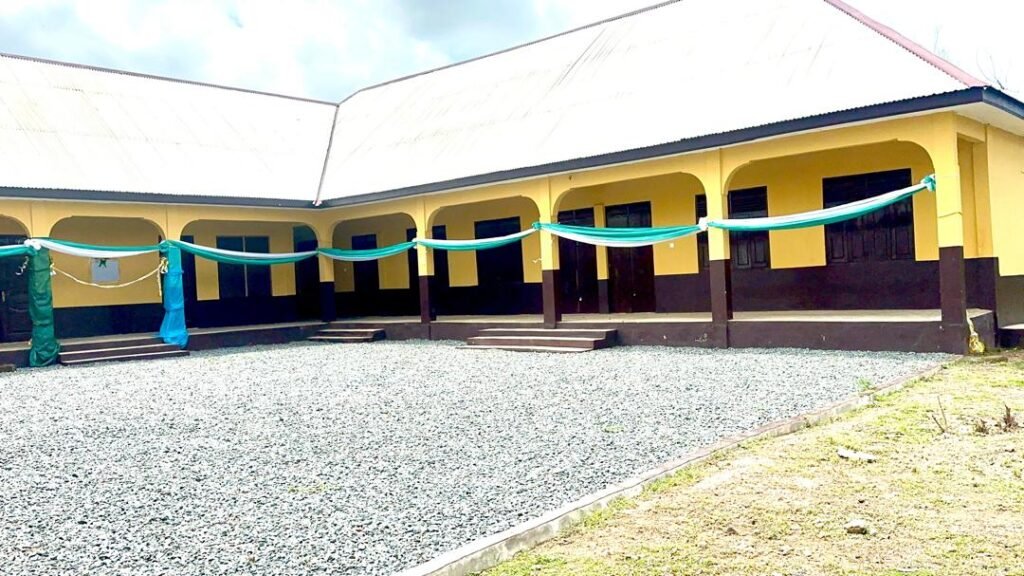
The turning point came with the completion of a new three-unit classroom block, fully funded, commissioned, and handed over by Nana Osei Kofi Abiri, the Omanhene of the Kenyasi No.1 Traditional Area. The modern facility includes administrative offices and storage facilities, providing a secure and conducive environment for learning.
During the commissioning ceremony, Mr. Boadi conveyed deep appreciation for the Paramount Chief’s action, highlighting the tangible improvements in safety and comfort for the school community. “This facility has significantly improved the safety and comfort of both students and staff,” he stated.
The new classroom block boasts modern amenities including proper ventilation, adequate lighting, and durable furniture designed to withstand daily use. Students have reported feeling more motivated to attend classes, noting that the secure environment allows them to focus on their studies without fear of structural hazards. Teachers, too, have expressed relief at being able to deliver lessons without the distraction of safety concerns, leading to more engaged classroom interactions.
The project’s alignment with the United Nations Sustainable Development Goals adds a layer of global significance. It directly supports SDG 4 (Quality Education) by enhancing access to safe learning spaces and SDG 9 (Industry, Innovation and Infrastructure) through its contribution to resilient infrastructure development.
By replacing the hazardous structure with a modern building, the initiative addresses a critical need for inclusive educational facilities. The District Director of Education for Asutifi North, Naomi Asantewaa, acknowledged the Paramount Chief’s sustained commitment to local education. She announced plans to intensify instructional supervision to ensure that the improved infrastructure translates into better academic performance.
Dauda Hafiz Dabel, the District Chief Executive for Asutifi North, framed the project as a exemplar of community-led development. He pointed out that the classroom block joins a series of initiatives spearheaded by Nana Osei Kofi Abiri, including a police training school, the Osei Kofi Abiri Basic School, and the Lady Julia ICT Training Centre, all designed to uplift the Kenyasi No.1 community.
According to Mr. Dabel, the Omanhene’s investment has alleviated a substantial financial burden from the District Assembly, showcasing how traditional authorities can complement governmental efforts in driving progress. He called on residents and stakeholders to safeguard the new facility and uphold the chief’s vision of nurturing future professionals from within the community.
The Catholic Bishop of Goaso, Most Rev. Peter Kwaku Atuahene, echoed these sentiments, emphasizing the enduring collaboration between traditional leaders and educational institutions. He noted that such investments by figures like Nana Osei Kofi Abiri play a vital role in shaping not only the intellectual but also the moral development of young people, thereby strengthening the community’s future prospects.
The completion of this classroom block represents a significant advancement in educational infrastructure for the Asutifi North District. It stands as a testament to the potential of localized leadership in addressing fundamental community needs and restoring hope for quality education at the Kenyasi No.1 Roman Catholic JHS.
This initiative is part of a broader movement to enhance school environments across Ghana, which includes recent measures such as the directive for daily anti-drug messages in schools that aim to create healthier and more supportive educational settings.
Image Source: MYJOYONLINE