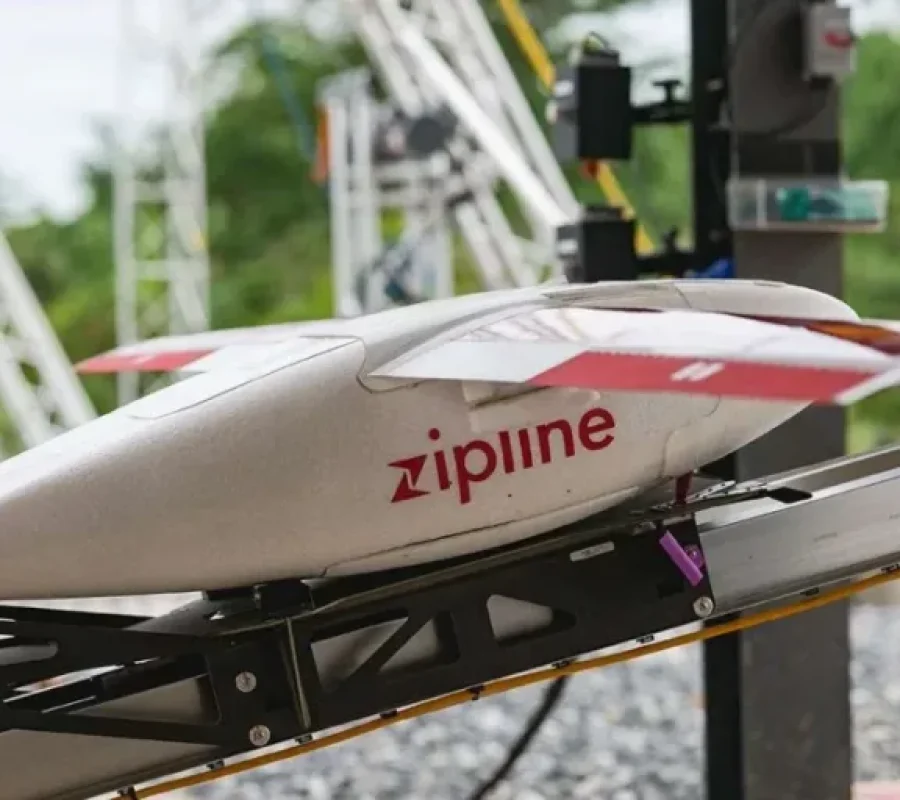
Health Minister Reviews Zipline Drone Delivery Report

The Ministry of Health has received a comprehensive technical report assessing the performance and financial viability of Zipline’s medical drone delivery service in Ghana. The report comes amidst growing public debate and the recent closure of three Zipline distribution centres.
Produced by the Zipline Technical Task Force at the behest of Health Minister Kwabena Mintah Akandoh, the review seeks to offer an evidence-based understanding of the drone delivery model’s impact on Ghana’s healthcare supply chain.
Minister Akandoh emphasized the importance of a shared understanding among stakeholders regarding the costs, contractual obligations, and practical challenges of nationwide implementation. “Our focus is on building a health supply chain that is efficient, sustainable, and provides value for money,” he stated.
A key finding highlighted in the report is the shift in funding responsibility. Initially envisioned as a Corporate Ghana initiative, the final agreement placed the full financial burden on the government, requiring payments of US$88,000 per distribution centre monthly for 24-hour operations. This cost structure has drawn significant public scrutiny, particularly following the shutdown of the three centres.
The Task Force’s extensive review covered several critical areas, including operational effectiveness – specifically, the reliability of deliveries to remote areas – and a thorough value-for-money analysis. It also examined procurement integrity, the long-term sustainability of the contract, and alternative logistics models employed globally.
Furthermore, the report assessed whether Zipline’s services have led to measurable improvements in health outcomes by reviewing health indicators before and during the drone delivery program. It also considered the broader context of Ghana’s evolving healthcare logistics needs.
Minister Akandoh assured the public that the Ministry will carefully consider the report’s recommendations. He also reaffirmed the government’s commitment to ongoing discussions with Zipline and other partners to determine the best course of action.
The report’s findings are expected to significantly influence future health policy decisions, particularly regarding the continued role of drone deliveries within Ghana’s medical supply system. The outcome of the Ministry’s deliberations could lead to a restructured partnership with Zipline or a move towards alternative logistical solutions.
The Ministry has pledged transparency and evidence-based decision-making throughout the process, prioritizing improved healthcare access for all Ghanaians.
Image Source: MYJOYONLINE