Govt committed to protecting pension funds for Ghanaian workers – Vice President
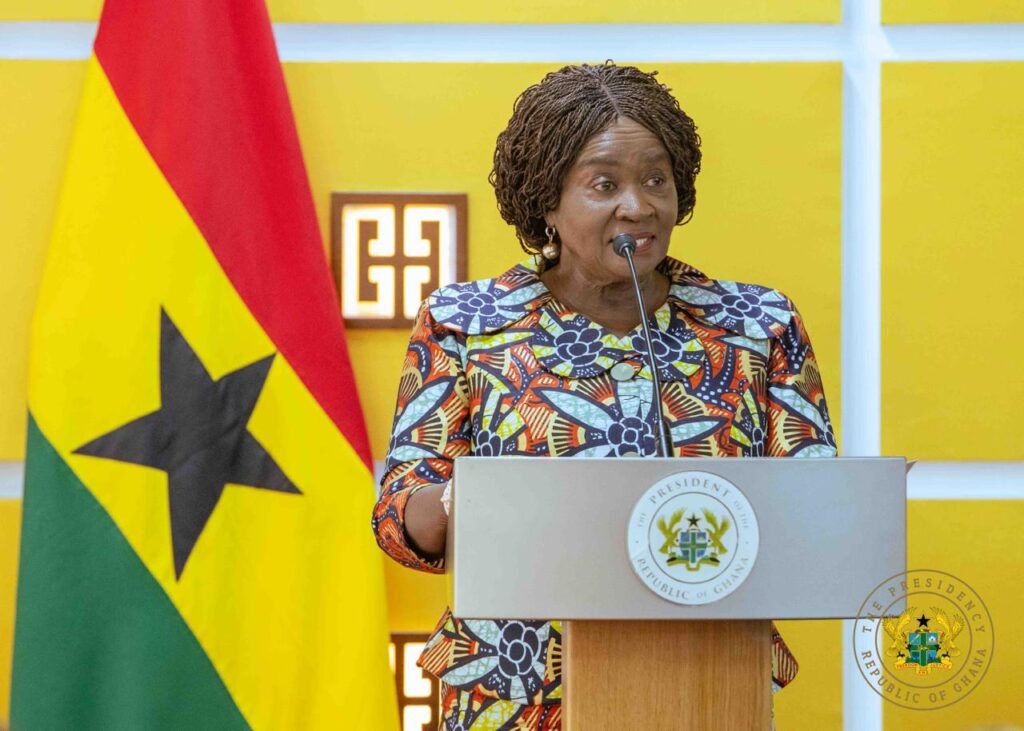
Ghana’s Vice President, Professor Jane Nana Opoku-Agyemang, has doubled down on the government’s pledge to shield the nation’s pension funds from mismanagement, emphasizing that the retirement savings of workers constitute an inviolable trust that must be guarded with the utmost rigor.
Speaking at the 2026 National Labour Conference in Ho, the Vice President framed the protection of pension assets not merely as a fiscal obligation but as a moral imperative rooted in the social contract between the state and its workforce. “Pension funds represent the lifelong savings and sacrifices of workers,” she declared, “and must therefore be managed with the highest levels of transparency, accountability, and prudence.”
Her remarks come amid growing concerns over the sustainability of retirement systems globally, particularly in developing economies where economic volatility often threatens long-term savings schemes. In Ghana, where the informal sector employs a significant portion of the workforce, ensuring the integrity of formal pension arrangements is seen as critical to broadening social protection.
The Vice President outlined a multi-pronged approach to fortify the pension ecosystem. First, the government reiterated its commitment to honoring existing obligations across all tiered pension schemes, signaling continuity despite periodic calls for reform. Second, she highlighted the administration’s ongoing efforts to strengthen regulatory oversight, arguing that robust supervisory frameworks are essential to prevent maladministration and fraud. Third, she urged the promotion of sound investment practices that balance risk and return, particularly in the face of domestic and international economic headwinds.
Beyond the immediate safeguarding of assets, Professor Opoku-Agyemang linked pension security to broader economic strategy. She pointed to the government’s 24-hour economy policy — accompanied by a seven-point plan of action — as a catalyst for accelerating growth and creating the fiscal space necessary to uphold pension commitments. By maximizing resource utilization and pivoting toward an export-oriented model, the administration aims to generate the revenue streams required to meet long-term liabilities.
The address also touched on the historical context of labour relations in Ghana, acknowledging past turbulence while expressing optimism about recent progress. “The collective but difficult decisions we have made over the past year are yielding some results,” she noted, stressing the importance of maintaining momentum without falling into the trap of “neutral poverty” — a state where economic activity fails to translate into meaningful improvements in living standards.
A significant portion of her speech focused on compensation reform. Criticizing the current market-driven pay system as prone to instability, the Vice President advocated for the establishment of an independent emolument mechanism designed to stabilize wages and foster industrial harmony. Such a system, she argued, would provide predictability for both employers and employees while reducing the likelihood of labour disputes.
In a move likely to be welcomed by public sector unions, the Vice President announced that 2026 would not be a year for major renegotiations with government workers. Instead, the administration intends to uphold existing collective agreements as an interim measure while completing broader modular reforms to the economy. This pause, she suggested, would allow stakeholders to adjust to ongoing changes without the added strain of simultaneous wage talks.
Concluding her address, Professor Opoku-Agyemang called for a renewed spirit of collaboration among government, organised labour, employers, and regulatory institutions. She framed this tripartite dialogue as essential to achieving decent work, advancing sustainable national development, and preserving industrial peace. To this end, she highlighted ongoing government initiatives in energy access, public transportation, security infrastructure, and incentive programs designed to facilitate a just transition to a more resilient economy.
Her remarks were echoed by several labour leaders present at the conference, who praised the government’s stance while urging even greater vigilance. “Words must be backed by action,” said one union representative, requesting anonymity. “We will be watching closely to ensure that these commitments are reflected in the management of our pensions.”
Image Source: MYJOYONLINE