Ghana Showcases Social Protection Reforms at Continental Knowledge Exchange in Ethiopia
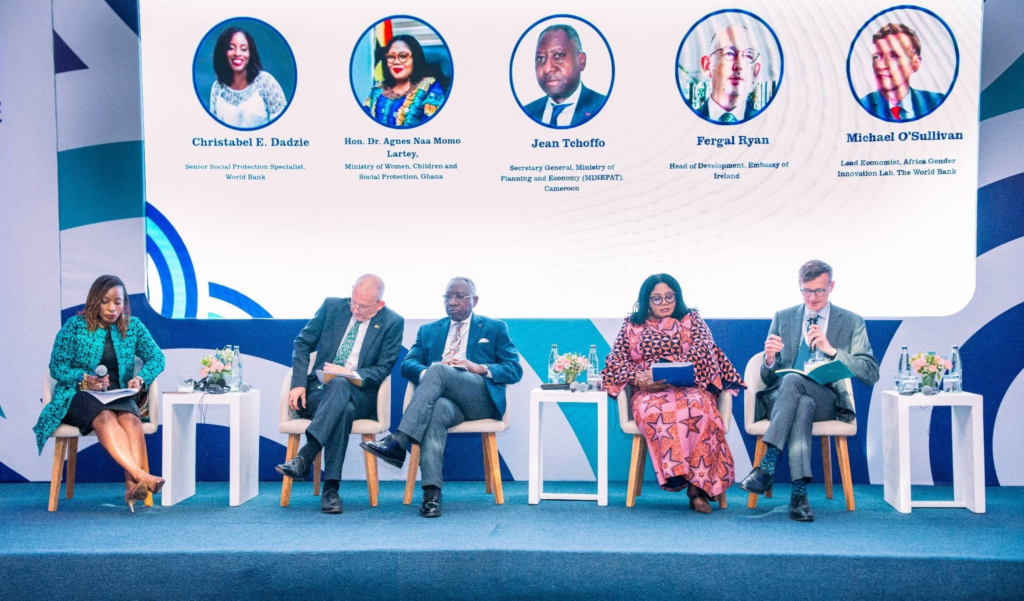
Ghana has taken its social protection success story to the continental stage, with a high-level delegation presenting the country’s reform achievements at a knowledge exchange event in Addis Ababa, Ethiopia, focused on advancing women’s economic empowerment through social protection programmes.
Minister for Gender, Children and Social Protection Agnes Naa Momo Lartey led the Ghanaian delegation to the event, which served as the closing ceremony for Ethiopia’s Productive Safety Net Programme Phase 5 (PSNP 5). The gathering brought together ministers, policymakers, development partners, civil society organisations, and social-protection experts from across Africa.
In her address, Lartey challenged the prevailing view of social protection as a drain on public finances. “Social protection should not be viewed merely as a welfare expenditure but rather as a strategic investment in human capital development and national economic growth,” she said, framing the issue in terms that resonate with finance ministries across the continent.
Ghana’s presentation centred on several innovations that have strengthened the country’s social protection architecture. Chief among these is the Ghana National Household Registry (GNHR), which combines registry data, community validation, and community-based targeting to improve the accuracy of beneficiary identification for the Livelihood Empowerment Against Poverty (LEAP) programme. The system has reduced both inclusion and exclusion errors, ensuring that limited resources reach those who need them most.
The delegation also highlighted the importance of inter-agency coordination. Collaboration between the Ministry of Gender, Children and Social Protection and the Ministry of Local Government, Decentralisation and Rural Development has smoothed implementation at the district level, while data-sharing with the National Health Insurance Authority has enabled free NHIS access for LEAP households.
A particularly notable innovation involved working with the Bank of Ghana to temporarily onboard eligible households that lacked a Ghana Card — a prerequisite for accessing financial services. This intervention addressed a critical gap that had previously excluded some of the country’s most vulnerable citizens from the formal financial system.
The minister also pointed to the passage of Ghana’s Social Protection legislation as a landmark achievement. The new law provides a stronger legal and policy framework for implementation, coordination, and sustainability of the country’s social-protection interventions, offering a model that other African nations may seek to replicate.
On the question of women’s economic empowerment, Lartey argued that financial inclusion alone is not sufficient. “Economic interventions alone are insufficient; we must confront harmful social norms, discriminatory practices and cultural barriers that limit women’s participation,” she said, calling for a more holistic approach that addresses the structural obstacles facing women in the informal economy.
Ghana’s productive inclusion initiatives, which support women in petty trading, agribusiness, and micro-enterprises, were presented as examples of how social protection can move beyond cash transfers to foster sustainable livelihoods and economic independence.
The event’s theme — “Out of Poverty into Jobs: Advancing Women’s Economic Empowerment in Social Protection Programmes” — reflected a growing consensus among African policymakers that social protection must be designed not merely to cushion the poor but to help them climb out of poverty permanently.
Ghana’s participation in the exchange aligns with broader continental efforts to strengthen social protection systems. African nations have increasingly emphasised the need for predictable financing to support development programmes, and social protection is increasingly recognised as a critical component of that agenda.
Lartey called for greater collaboration among African nations to expand identification systems and social-protection service delivery, increased investment in graduation-focused programmes, and continued sharing of innovations and best practices to accelerate continent-wide poverty reduction.
Image Source: MYJOYONLINE