Ferrari's First Electric Vehicle Sparks Heated Backlash Over Design and Identity
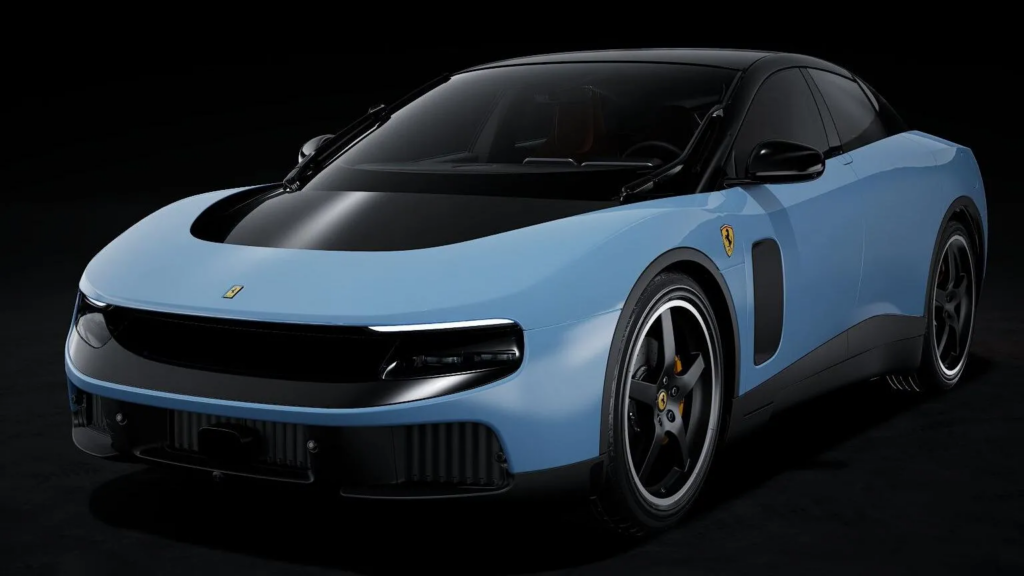
When Ferrari unveiled the Luce, its first fully electric vehicle, the Italian marque expected to make history. Instead, it found itself at the centre of a fierce debate about brand identity, design philosophy and whether a company built on the visceral thrill of petrol-powered supercars can credibly reinvent itself for the electric age.
The Luce — Italian for “light” — was designed by Sir Jony Ive, the creative mind behind Apple’s iPhone, and was deemed significant enough to attract Italian President Sergio Mattarella and Pope Leo to its private viewing. Yet within 24 hours of the public reveal, Ferrari’s shares had tumbled eight per cent. Internet critics, collectors, politicians and even a former company chairman lined up to denounce the car.
Former Ferrari chairman Luca Cordero di Montezemolo told reporters the Luce was “risking the destruction of a legend” and called for the iconic prancing horse badge to be removed from the vehicle. Italy’s deputy prime minister, Matteo Salvini, was equally blunt, declaring the car “looks like anything but a car from the prancing horse” and wondering aloud what company founder Enzo Ferrari would have made of it.
The criticism has been as much about aesthetics as about the electric drivetrain. Unlike the low-slung silhouettes that have defined Ferrari for seven decades, the Luce adopts a taller, five-seater body style — a first for the brand. It retains supercar-level performance, sprinting from zero to 60 miles per hour in roughly 2.5 seconds with a top speed exceeding 190 mph. But the absence of a howling engine note and the departure from traditional proportions have left many enthusiasts cold.
Shaun Baker, an Australia-based high-end car dealer who has owned more than 50 Ferraris, told the BBC he has taken to calling the vehicle the “Loser.” He pointed to AI-generated redesigns circulating on social media, noting they were “made in 10 seconds and still look better than what Ferrari has come up with.”
The backlash has drawn inevitable comparisons with Jaguar’s troubled rebrand. In 2024, the British luxury carmaker unveiled the Type 00 concept as part of its pivot to an all-electric future, only to face a similar storm of criticism over its radical departure from convention. Ferrari now finds itself navigating the same treacherous terrain between innovation and heritage.
Singapore-based car analyst James Wong praised the Luce’s interior design but conceded the vehicle is “unrecognisable” as a Ferrari. Sustainable industry expert Jessica Cheam added that the car’s $640,000 price tag looks particularly ambitious given the increasingly competitive landscape of luxury electric vehicles, where Chinese manufacturers have driven down costs through vast supply chains and aggressive subsidies.
Ferrari’s timing is also under scrutiny. Rival supercar maker Lamborghini has scrapped its all-electric programme entirely, citing weak demand and customer preference for petrol and hybrid powertrains. Other manufacturers including Porsche, Honda and Ford have similarly scaled back their EV ambitions. Lamborghini boss Stephan Winkelmann publicly stated that his company’s focus on hybrids over pure electric models was “the right way to go.”
Yet Ferrari chief executive Benedetto Vigna remains defiant. He has defended the Luce’s price as a fair reflection of the innovation it represents and insists the car has generated strong interest from prospective buyers. The company’s earlier SUV, the Purosangue, also drew sharp criticism when launched in 2022 but went on to sell well, opening up an entirely new market segment for the brand.
Whether the Luce proves to be a similar vindication or a costly misstep will depend on how collectors and the broader market respond in the months ahead. What is already clear is that the transition to electric power is testing even the most storied names in motoring — and that brand loyalty, however deep, has its limits when the product no longer looks or sounds like the legend that came before.
Image Source: MYJOYONLINE