Evidence: Afari Military Hospital is not 98% complete
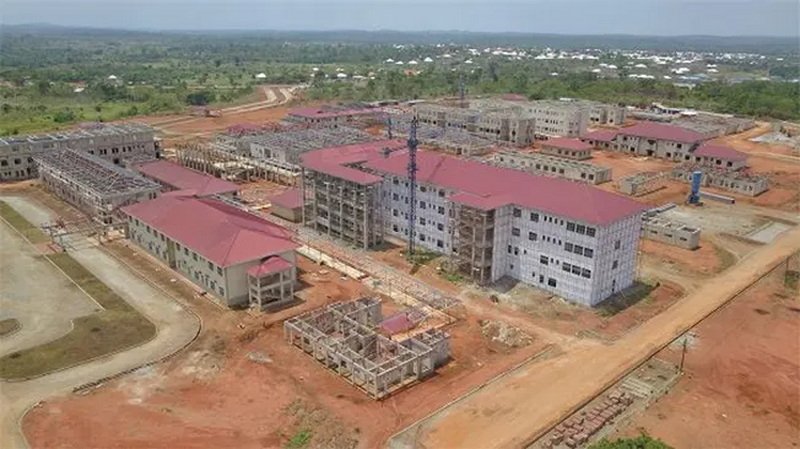
Investigative reporting has revealed that the much-touted Afari Military Hospital in Ghana’s Ashanti Region remains far from completion, contradicting claims by the former New Patriotic Party government that the facility was 98 percent finished when it left office in January 2025.
Despite official statements asserting near-completion, the 500-bed hospital currently stands at approximately 60 percent overall completion, with critical medical equipment installation lagging at just 5 percent. This discrepancy raises serious questions about government accountability and transparency in major infrastructure projects.
The controversy centers on contrasting reports about the hospital’s status. While the NPP administration cited figures showing 92.5 percent completion of core structures and 98 percent overall by early 2025, an independent April 2025 progress report tells a different story: civil works at 97 percent, architectural works at 80 percent, but biomedical equipment installation—a critical component for hospital functionality—at only 5 percent.
As one project source noted bluntly, “As it stands, we can convert the structures into a school. What makes it a hospital is the equipment.” Without functioning medical technology, the buildings alone cannot serve their intended purpose as a healthcare facility.
The project’s troubles extend beyond completion discrepancies. Originally contracted in 2008 to Egyptian firm Euroget De-invest s.a for $180 million, the hospital has faced numerous delays due to site relocations, redesigns, and tax exemption disputes. Construction finally began in 2014, with an initial completion target of June 2020.
Financial disagreements have further stalled progress. The contractor has submitted additional claims totaling approximately $84.9 million for delays and changes attributed to the government—a claim disputed by former finance officials who maintain the original contract sum has been paid in full through government bonds.
Former Defense Minister Dominic Nitiwul characterized demands for additional payment as “criminal,” arguing the contractor has received full compensation. He advocates either completing the existing contract without extra funds or terminating the agreement and selecting a new contractor.
The Afari Military Hospital was intended to be one of nine medical facilities built across Ghana under a 2008 agreement. Its prolonged incomplete status not only represents a significant financial investment without corresponding public benefit but also raises broader questions about oversight and execution of major infrastructure initiatives in the country.
As Ghana continues to develop its healthcare infrastructure, the Afari case serves as a cautionary tale about the importance of accurate reporting, realistic timelines, and clear accountability in public works projects—particularly those intended to serve critical community needs like healthcare access.