Why Africa’s Military Coups Worsen Governance Crises
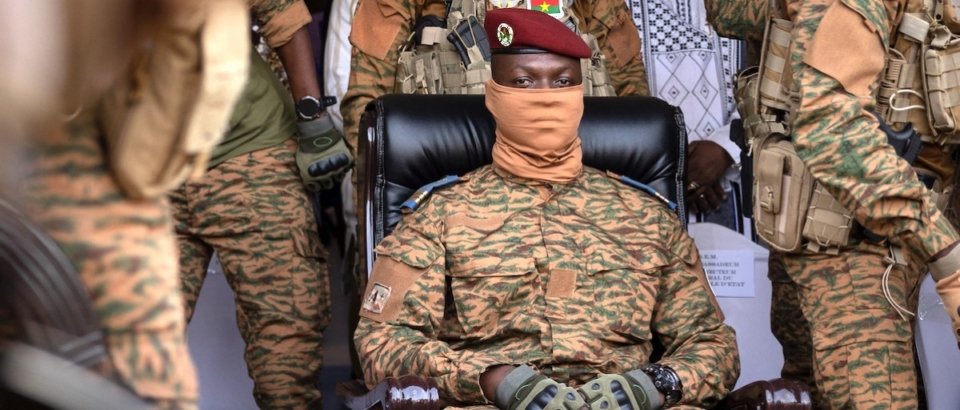
The wave of military coups that has swept across Africa since 2020 is widening the continent’s governance crisis rather than fixing it, experts say.
From the failed coup in Benin on 7 December 2025 to the successful overthrow in Guinea‑Bissau on 26 November 2025, the pattern shows a troubling paradox: coup leaders invoke public grievances – security lapses, corruption and failed elections – but their take‑overs repeatedly deepen institutional decay.
Analysts note that the justifications are strikingly similar. General Abdourahamane Tchiani in Niger claimed the nation’s security was spiralling, while Captain Ibrahim Traoré in Burkina Faso accused his predecessor of neglecting the jihadist threat. “The rhetoric sounds legitimate, but military rule cannot create the transparent, accountable institutions needed for long‑term stability,” said Dr. Kwame Mensah, senior fellow at the Ghana Institute of International Affairs.
In Mali, where two coups occurred within nine months (August 2020 and May 2021), the first overthrow of President Ibrahim Boubacar Keïta was initially welcomed. Yet Vice‑President Assimi Goïta’s second coup dismantled the transitional civilian government, proving that military rule breeds further instability.
Burkina Faso illustrates the same cycle. After Lieutenant Colonel Paul‑Henri Damiba’s January 2022 coup failed to halt jihadist advances, Captain Ibrahim Traoré seized power in September 2022 with identical security claims, only to suspend key military operations and divert resources away from the front lines.
Economic fallout follows quickly. ECOWAS sanctions after Niger’s July 2023 coup cut border trade and slashed electricity supply, forcing the junta to announce a 40 % budget reduction. In Mali, food insecurity rose to 37.6 % of households between 2021 and 2023, while in Guinea the proportion of people facing acute hunger jumped from 2.6 % in 2020 to 11 % after the September 2021 takeover.
Health systems suffer too. The Sudanese coup of October 2021 led to bombings of hospitals and a collapse of maternal‑child services, while in Mali, Burkina Faso and Niger the combined effect of insurgent attacks and coup‑induced aid suspensions crippled supply chains for essential medicines.
Education is another casualty. In Burkina Faso, an estimated 1.9 million internally displaced persons lost access to schools after coups disrupted funding and security. Guinea’s universities faced budget cuts and political interference, stifling research that could have bolstered governance capacity.
Crucially, military regimes suppress dissent, eliminating the checks that could correct policy failures. In Guinea, the junta dissolved the Front National de la Défense de la Constitution and jailed opposition leaders, while in Burkina Faso activists, journalists and judges have been detained or forced into exile.
Experts argue that breaking the coup cycle requires building transparent, accountable and inclusive institutions rather than relying on force. “Sustainable peace comes from democratic processes, not palace coups,” Dr. Mensah concluded. Regional bodies, civil society and the international community must focus on strengthening governance frameworks to prevent future seizures of power.
Image Source: MYJOYONLINE