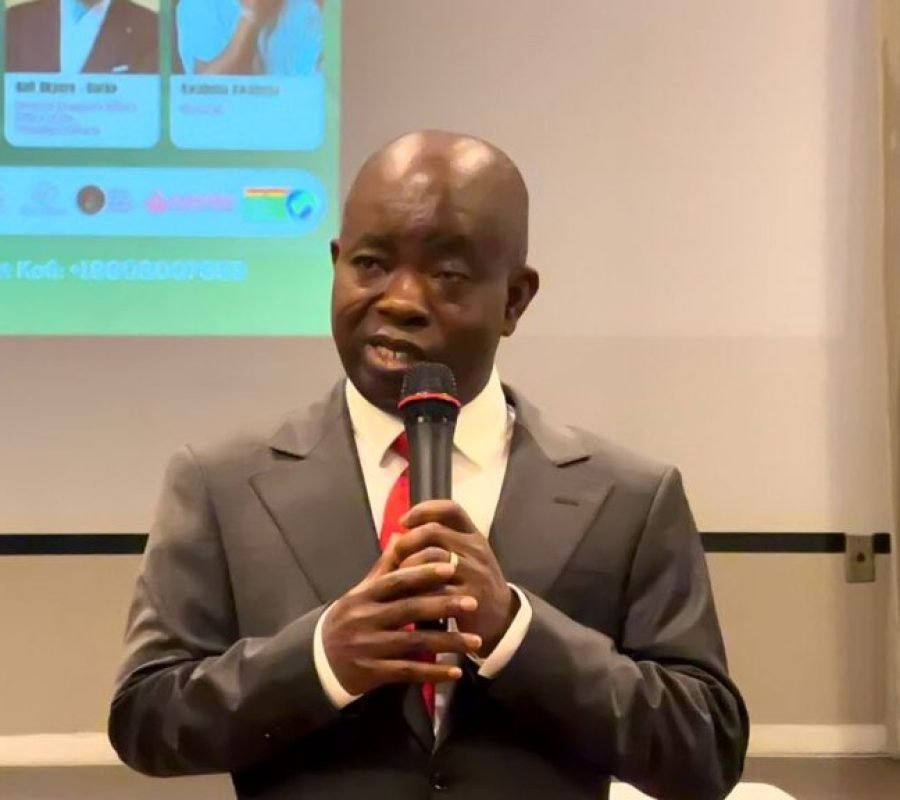
Banks in Compliance with Regulatory Agencies

The Ghana Association of Banks (GAB) has strongly refuted claims of systemic failure in Ghana’s banking sector, following an article by Michael Darko (PhD) questioning whether banks are adequately serving as gatekeepers of financial integrity in the wake of the Abu Trica case.
In a statement released today, the GAB asserted that no bank operating in Ghana has been officially cited, sanctioned, or found culpable by any regulatory or law enforcement body concerning matters related to the aforementioned case.
“To imply systemic failure without such evidence risks conflating allegations with facts, and investigation with adjudication,” the association stated emphatically.
The GAB highlighted the robust and evolving regulatory framework governing Ghana’s banking sector, citing the Anti-Money Laundering (AML) Act 2020 (Act 1044), including anticipated updates in 2025, the Anti-Terrorism (Amendment) Act 2014 (Act 875), the Banks and Specialised Deposit-Taking Institutions Act 2016 (Act 930), and the Payment Systems and Services Act 2019 (Act 987) as key pillars. These are supported by detailed directives issued by the Bank of Ghana, the GAB explained.
The association clarified that banks are mandated to perform customer due diligence, enhanced due diligence on high-risk clients, rigorous transaction monitoring, and file Suspicious Transaction Reports (STRs). However, it stressed that the evaluation and investigation of these reports fall under the purview of the Financial Intelligence Centre (FIC) and other law enforcement agencies, not the banks themselves.
GAB further pointed out that the mere presence of illicit funds within the banking system should not automatically be interpreted as a regulatory or institutional failure. “Sophisticated financial crimes, particularly cyber-enabled scams, are deliberately structured to evade detection, often exploiting social engineering, cross-border channels, non-bank platforms, cryptocurrency wallets, decentralised finance (DeFi) platforms, gift cards and digital vouchers, and peer-to-peer digital applications,” the statement noted.
It explained that these crimes often begin outside of the banks’ and regulators’ direct oversight, with funds frequently masquerading as legitimate income—such as asset sales, consultancy fees, remittances, or standard business transactions—backed by seemingly valid documentation by the time they reach a financial institution. “At this stage, banks are not receiving “dirty money” in an obvious sense, but funds that may have already passed through multiple non-bank channels designed specifically to obscure criminal origins,” GAB emphasized.
Responding to suggestions that delayed detection reflects weak compliance, the GAB explained that banks are required to report suspicions, not definitive conclusions, and such reports are legally confidential. “The effectiveness of the system relies on the quality of intelligence gathered, inter-agency coordination, and thorough investigations, aspects largely conducted away from public scrutiny. Therefore, the lack of public announcements regarding enforcement actions should not be taken as evidence of regulatory inaction,” the association stated.
The association also cautioned against drawing direct comparisons between enforcement outcomes in Ghana and those in Europe or North America, acknowledging the differences in legal systems, supervisory approaches, and disclosure requirements.
While acknowledging the need for continuous improvement, GAB highlighted the substantial investments banks are making in transaction monitoring systems, staff training, risk-based supervision, and ongoing collaboration with regulators.
Image Source: MYJOYONLINE