DVLA Introduces New Number Plates: What You Need to Know
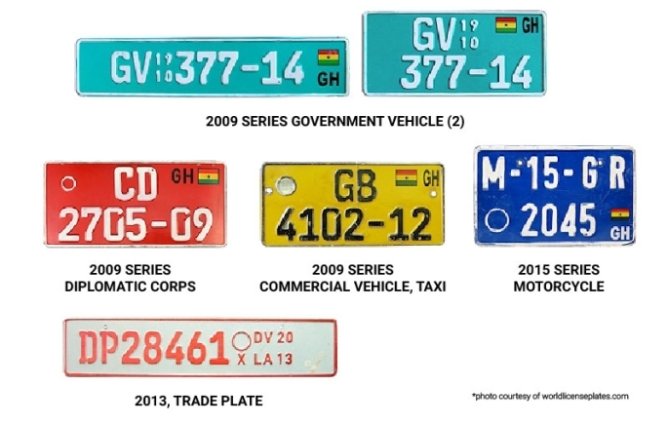
The Driver and Vehicle Licensing Authority (DVLA) is set to introduce new vehicle license plates in 2026, a move aimed at enhancing security and tracking capabilities. DVLA Chief Executive, Julius Neequaye Kotey, has been outlining the features of the plates on television, detailing a significant departure from the current system.
According to Mr. Kotey, the new plates will prominently display the region of vehicle registration at the top – for example, “Greater-Accra”. The region’s slogan will appear at the bottom, while the vehicle number, ranging from 1 to 9999, followed by two letters representing the region (GR for Greater Accra, CR for Central Region) and two letters indicating the DVLA registration office, will occupy the central space. A typical plate could look like 3648-GRXY or 5285-CRTD. Finally, a map of the region will be featured in the background.
A key aspect of the new system is that the plates will be manufactured and issued solely by the DVLA, eliminating private sector involvement. Mr. Kotey emphasized the inclusion of advanced security features designed to allow security agencies to quickly scan and trace vehicles, verifying licensing, identifying stolen cars, and assisting in investigations.
“These security features will make the process of determining whether vehicles are properly licenced, stolen, customs duties paid on them or whether vehicles been involved in crime etc. more efficient,” Mr. Kotey stated, expressing confidence in the system’s ability to aid in crime fighting and traffic law enforcement.
However, the proposed design has drawn criticism for its complexity. One observer, Johnny Blukoo-Allotey, argues that the inclusion of regional identification, slogans, and maps adds unnecessary clutter and may hinder quick identification in crucial situations.
“If one runs over an old lady on Adjiriganno’s poorly lit roads at night, no scanner or camera will detect his vehicle if he uses the back roads all the way to Abokobi,” Blukoo-Allotey wrote. “The next day he can go to a workshop, say he struck a goat and have it repaired. No questions asked. Case closed. That is the reality.”
He further contends that the shift away from the traditional two-letter, four-number format, to a number-region-office code, is a step backward. The inclusion of the DVLA office code, he argues, is information better accessed digitally rather than displayed on the plate itself. He points to previous re-registration exercises in 1991 and 2009 as examples of changes that did not significantly improve vehicle identification.
Blukoo-Allotey suggests reverting to the pre-1991 format of two letters followed by up to four numbers, believing it to be more easily memorized and recognized by the public, who often play a vital role in identifying vehicles involved in incidents. He also stresses the importance of clear font sizes and styles on the plates, addressing concerns about current plates being difficult to read.
Ultimately, the success of the new license plates, according to Blukoo-Allotey, hinges on a combination of secure plate design and effective law enforcement, rather than solely relying on technological solutions. He advocates for simplicity and clarity in the plate’s design to maximize its usefulness in real-world scenarios.
Image Source: MYJOYONLINE