Beyond Emergency Response: How Accra Can Build Flood Resilience by Learning from Toronto's Infrastructure Investments
When Infrastructure Saves Lives: Can Accra Learn from Toronto Before the Next Flood?
July 6, 2026
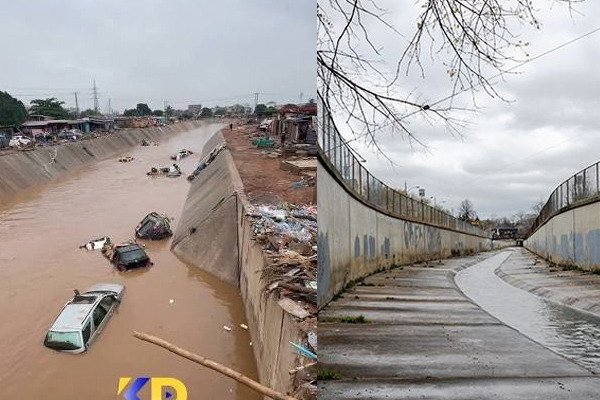
As floodwaters recede from Accra’s streets following another devastating rainy season, a critical question resonates across Ghana: can the city break its cycle of destruction by emulating proven flood management strategies? The answer may lie thousands of kilometers north, where Toronto’s decades-long investment in stormwater infrastructure offers a blueprint for saving lives and livelihoods.
The recent floods in Accra left more than submerged roads and damaged buildings in their wake. They shattered families, disrupted livelihoods, and left indelible trauma—exemplified by the harrowing rescue of an elderly woman swept away by rushing waters. These events underscore a brutal reality: every flood statistic represents a human story, a dream interrupted, a community in distress.
Toronto’s approach reveals a fundamental truth: flood prevention begins long before rain falls. The Canadian city maintains hundreds of thousands of stormwater catch basins, over 4,500 kilometers of sewer pipes, and numerous stormwater management ponds that collectively handle millions of cubic meters of water during extreme events, alongside retention ponds, engineered channels, culverts, pumping stations, and flood-control facilities—all designed to capture rainwater and snowmelt and safely divert it away from vulnerable areas. This system, maintained year-round, transforms potential catastrophe into manageable water flow.
Critically, Toronto’s success stems not from isolated projects but from an integrated strategy. Infrastructure alone cannot solve flooding; it must combine with rigorous waste management, thoughtful urban planning, environmental protection, public education, and strict enforcement of building codes. When storm drains clog with plastic waste, food containers, and silt—as frequently happens in Accra—their capacity diminishes dramatically, forcing water into streets, homes, and businesses.
Urban planning decisions profoundly influence flood vulnerability. Accra’s rapid urbanization has narrowed natural waterways, replaced absorbent green spaces with concrete, and increased surface runoff. Toronto’s approach preserves wetlands, expands green spaces, and enforces development regulations that respect natural hydrology. Even residential design matters: Toronto neighborhoods feature permeable surfaces, lawns, and gardens that absorb rainfall before it reaches drainage systems, while many Accra homes feature impermeable compounds that exacerbate runoff.
Climate change intensifies this challenge. Scientists confirm that extreme rainfall events are growing more frequent and severe globally, rendering outdated infrastructure increasingly inadequate. For Ghana, this presents both a warning and an opportunity: acknowledge that emergency response alone cannot solve recurring floods, and instead invest in resilient systems that protect lives, support economic activity, and restore public confidence.
The path forward requires partnership. Engineers, environmentalists, urban planners, policymakers, traditional leaders, businesses, and citizens must collaborate toward a common goal. Simple actions—clearing drains before rains, refusing to dump waste in waterways, respecting environmental regulations, and participating in community clean-ups—collectively build resilience. Government must lead by modernizing drainage systems, improving waste collection, enforcing environmental laws, and supporting sustainable planning.
Accra’s recent floods should not be remembered as just another disaster, but as a turning point. They represent an opportunity to shift from reactive coping to proactive prevention, to invest in infrastructure that does more than lay concrete—it protects homes, preserves businesses, strengthens communities, and most importantly, saves lives. The next heavy rainfall is inevitable; whether it becomes another national tragedy depends on the choices made today.
Their aspirations extend beyond the pitch, as increased visibility and success could catalyze greater investment in women’s sports across Algeria, encouraging more girls to take up the game and fostering a stronger football culture nationwide.
Image Source: MYJOYONLINE