Ghana unveils roadmap for climate-resilient finance
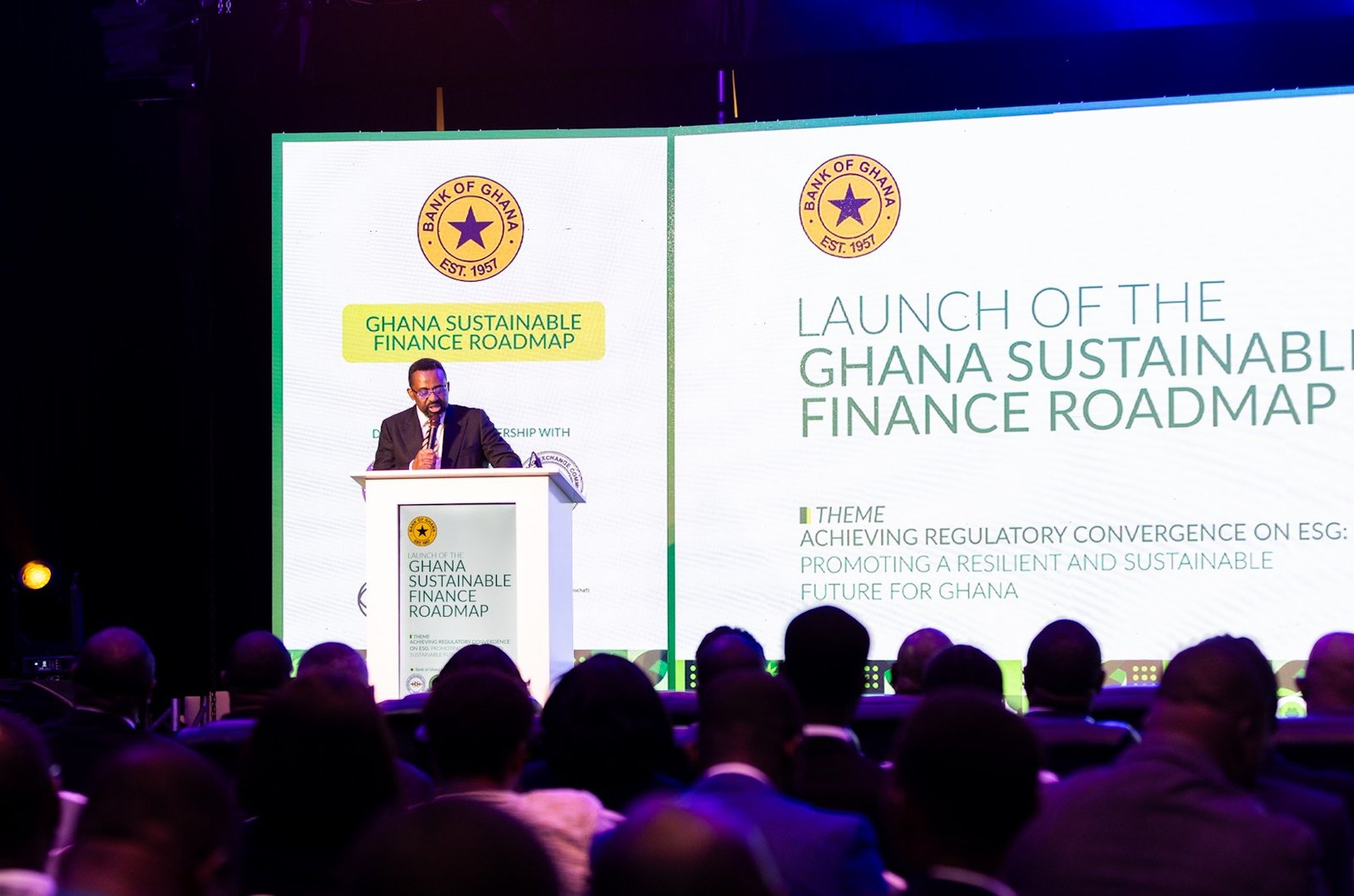
Ghana has unveiled a comprehensive Sustainable Finance Roadmap aimed at integrating climate risk management and environmental, social, and governance (ESG) standards across the nation’s financial sector. The initiative, launched by the Bank of Ghana in collaboration with the National Insurance Commission (NIC), the National Pensions Regulatory Authority (NPRA), and the Securities and Exchange Commission (SEC), represents a significant step toward aligning Ghana’s financial systems with global sustainability goals.The framework is designed to channel capital into sustainable investments while strengthening the financial sector’s resilience to climate-related risks. At the launch event in Accra, Dr. Johnson Pandit Asiama, Governor of the Bank of Ghana, emphasized that sustainable finance is not merely about risk management and# not only about managing risks but also about positioning Ghana to access new pools of global capital, finance critical infrastructure, support the energy transition, deepen financial markets, and foster long-term economic growth.Dr. Asiama announced the publication of a four-year strategic plan on sustainability and climate-related risk for 2024–2028, accompanied by a Climate-Related Financial Risk Directive to support implementation. He noted that the initiative builds on work that began in 2015 with the establishment of a multi-stakeholder steering committee involving the Ghana Association of Banks and the Environmental Protection Agency.This effort has already yielded the Sustainable Banking Principles, adopted voluntarily by all 23 commercial banks in 2019, with industry compliance reaching 73 percent as of September 2025. However, Dr. Asiama cautioned that the true value of the roadmap will be realized through effective implementation.Finance Minister Dr. Cassiel Ato Baah Forson, speaking on his behalf, described climate sustainability as a macroeconomic, financial stability, and national development priority. He noted that when floods wash away roads or droughts affect crop yields, the economic impacts appear in national budgets and food inflation, underscoring the need for capital that not only seeks returns but also builds resilience.The minister urged financial institutions to incorporate sustainability considerations into lending decisions, particularly for sectors like construction and mining, and highlighted that Ghana has already introduced the Bank of Ghana’s Sustainable Banking Principles and the Ministry of Finance’s Green Finance Taxonomy.Mr. Seidu Issifu, Minister of State for Climate and Sustainability, characterized the roadmap as a declaration of intent that will enable banks, insurers, capital markets, and pension funds to expand financing for sustainable development. He called on financial institutions to integrate environmental, social, and governance (ESG) principles into their strategies and disclose climate-related risks, while urging regulators to strengthen supervisory frameworks and data infrastructure.International support for the initiative comes from the International Finance Corporation (IFC) of the World Bank Group and Switzerland’s State Secretariat for Economic Affairs (SECO). Ms. Nathalie Kouassi Akon, IFC Division Director for West Africa and the Gulf of Guinea, stressed that the roadmap establishes a common framework for financial regulators and will require sustained capacity building, innovative financial products, and unwavering commitment to transparency and accountability from all stakeholders.Ms. Janine Walz, Deputy Head of Mission at the Embassy of Switzerland, affirmed that the roadmap marks the beginning of implementation and emphasized the need for continued capacity building and stakeholder engagement, reaffirming SECO’s support for the process.
Image Source: GHANA BUSINESS NEWS