Telecel Ghana Adopts Kumasi South Hospital's Mother and Baby Unit for Two Years
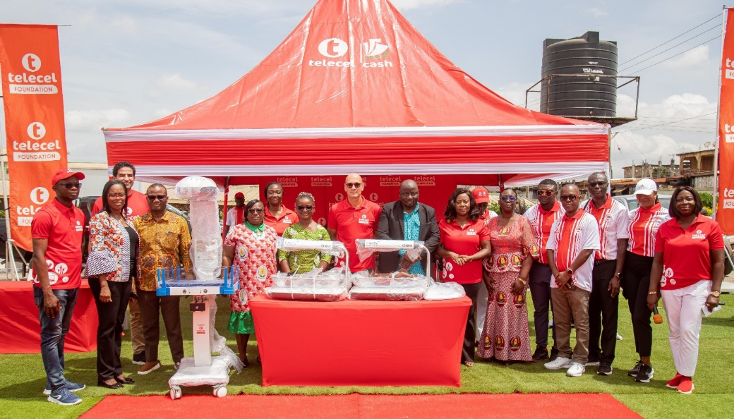
Telecel Ghana’s Foundation has made a significant investment in maternal and newborn health in the Ashanti Region by donating critical medical equipment to the Kumasi South Hospital and committing to a two-year adoption of the hospital’s Mother and Baby Unit.The donation, made during the climax of Telecel’s Ashanti Month celebrations, includes two Firefly Phototherapy Units for treating neonatal jaundice, a Wall Baby Radiant Warmer for premature and low-birth-weight infants, and an Infant Digital Weighing Scale for accurate growth monitoring.This intervention addresses a critical gap in healthcare delivery for newborns, particularly those born prematurely or suffering from complications such as birth asphyxia, neonatal jaundice, and infections. The Kumasi South Hospital, which has become a key referral centre for maternal and child health in the region, manages over 10,000 births annually.Speaking at the event, Telecel Ghana’s CEO, Patricia Obo-Nai, emphasized the importance of investing in early childhood health outcomes. “The first days after birth are often the most critical, and for many families they can also be the most uncertain. Through this partnership with Kumasi South Hospital, we are investing in better outcomes for newborns, supporting healthcare professionals and helping to create an environment where children can survive, recover and achieve their full potential,” she said.Under the partnership agreement, Telecel will not only provide the equipment but also undertake a facelift of the unit, supply essential consumables, and support enhancements to create a safer, more baby-friendly environment for patients, families, and healthcare workers.Dr. Rita Yeboah, Head of the Paediatric Unit at Kumasi South Hospital, welcomed the donation, noting the constant wear and tear on critical equipment that impairs healthcare delivery and leads to referrals to tertiary hospitals. “Our greatest appreciation goes to Telecel Foundation for donating this essential medical equipment and agreeing to renovate the entire newborn unit and labour ward. This will ensure babies are born in safety and peace, saving lives and nurturing families,” she stated.Dr. Rita Larsen, representing the Ashanti Regional Health Directorate and the Ghana Health Service’s Deputy Director of Clinical Care, highlighted the broader impact of such investments. “Investing in child health significantly reduces morbidity and mortality, ensuring our future generation can thrive and achieve their full potential. The decision by Telecel Foundation to adopt the ward for two years demonstrates a commitment to sustainable impact rather than one-time intervention,” she said.Nicolas Bourg, Board Chair of Telecel Group, framed the initiative as part of the company’s stronger support for long-term national development. “We hope this contribution will strengthen the excellent work being done here, support health outcomes for newborns and women, and reinforce our partnership with this facility for lasting impact,” he said.Beyond healthcare, Telecel’s Ashanti Month encompassed a wide range of initiatives, including sports sponsorship, digital skills training, retailer forums, health outreach programs, customer engagement activities, and a cashless bazaar promoting digital payments and financial inclusion.As the month concludes, Telecel Ghana has demonstrated how corporate connectivity can drive multidimensional development in the region, touching on community health, digital empowerment, service improvement, financial inclusion, and youth opportunity.The Firefly Phototherapy Units, which use blue light to break down bilirubin in the blood, are critical for treating jaundice, a condition that affects up to 60% of term newborns and 80% of preterm infants. The Wall Baby Radiant Warmer provides a controlled thermal environment for premature infants, while the Digital Weighing Scale ensures accurate tracking of growth metrics — all essential for reducing neonatal mortality.Telecel’s commitment extends beyond the hardware donation. The partnership includes training for healthcare workers on the new equipment and protocols, ensuring the technology is used effectively and safely. Over the two-year adoption period, the company will monitor outcomes and adjust support as needed, aiming to create a self-sustaining model of excellence in maternal and newborn care.This approach aligns with global best practices in humanitarian aid, where capacity building and local ownership are prioritized over mere handouts. By investing in both infrastructure and human capital, Telecel hopes to leave a legacy that continues to benefit mothers and babies long after the two-year period ends.
Image Source: MYJOYONLINE