Torkornoo's Legal Battle: Nine Cases Across Three Courts in Ghana.
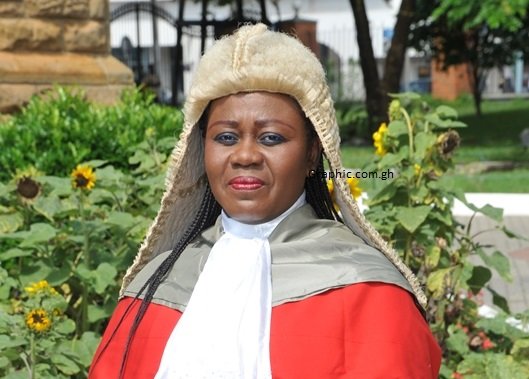
The legal challenge mounted by former Chief Justice Gertrude Torkornoo against her removal from office has revealed a complex and multi-faceted legal strategy that extends far beyond initial public understanding. Recent disclosures by the Deputy Attorney General, Dr Justice Srem-Sai, indicate that Ms. Torkornoo has pursued litigation across three different judicial forums, encompassing a total of nine distinct cases.
According to Dr Srem-Sai, who shared the details in a Facebook post on June 27, 2026, the former Chief Justice has filed five separate applications before Ghana’s Supreme Court, initiated a case at the ECOWAS Court of Justice, and lodged three suits in the High Court. This revelation came shortly after the ECOWAS Court unanimously dismissed her case on June 24, 2026, ruling that her claims of rights violations during the removal process were unfounded.
The Deputy Attorney General emphasized that the ECOWAS Court decision represented only a single component of a broader judicial campaign. ‘Quite apart from the five Supreme Court cases and the ECOWAS case, Her Ladyship filed three cases in the High Court to challenge her removal,’ he stated. He further noted that, sometime in the previous year, Ms. Torkornoo abandoned one of the three High Court cases, leaving two active proceedings.
In response to the ongoing litigation, the legal team representing the former Chief Justice has sought to streamline the case. On June 24, 2026, she filed a motion to consolidate the two remaining High Court cases into a single proceeding. Dr Srem-Sai commented on this development, adding the local expression ‘Da yie’ (meaning ‘it is good’) to his statement.
Legal analysts suggest that the consolidation effort aims to create a more coherent argument centered on constitutional governance, due process protections, and judicial independence. These themes have been central to the national debate surrounding her removal since it occurred.
As the consolidated High Court proceedings move forward alongside the pending Supreme Court applications, legal experts and the public alike are closely watching how the courts will address the fundamental questions at stake. The outcome will not only determine the personal fate of the former Chief Justice but also clarify the boundaries of judicial authority and executive power in Ghana’s constitutional framework.
The case has drawn significant attention due to its implications for the separation of powers and the rule of law. Observers note that the sheer volume of litigation filed by a former head of the judiciary is unprecedented in Ghana’s recent history, raising important questions about the appropriate channels for challenging administrative decisions and the potential for forum shopping in high-stakes constitutional disputes.
Forum shopping, the practice of selecting a court believed to be most favorable to one’s case, has been a topic of discussion in legal circles. While Ms. Torkornoo’s legal team has pursued remedies in multiple jurisdictions, the dismissal at the ECOWAS Court underscores that not all forums may be receptive to her arguments. This outcome may influence the strategy moving forward, particularly as the focus shifts to domestic courts.
The High Court cases, which are now slated for consolidation, reportedly concern specific procedural aspects of her removal. Legal scholars suggest that by combining these cases, her team aims to avoid contradictory rulings and present a more compelling narrative regarding alleged violations of due process and judicial independence.
Meanwhile, the five Supreme Court applications remain pending, each addressing different facets of the controversy. These applications are understood to challenge the constitutional basis of her removal, the composition of the panel that recommended her dismissal, and the adherence to statutory procedures throughout the process.
Legal experts caution that the multiplicity of cases could lead to prolonged litigation, potentially keeping the issue in the public eye for an extended period. They also note that the courts will need to carefully consider the precedent-setting nature of their decisions, particularly regarding the extent to which a former Chief Justice can challenge her own removal through judicial means.
Public reaction to the revelations has been mixed, with some expressing concern over the potential destabilization of the judiciary and others defending the former Chief Justice’s right to seek legal redress. Civil society organizations have called for a swift resolution to the matter, emphasizing the importance of maintaining public confidence in the judiciary during periods of institutional tension.
As the legal battle continues to unfold across multiple jurisdictions, the nation awaits clarity on a matter that has profound implications for Ghana’s democratic institutions. The courts’ eventual rulings will be scrutinized not only for their immediate impact on the parties involved but also for their broader significance in defining the balance of power among the branches of government.
The unfolding situation serves as a reminder of the resilience of Ghana’s judicial system in handling high-profile constitutional disputes, while also highlighting the challenges that arise when legal mechanisms are employed to contest executive decisions at the highest level of the judiciary.
Image Source: MYJOYONLINE