2026 World Cup: Ghana lose to Croatia to finish third in Group L
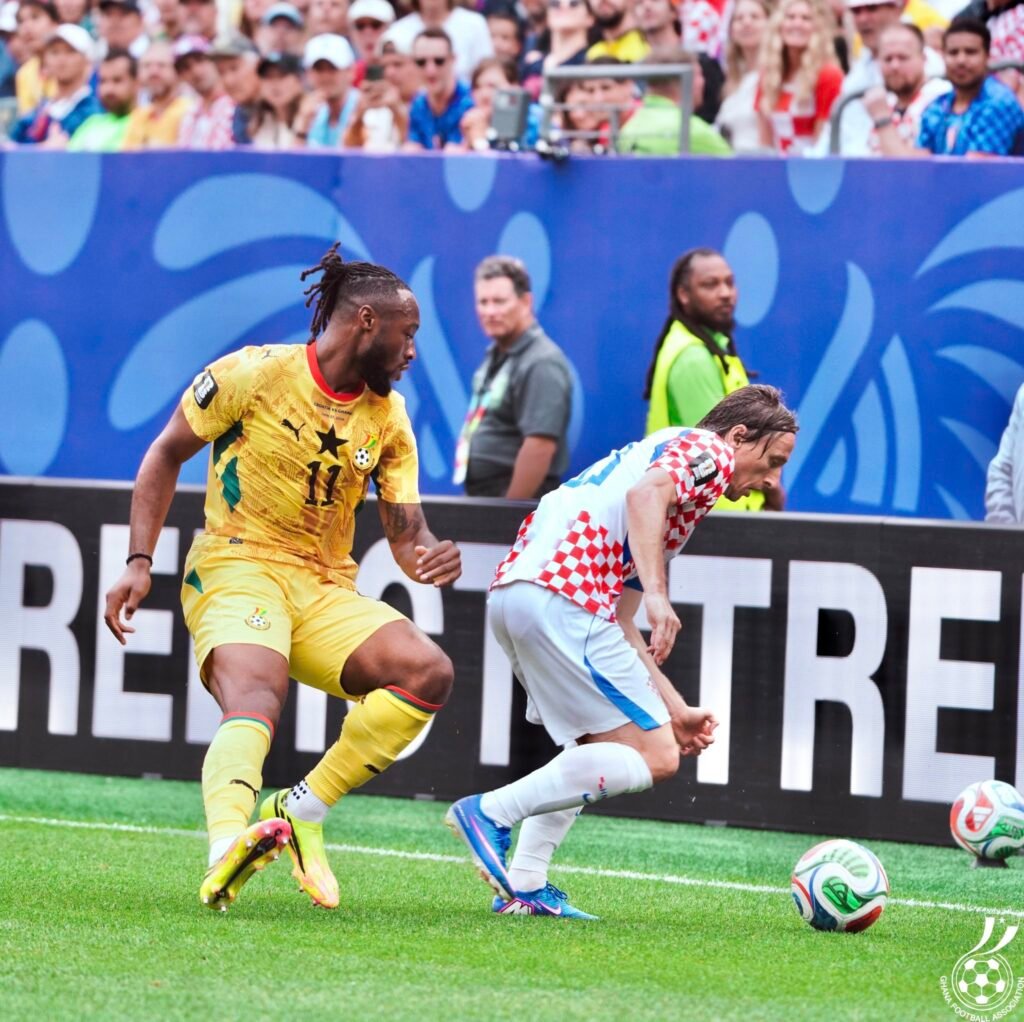
In a tense encounter that encapsulated the fine margins separating triumph from heartbreak at the 2026 FIFA World Cup, Ghana’s Black Stars suffered a 2-1 defeat to Croatia in their final Group L match, played amidst the fervent atmosphere of Philadelphia’s stadium. The result, while denying Ghana a coveted top-two finish in the group, nonetheless secured their passage to the Round of 32 as one of the best third-placed teams, a testament to their resilience and tactical discipline throughout the tournament’s opening stages.
Heading into the match, Ghana carried the momentum of two impressive performances that had yielded four points from their opening two fixtures, including a hard-earned draw against England that had signaled their intent to challenge the group’s established hierarchy. The Black Stars, under the astute guidance of coach Carlos Queiroz, had prioritized defensive solidity and quick transitions, a strategy that had served them well until the 31st minute of this encounter. Croatia, perennial semi-finalists in recent World Cups, arrived with a blend of experience and youthful exuberance, relying on the midfield maestro Luka Modrić to orchestrate their attacks and the aerial prowess of Nikola Vlašić to threaten opponents from set-pieces.
The match began with Croatia asserting early dominance, nearly breaking the deadlock in the 17th minute when Vlašić struck the post from the edge of the box after a momentary lapse in Ghana’s defensive positioning. The visitors’ persistence paid off in the 31st minute, as Petar Sušić unleashed a precise low drive from approximately 30 yards, finding the bottom corner to end Ghana’s hitherto impeccable defensive record in the tournament — a statistic that had underscored their growing reputation as a difficult side to break down.
Responding to the setback, Ghana showed renewed vigor before halftime, with Antoine Semenyo creating a promising opportunity through a penetrating run and a dangerous cross that begged for a finish. The halftime break saw coach Queiroz make tactical adjustments, introducing Opong Peprah and Abdul Fatawu Issahaku to inject fresh impetus into the attack, particularly on the flanks. The changes bore fruit shortly after the restart, as Issahaku’s inventive crossfield pass found Semenyo, whose attempt agonizingly lacked the final touch as the ball traversed the goalmouth, a moment that epitomized the fine margins that define elite football.
Ghana’s persistence was rewarded in the 76th minute when Ernest Nuamah’s delicately weighted free-kick found the penalty area, where Derrick Luckassen composedly volleyed the ball home at the far post. Initial jubilation was briefly checked by an offside flag, but a meticulous Video Assistant Referee review determined that Kwasi Sibo, though in an offside position, had not actively participated in the play, allowing the goal to stand and temporarily level the scores at 1-1. The decision highlighted the increasingly pivotal role of technology in modern football, ensuring that justice was served despite the initial on-field judgment.
The equaliser appeared to shift momentum in Ghana’s favor, only for Benjamin Asare to produce a moment of individual brilliance shortly thereafter, tipping Mario Pašalić’s powerful effort over the crossbar with a remarkable one-handed save that drew gasps from the crowd and social media acclaim worldwide. However, from the ensuing corner, Croatia struck back with devastating efficiency. Luka Modrić delivered a pinpoint delivery, and Vlašić, rising highest, powered a header beyond Asare’s reach, the ball ricocheting off the inside of the post to restore Croatia’s lead in the 83rd minute — a goal that proved decisive as the clock wound down.
Despite a frantic finish as Ghana searched for an equalizer, pushing numbers forward in search of a late leveller, Croatia held firm to claim the victory and seal their qualification as Group L runners-up. The outcome, combined with England’s 2-0 win over Panama, saw England top the group with seven points, Croatia follow with six, and Ghana finish with four points — sufficient to advance as one of the four best third-placed teams, setting up a potentially daunting Round of 32 encounter against a group winner from another section.
For Ghana, the match underscored both the promise and the unpredictability of World Cup football. While the loss prevented a higher group standing, their ability to compete fiercely against established European sides and secure advancement through meritocratic means bodes well for their knockout-stage aspirations. The performance against Croatia, particularly the second-half resurgence, demonstrated a tactical flexibility and mental resilience that will be invaluable in the challenges ahead. As the tournament progresses, the Black Stars will look to build on the spirit displayed in Philadelphia, carrying the lessons of a hard-fought encounter into the obstacles that lie ahead, knowing that every match at this level is a test of character as much as skill.
Image Source: MYJOYONLINE