How brands banned from the World Cup became the story
In the high-stakes world of World Cup sponsorship, where official partners pay tens of millions for exclusivity, an unexpected narrative has emerged: the brands that were meant to be sidelined have become some of the most talked-about presences at the tournament. This phenomenon, driven by FIFA’s vigorous efforts to protect its official sponsors, has inadvertently turned ambush marketing into a central storyline of the 2026 World Cup.
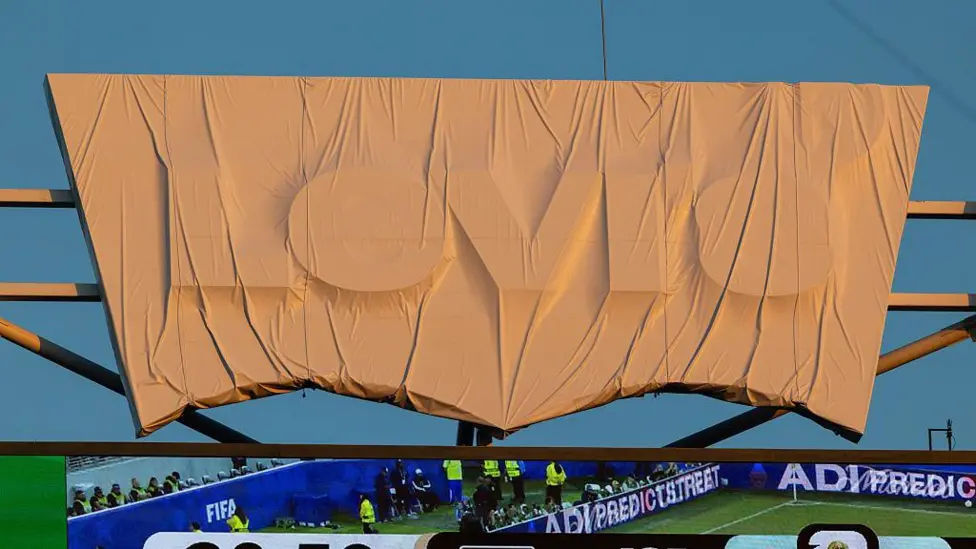
The scene outside Levi’s Stadium in San Francisco is now iconic: the famous denim brand’s logo obscured by a white tarpaulin, a direct result of FIFA’s rule that only official partners may have visible branding within stadium precincts. Inside, the story repeats — Heinz ketchup bottles have their logos covered with tape, and even Germany’s Jamal Musiala was spotted pre-match with masking tape over the Beats logo on his headphones. None of these companies paid for official sponsorship, yet all three have found themselves at the heart of one of the competition’s most unexpected narratives.
This is not mere coincidence but a textbook example of the Streisand Effect, the phenomenon where attempts to suppress information only serve to amplify it. Named after the singer-actress whose legal efforts to remove aerial photographs of her home from the internet backfired spectacularly, the effect has been in full force at this World Cup. FIFA’s attempts to keep the focus on its official partners have instead redirected global attention toward the very brands it sought to minimise.
The rationale behind FIFA’s strict brand protection is straightforward: official sponsors invest vast sums for the exclusive right to associate with the World Cup, and part of that investment is the assurance that their exposure will not be diluted by unsolicited Ambush marketing. If every brand could gain the same visibility for free, the incentive to pay for exclusivity would vanish. Thus, FIFA employs a range of controls — from renaming stadiums to regulating apparel and even tournament typography — to maintain the sanctity of its official partnerships.
Yet, as history has shown, fans and brands alike are adept at finding loopholes. As far back as 2006, Netherlands fans were instructed to remove their trousers bearing the Bavaria logo before entering a stadium, a rule that backfired when the image of a fan in his underwear went viral, granting Bavaria invaluable publicity without spending a penny on official fees. By 2010, South African airline Kulula was forced to withdraw a tongue-in-cheek campaign referring to itself as the unofficial carrier of the ‘you-know-what’, only to see the withdrawal generate more publicity than the original advert. In 2014, when Sony was an official FIFA sponsor and Beats by Dre were banned from stadiums and media events, the headphone giant turned the restriction into a masterstroke, releasing a five-minute advert that ensured their products were seen and heard everywhere FIFA’s control did not reach.
The current tournament has seen similar ingenuity. Heinz transformed a taped-up ketchup bottle into a limited-edition product release, while Beats posted an image of Musiala with taped-over headphones, captioned ‘Spoiler alert: it’s a b.’, which turned out to be a teaser for an unreleased model. Levi’s, meanwhile, opted for a different approach, allowing FIFA to cover its logo and then leveraging the resulting visibility across its global stores, from London to Mexico City, turning a simple act of compliance into a worldwide marketing campaign.
These examples underscore a critical distinction: while ambush marketing excels at generating immediate conversation and engagement during the tournament, official sponsorship offers deeper, more enduring benefits — rights to official activations, hospitality opportunities, and a long-term association with one of the world’s most prestigious sporting events. The two strategies are not direct competitors but rather serve different purposes in the marketing ecosystem.
As the World Cup progresses, the conversation surrounding these unofficial brands shows no signs of abating. Whether this attention will translate into lasting commercial success remains to be seen, but for now, the ambush marketers have undeniably captured the spotlight, proving once again that in the battle between suppression and visibility, the latter often prevails.
Image Source: MYJOYONLINE