Elon Musk loses trillionaire status as global tech rout hits SpaceX
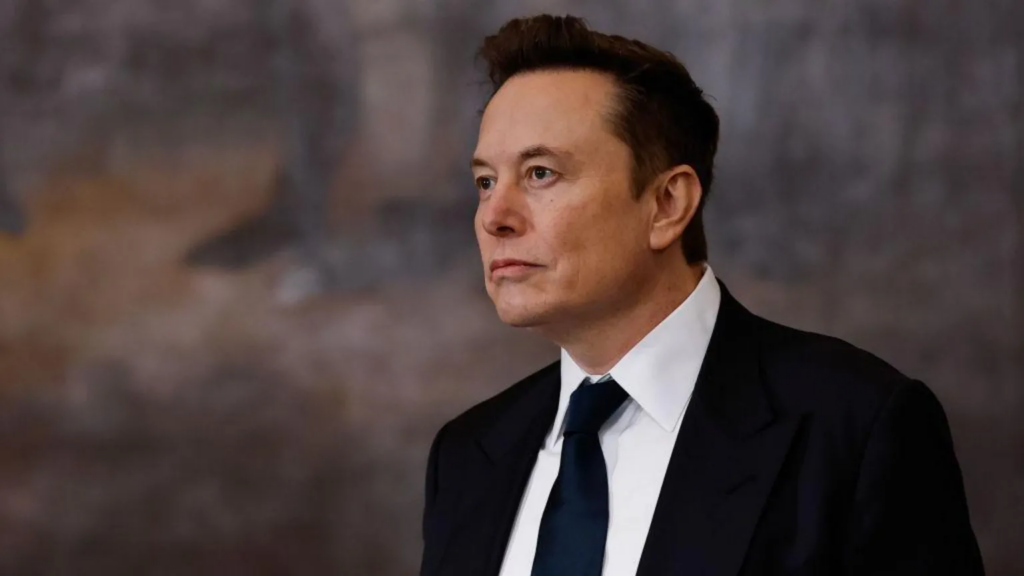
Elon Musk’s brief tenure as the world’s first trillionaire has already ended, with the tech entrepreneur’s net worth falling below the $1 trillion threshold following a sharp downturn in technology markets that disproportionately affected his holdings in SpaceX and Tesla.
According to the Bloomberg Billionaires Index, Musk’s fortune was valued at approximately $957 billion on Tuesday, representing a decline of over $150 billion from his peak valuation of $1.32 trillion reached just six days earlier. This rapid fluctuation marks one of the most dramatic shifts in personal wealth recorded in recent financial history, underscoring the volatility inherent in markets where individual fortunes are tightly coupled to the performance of a few high-profile companies.
The downturn began shortly after SpaceX’s highly anticipated initial public offering on June 12, which valued the rocket and satellite company at more than $1.77 trillion. Given Musk’s approximately 42% ownership stake, the IPO immediately elevated his net worth past the unprecedented $1 trillion milestone. Investor enthusiasm initially propelled SpaceX shares to a peak of $225.64 by June 16, further increasing Musk’s paper wealth to record levels.
However, the celebration was short-lived. A broad-based retreat in technology shares, driven by rising concerns about the profitability of artificial intelligence investments, persistent inflationary pressures, and elevated interest rates, triggered a significant market correction. SpaceX shares proved particularly vulnerable to this sentiment, declining more than 30% from their mid-June highs to trade around $156 per share.
The impact on Musk’s personal finances was immediate and substantial. On June 22 alone, a single-day 16% drop in SpaceX stock erased approximately $240 billion from his net worth. The following day, Tesla shares declined by nearly 6%, further compounding the losses given Musk’s approximately 12% stake in the electric vehicle manufacturer.
This episode highlights the extraordinary concentration of Musk’s wealth, which distinguishes him from traditional billionaires whose fortunes are typically spread across diverse asset classes and industry sectors. Analysis indicates that approximately 80% of Musk’s net worth is derived from his holdings in SpaceX and Tesla, creating a vulnerability to sector-specific downturns that would be less pronounced for investors with more diversified portfolios.
Financial commentators note that while post-IPO volatility is common for high-growth companies, the scale of Musk’s fluctuation reflects unique characteristics of his situation. The tremendous initial enthusiasm for SpaceX’s public debut appeared driven by expectations of revolutionary advances in space exploration and satellite technology, tempered by growing skepticism about the near-term commercial viability of such ambitious ventures.
As one analyst observed, “For a stock like SpaceX, a lot of decision-making might have been emotional and based on the anticipation of huge leaps forward in space exploration and utilisation, but investing should be something treated with clear eyes and patience, even when such huge numbers are involved.” This perspective suggests that the subsequent market correction may represent a recalibration of expectations rather than a fundamental reassessment of the companies’ long-term prospects.
Looking ahead, market restrictions preventing company insiders from selling their shares are set to lapse in late July, potentially introducing additional supply-side pressure as early investors and employees seek to monetize their positions. Nevertheless, analysts suggest that a relatively modest recovery in SpaceX share price—approximately 6% from current levels—would be sufficient to restore Musk’s trillionaire status, suggesting that his position at the pinnacle of global wealth may prove transient rather than permanent.
The episode serves as a reminder of the inherent volatility in markets where individual net worth becomes closely tied to the performance of specific high-profile companies, particularly those operating at the frontier of technological innovation where expectations often outpace near-term financial realities.
The rapid rise and fall of Elon Musk’s trillionaire status offers a compelling case study in the intersection of technological innovation, market psychology, and personal wealth concentration in the modern financial era. Unlike the gradual accumulation of wealth characteristic of traditional industrialists or diversified investors, Musk’s ascent to and descent from the $1 trillion threshold occurred with remarkable speed, reflecting both the explosive growth potential and inherent volatility associated with frontier technology companies.
The sequence began with SpaceX’s initial public offering on the Nasdaq exchange on June 12, 2026. Priced at $135 per share, the offering valued the rocket manufacturer at approximately $1.77 trillion—an astonishing figure for a company whose primary revenue streams remain largely developmental and contractual rather than derived from mature, recurring commercial operations. Given Musk’s estimated 42% ownership stake, this valuation immediately translated to a personal net worth exceeding $740 billion from SpaceX alone, before accounting for his holdings in Tesla and other ventures.
Investor response was initially overwhelmingly enthusiastic. Shares opened at $150 on the first day of trading and continued to climb, reaching an intraday high of $225.64 by June 16. At this peak, Musk’s SpaceX holdings were worth approximately $945 billion, contributing to a combined net worth that briefly surpassed $1.32 trillion when combined with his Tesla stake and other assets.
This enthusiasm appeared driven by a confluence of factors: genuine excitement about SpaceX’s technological achievements in reusable rocket systems and satellite constellation deployment, anticipation of future revenue streams from space-based internet and point-to-point terrestrial transportation, and the speculative allure of investing in what many perceived as a transformative enterprise poised to reshape humanity’s relationship with space.
However, the market’s sentiment shifted abruptly in the latter half of June. Several interconnected concerns began to weigh on technology shares broadly, with particular intensity applied to companies whose valuations appeared to depend heavily on future growth expectations rather than current earnings. These included questions about the near-term profitability of massive artificial intelligence infrastructure investments, the persistence of inflationary pressures despite monetary policy tightening, and growing skepticism about whether the most ambitious promises of technological visionaries could be realized within expected timeframes.
SpaceX proved especially susceptible to this reassessment. While the company has demonstrated remarkable technical prowess in reducing launch costs and increasing flight frequency, critics point to the substantial capital expenditures required to maintain its ambitious development schedule, including investments in next-generation rockets, satellite production facilities, and global launch infrastructure. The company’s reliance on government contracts for a significant portion of its revenue also introduces elements of political and budgetary uncertainty that may not be fully appreciated during periods of exuberant optimism.
The impact on Musk’s personal wealth was both immediate and mathematically predictable given the concentration of his holdings. With approximately 80% of his net worth tied to SpaceX and Tesla, even moderate percentage movements in these stocks translate to enormous absolute changes in his financial position. The June 22 single-day decline in SpaceX shares, while representing a relatively common volatility measurement for individual stocks, corresponded to a loss of hundreds of billions of dollars in personal wealth due to the sheer scale of his ownership.
Tesla’s concurrent decline, though less severe in percentage terms, further amplified the effect given Musk’s significant stake in the electric vehicle manufacturer. The company faces its own set of challenges, including intensifying competition in the automotive sector, questions about the pace of full self-driving technology deployment, and ongoing scrutiny of its production and delivery capabilities.
Financial analysts and historians note that while extreme wealth concentration has historical precedents, the speed and visibility of modern fluctuations—amplified by real-time market data and ubiquitous financial reporting—create novel dynamics for both the individuals involved and broader market perceptions. The Musk case illustrates how personal fortunes can now rise and fall with unprecedented rapidity in response to shifting assessments of technological promise and market conditions.
Looking forward, the eventual lifting of insider trading restrictions in late July may introduce additional complexity as early SpaceX employees and investors seek to capitalize on their holdings. However, the fundamental dynamics that drove both the ascent and descent of Musk’s trillionaire status appear likely to persist: a market continually reassessing the balance between transformative technological potential and near-term financial realizability, with individual fortunes serving as particularly sensitive barometers of that ongoing negotiation.