Oil Prices Slide 5% to Three-Month Low as Strait of Hormuz Deal Takes Shape
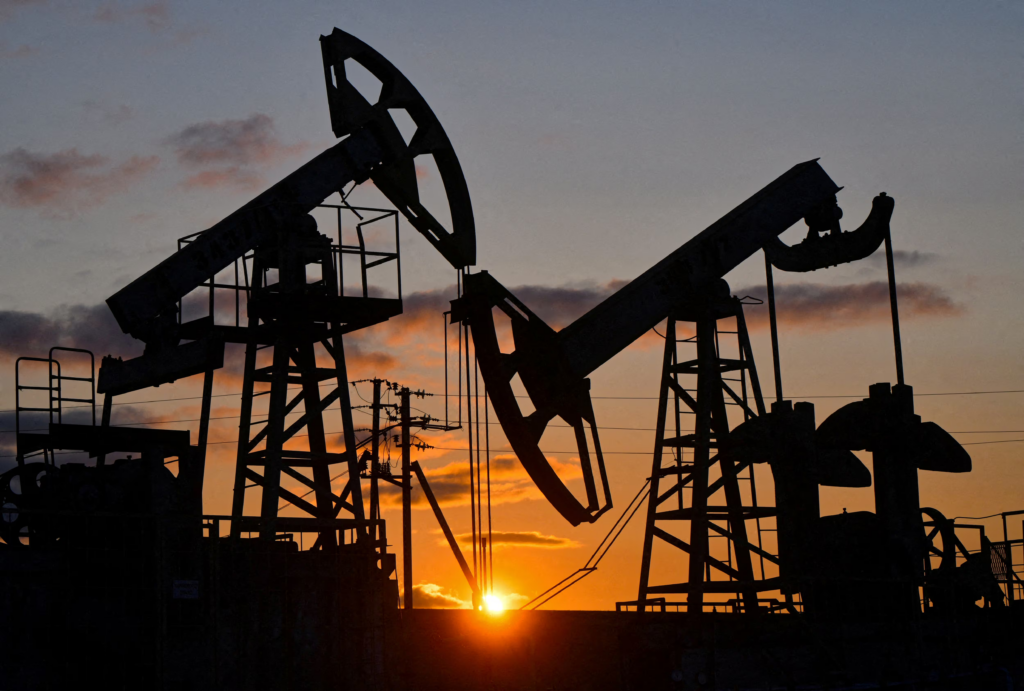
Oil prices fell sharply for a second consecutive day on Tuesday, dropping about 5 per cent to their lowest levels in three months, as details emerged of an interim deal to end the war in the Middle East and reopen the Strait of Hormuz, the narrow waterway through which a significant share of the world’s oil supply passes.
Brent crude futures settled at $78.96 a barrel, down $4.21 or 5.1 per cent, marking the lowest close since March 2. U.S. West Texas Intermediate crude fell $4.70, or 5.8 per cent, to $76.05 a barrel — its weakest finish since March 4.
The sell-off was driven by growing optimism that the Strait of Hormuz, which Iran has effectively blocked since the United States and Israel first attacked the country in February, would soon reopen to commercial shipping. The strait is a chokepoint for roughly a fifth of the world’s oil trade, and its closure had sent prices surging in the months following the outbreak of hostilities.
“Crude oil is sliding fast on the assumption the Strait of Hormuz will open soon,” said Bob Yawger, director of energy futures at Mizuho. But he and other analysts cautioned that the market may be getting ahead of itself.
The interim deal, details of which began to surface on Tuesday, would extend a fragile ceasefire announced in April by another 60 days. Under its terms, the United States would rule out Iran’s development of a nuclear weapon, while Iran would be permitted to resume oil sales upon signing. U.S. President Donald Trump confirmed the broad outlines, saying the agreement would prevent Tehran from acquiring nuclear arms.
Yet significant uncertainties remain. Analysts at Ritterbusch and Associates noted that a “major vote of confidence is being applied to the success of this plan with limited regard to thorny issues such as financial compensation, sanctions and especially a satisfactory nuclear deal that was largely the reason behind the war.” Shipping and oil export flows through the strait could take weeks to normalise even after a final agreement.
Adding to the downward pressure on prices, China — the world’s largest oil importer — reported disappointing economic data. Retail sales in May fell 9.1 per cent year on year, the steepest decline in nearly four years, while crude throughput dropped by the same margin. The figures reinforced concerns about weakening demand from Asia’s largest economy.
Major investment banks responded by revising their forecasts. Goldman Sachs, Morgan Stanley, and Citigroup all lowered their oil price projections in the wake of the deal’s emergence, suggesting further downward pressure could persist in the near term.
For Ghana and other oil-producing nations in West Africa, the price decline carries mixed implications. Lower crude prices reduce the cost of fuel imports but also diminish revenues for petroleum-exporting economies. The Deputy Energy Minister recently reaffirmed Ghana’s commitment to gas-led development, a strategy that could provide some insulation from oil price volatility.
On the supply side, U.S. crude inventories drew down by an estimated 4.6 million barrels in the week ending June 12 — the first draw in eight weeks — suggesting that underlying demand, while softening, has not collapsed entirely. The draw compared with a decline of 11.5 million barrels in the same week a year ago and a five-year average draw of 2.3 million barrels.
Markets are now watching for confirmation of the final nuclear deal and the timeline for reopening the Strait of Hormuz. Any delay or breakdown in negotiations could send prices sharply higher again, underscoring the fragility of the current rally in risk assets and the continued vulnerability of global energy markets to geopolitical disruption.
Image Source: MYJOYONLINE