The Hidden Poison: How Used Car Batteries Are Contaminating Ghana’s Soil and Water
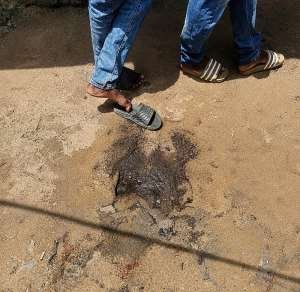
In a busy automobile repair hub in southern Ghana, a veteran mechanic of nearly four decades performs a task so routine it barely registers as noteworthy. When battery plates become damaged, he melts lead to replace worn parts. When batteries need reactivating, he mixes distilled water with sulphuric acid. And when the spent acid must be disposed of, he digs a hole behind his shop, pours the liquid in, and covers it with soil.
It is a practice repeated at thousands of informal battery repair and recycling sites across the country. And according to environmental and public health experts, it is quietly poisoning a generation of Ghanaian children.
Used lead-acid batteries contain two dangerously persistent substances: sulphuric acid and lead. When released into the environment, the acid does more than degrade soil structure. It creates conditions that allow toxic metals to dissolve and spread more readily through surrounding land. Lead, once deposited, can remain in soil for decades, contaminating crops, poisoning livestock, and exposing children through direct contact or through contaminated food and water.
“Once lead is deposited into soil, it remains there forever if it is not removed. It becomes a multi-generational poisoning site,” said Esmond Quansah, Programme Director of Pure Earth Africa. His organisation has worked with the Environmental Protection Authority to document contamination around informal smelters, finding that vegetables grown nearby carry dangerous levels of the metal.
The scale of the problem is staggering. A recent study by the Centre for Global Development estimated that approximately 33 percent of lead exposure in low- and lower-middle-income countries may be linked to unsafe battery recycling activities. In Ghana, the consequences are already visible in blood tests. A survey conducted between 2022 and 2023 revealed alarming prevalence rates among children. In the Northern Region, 79 percent of children in Yendi and 74 percent elsewhere had elevated blood lead levels, far exceeding the global average of roughly 33 percent. In Greater Accra, children living near contaminated sites in Ashaiman recorded levels around 56 percent. Perhaps most troubling, communities near formally regulated recycling facilities still showed prevalence rates as high as 89 percent.
The contamination does not stop at the surface. For households dependent on groundwater, polluted soil becomes the entry point to a deeper crisis. “Lead can travel deep into groundwater,” explained Dr. Sampson Atiemo, a private environmental consultant. “Once it reaches the water table, there is no technology to dissolve it. Also, with most of our water treatment systems, lead is able to escape.”
The health effects, particularly for children, are devastating and irreversible. According to the World Health Organization, elevated blood lead levels can cause brain damage, lower IQ, attention and behavioural problems, delayed growth, anaemia, hearing loss, and kidney damage. In 2021, more than four million children in Ghana were estimated to have unsafe blood lead levels.
“Lead poisoning affects how a child develops,” said Dr. Emmanuel Kyeremanteng Amoah, a Public Health Physician at UNICEF Ghana. “In severe cases, you see that the developmental milestones of the child are seriously impaired.”
The pathways of exposure extend beyond contaminated soil. Workers carry lead particles home on their clothes, shoes, and tools. Children play near workshops, touching contaminated dust and battery waste without knowing the danger. The recent donation of diagnostic equipment to the Health Ministry underscores Ghana’s broader healthcare challenges, but addressing lead contamination requires a different order of intervention.
Experts say prevention is possible. Safer recycling methods exist. Protective equipment can reduce exposure. Hazardous waste can be collected and treated properly. But enforcement remains the bottleneck. “There are capacity gaps in the system,” Dr. Atiemo noted. “The older officers who have the expertise are leaving and are not passing their knowledge on to the next generation.”
Behind many workshops across Ghana, small patches of earth conceal buried sulphuric acid. Grass grows over them. Dust settles. Life continues. Yet beneath the surface, toxic substances persist for decades, silently moving through soil, water, food, and human bodies. The hole dug behind a workshop may take minutes to fill. The damage it leaves behind can last for generations.
Image Source: GHANAMMA