US Military Apache Helicopter Crashes Near Strait of Hormuz, Crew Rescued by Unmanned Drone Boat
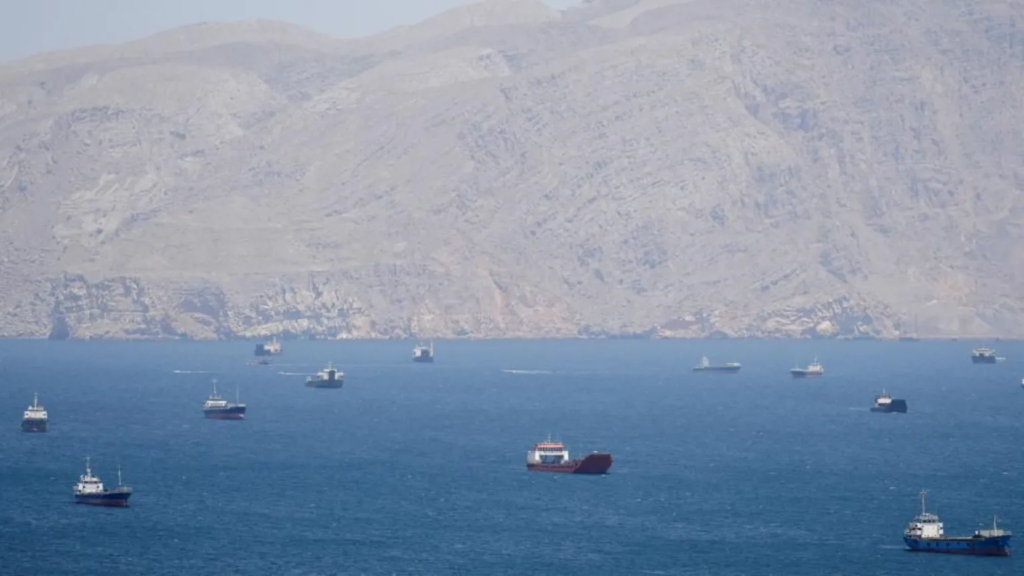
A United States Army AH-64 Apache attack helicopter went down early Tuesday near the strategic Strait of Hormuz, in an incident that underscores the continuing volatility of a region still grappling with the aftermath of direct Iranian-Israeli strikes that rattled global markets only a day earlier.
Both crew members were safely rescued by an unmanned surface vessel — a milestone that U.S. Central Command described as a historic first for American military operations. The soldiers were reported in stable condition and receiving medical care.
The helicopter was patrolling waters off the coast of Oman at approximately 3:30 a.m. local time when it crashed. The cause remains unknown, and an investigation is under way.
The downing occurred at a fraught moment for the Middle East. Iran and Israel had exchanged fire the previous day, delivering the most significant blow yet to a fragile ceasefire established in April. While both adversaries subsequently stepped back, allowing oil prices to ease and markets to recover, the regional security environment remains precarious. Iranian state media reported that the Israeli attacks killed at least two members of the country’s air defence units.
A Milestone in Maritime Rescue
In what Central Command spokesperson Captain Tim Hawkins called a historic maritime recovery, a Task Force 59 unmanned surface vessel located and extracted the two soldiers from the Gulf of Oman. The coordinated joint operation brought together U.S. Navy and Air Force personnel alongside the Army’s 82nd Airborne Division and a special naval drone unit. Multiple assets converged to complete the rescue within two hours of the crash.
President Donald Trump, speaking to journalists at John F. Kennedy International Airport after watching the NBA Finals, confirmed the crew’s safety. “The pilots are fine. Nobody injured,” he said. “We are going to issue a report tomorrow. But the pilots are fine.”
The Apache’s Role in a Dangerous Waterway
The Apache is a critical element of the American military posture in the region. These heavily armed aircraft enforce a blockade on Iranian crude oil shipments and are routinely deployed close to Iranian-controlled islands in the strait to deter small-boat attacks and intercept drones. This marks the first Apache lost in the conflict, though the U.S. military has previously lost fighter jets and roughly 30 MQ-9 Reaper drones to hostile and friendly fire since hostilities began on February 28.
The aggressive deployment persists despite the memory of a tense incident in April, when two crew members of an American F-15E Strike Eagle were shot down by Iran and rescued deep in hostile territory. It also follows the short-lived Project Freedom, during which Central Command imagery showed Admiral Brad Cooper flying over the strait to guide commercial ships through the blockade.
Tehran’s Measured Response
Regional reactions to the crash have been carefully calibrated. The semi-official Mehr News Agency reported that no claim of responsibility had been made by Iran. The Islamic Revolutionary Guard Corps has yet to issue an official statement. The absence of a claim coincides with a delicate diplomatic backdrop: the war has severely disrupted the global economy, driven up energy prices and inflated the cost of basic commodities since the U.S. and Israel began striking Iran.
Iran has maintained a tight grip on the Strait of Hormuz since the outbreak of hostilities. One-fifth of the world’s oil supply normally passes through this conduit. In response, the United States enacted its own counter-blockade on April 13, turning away 134 vessels and disabling seven others that ignored warnings.
Trump’s Diplomatic Optimism
Despite the loss of the aircraft, President Trump expressed renewed optimism about backchannel negotiations. “We’re in the final throes of what will be a very, very good deal that will not allow in any way, shape, or form nuclear weapons,” he told reporters. “The strait will open up right away. It’ll open up immediately upon signing, which could be in two or three days.”
Yet a binding agreement has repeatedly failed to materialise. Mediators led by Pakistan have spent weeks attempting to finalise terms, but Washington and Tehran maintain rigid positions. The United States insists Iran must relinquish its stockpile of highly enriched uranium. Iran demands immediate sanctions relief and the release of frozen assets. The Trump administration has explicitly rejected this sequence.
Iranian parliament speaker Mohammad Bagher Qalibaf issued a sharp critique on Monday, stating that Trump’s remarks “contradicted the agreed-upon sections, showing that the U.S. is neither seeking a ceasefire nor dialogue.”
The broader regional picture remains deeply unsettled. Israel continues to expand its military campaign against Hezbollah in Lebanon, and the Lebanese government finds itself incapable of disarming the powerful militia. The convergence of maritime tension in the Strait of Hormuz and escalating ground combat in Lebanon points to a security paradigm of extraordinary fragility. Whether automated technology and diplomatic backchannels can prevent the next crisis remains an open question.
Image Source: MYJOYONLINE