The United Nations' International Maritime Organization (IMO) is preparing to evacuate more than 11,000 sailors who have been stranded in the Gulf of Oman and the Strait of Hormuz amid escalating tensions stemming from the US-Israel conflict with Iran.
The United Nations’ International Maritime Organization (IMO) is preparing to evacuate more than 11,000 sailors who have been stranded in the Gulf of Oman and the Strait of Hormuz amid escalating tensions stemming from the US-Israel conflict with Iran. The operation, described by IMO Secretary-General Arsenio Dominguez as a ‘large-scale’ effort, will involve coordination with Iran, Oman, the United States, other regional coastal states, and maritime industry stakeholders to ensure safe passage for the vessels and their crews.
The decision to evacuate comes after months of disruption to global shipping lanes, following Iran’s effective closure of the Strait of Hormuz in the wake of heightened hostilities. The strait, a critical chokepoint for approximately one-fifth of the world’s oil trade, has seen transits plummet to well below pre-conflict levels, despite a recent interim agreement between the United States and Iran aimed at de-escalation.
According to Dominguez, the necessary safety guarantees have been secured and conditions for safe navigation thoroughly verified. The evacuation plan includes the potential use of two temporary routes through the strait, with vessels receiving individual instructions via Oman’s notice to mariners, as coordinated by the IMO. The organization intends to issue daily reports on the number of ships departing the region safely.
The interim deal, signed last week, has nevertheless become a point of contention between Washington and Tehran. U.S. officials assert that the agreement includes provisions for robust inspections by the International Atomic Energy Agency (IAEA) of the remnants of Iran’s nuclear weapons program. In contrast, Iranian President Masoud Pezeshkian maintained in a joint press conference with Pakistan’s Prime Minister that missiles were excluded from the accord and emphasized that Iran would never negotiate its defence capabilities with any foreign power.
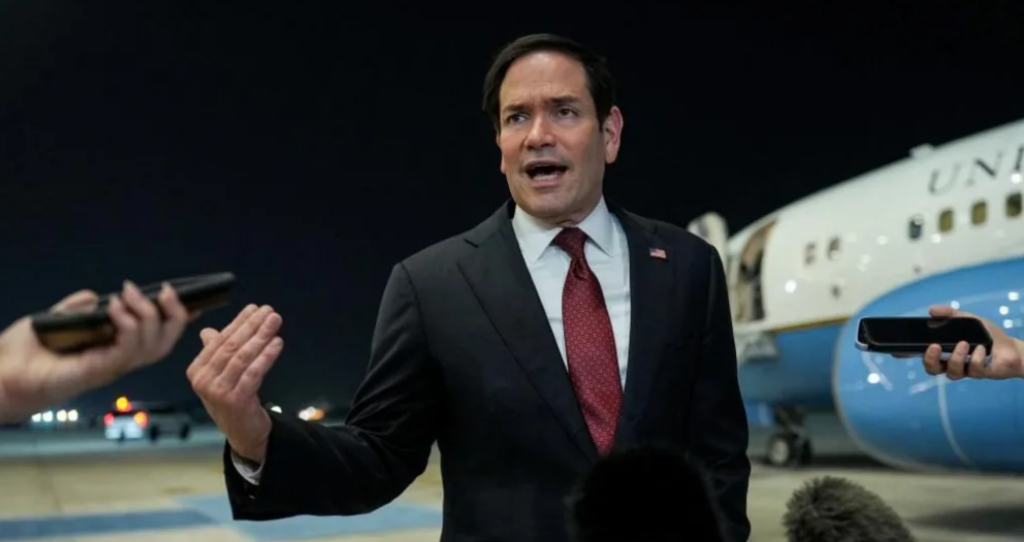
A U.S. official, speaking on condition of anonymity, countered that Iran had acquiesced to stringent IAEA oversight and would tailor its public statements for domestic consumption. This diplomatic wrangling unfolded as U.S. Secretary of State Marco Rubio began a Gulf tour, starting in the United Arab Emirates, with subsequent stops planned in Kuwait and Bahrain to discuss the agreement with Iranian officials.
Rubio, upon arriving in the UAE, reiterated a longstanding tenet of international law: no nation may levy tolls or fees on an international waterway such as the Strait of Hormuz. He expressed confidence that regional nations would align with the U.S. position on this matter, stressing that the free passage of vessels is essential not only for the evacuation mission but for global commerce.
The humanitarian and economic stakes are significant. Since the strait’s closure in February, benchmark Brent crude prices have exceeded $100 per barrel, and shipments of vital commodities like fertiliser have been disrupted. Although maritime data firm Kpler reports that 172 vessels have successfully transited the strait since its partial reopening — including 42 on a single recent Saturday — this remains far below the pre-conflict average of approximately 138 crossings daily. Satellite analyses indicate that over 200 tankers continue to await passage within the strait, underscoring the persistent bottleneck.
For the stranded seafarers, the situation has been dire. Many have reported dwindling supplies, deteriorating mental health, and anxiety about their families back home. The IMO’s evacuation effort aims not only to remove these individuals from harm’s way but also to signal to the international community that collective action can prevail even in the most fraught geopolitical circumstances.
Dominguez framed the evacuation as a decisive step toward restoring maritime security and ending what he termed ‘unacceptable attacks against civilian shipping.’ He welcomed the U.S.-Iran peace agreement with ‘deep satisfaction,’ noting its potential to alleviate the hardship endured by thousands of seafarers and mitigate worldwide economic repercussions. ‘After months of hardship and distress for thousands of innocent seafarers, and negative impact on the whole world, I welcome with deep satisfaction the peace agreement concluded between the United States and Iran,’ he said.
As the operation unfolds, the IMO’s focus will remain on safeguarding human life and facilitating the resumption of legitimate trade through one of the world’s most vital maritime corridors. The success of this mission could set a precedent for future humanitarian interventions in conflict zones, reinforcing the principle that civilian shipping must remain protected irrespective of political disputes.
See related: [Oil prices fall 5% to 3-month low on hopes Strait of Hormuz will open](/oil-prices-fall-5-to-3-month-low-on-hopes-strait-of-hormuz-will-open) and [Strait of Hormuz transit will take ‘weeks’ to resume, largest tanker operator tells FT](/strait-of-hormuz-transit-will-take-weeks-to-resume-largest-tanker-operator-tells-ft).
Image Source: MYJOYONLINE