Telecel Backs Innovators at Tech in Ghana 2025
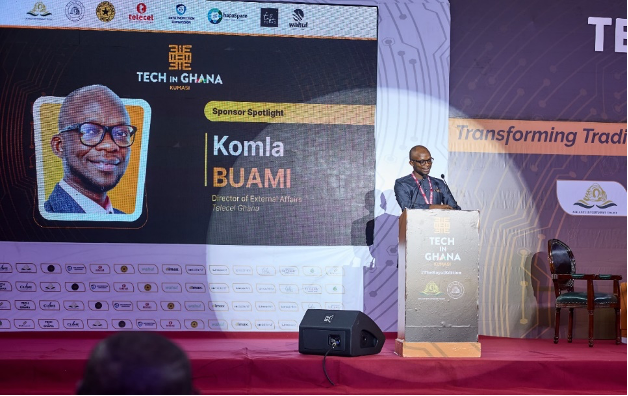
Telecel Ghana is advocating for increased collaboration and investment in young innovators to propel Ghana’s digital transformation.
The call was made by the Director of External Affairs at Telecel Ghana, Komla Buami, at the 2025 Tech in Ghana conference held at the Manhyia Palace in Kumasi. The conference, themed “When Tradition Meets Innovation,” brought together key stakeholders in the tech ecosystem.
Mr. Buami emphasized that simply providing connectivity is insufficient. “Connectivity alone isn’t enough. We must invest in the next wave of thinkers and innovators. We must be intentional about building a constant talent pipeline to lead the digital revolution,” he stated, urging industry leaders to move away from isolated work practices.
Telecel Ghana has already begun demonstrating this commitment through initiatives like the DigiTech Academy. The academy has trained approximately 2,000 upper primary and junior high school students across 13 regions in crucial skills such as robotics, coding, artificial intelligence, the Internet of Things, and digital marketing.
Graduates of the DigiTech Academy are now developing prototypes for solutions addressing real-world challenges, including smart home systems, automated farm harvesters, and applications focused on malnutrition and mental health.
“Ghana is not short of talent; we’ve simply not been asking our young people to dream big enough and not given them the tools and enabling environment to lead the digital revolution. That should change now,” Mr. Buami added.
Addressing the gender gap in the engineering field, Telecel’s Female Engineering Students Scholarship Programme (FESSP) has supported over 100 female engineers with mentorship, financial aid, and practical experience.
Furthermore, Telecel has partnered with the Ghana One Million Coders initiative, providing free access to its Startocode platform for 100,000 young people. The platform offers courses in Python, web development, data analytics, and digital entrepreneurship, with a specific focus on empowering female learners.
Beyond skills development, Telecel’s Africa Startup Initiative Programme has supported more than 40 startups across Africa, providing over GH₵750,000 in benefits and creating nearly 4,000 jobs, with approximately 70 per cent led by women.
Mr. Buami stressed that innovation requires cross-sector collaboration, urging tech founders to engage with traditional industries, AI innovators, government, content creators, and universities. “Innovation doesn’t happen in compartments. Across the world, collaboration is leading innovation. Open‑source ecosystems are winning. Cross‑sector partnerships are winning. And Ghana must win this way too,” he explained.
Telecel Ghana has pledged to continue investing in connectivity infrastructure, mentoring young innovators, and supporting the broader tech ecosystem to ensure an inclusive and sustainable digital revolution for Ghana.
The Tech in Ghana: Royal Edition 2025 marked the 16th national tech conference and the first to be held in the Ashanti Region, under the patronage of Asantehene, Otumfuo Osei Tutu II. The event brought together startups, investors, government officials, and tech enthusiasts from the diaspora to explore the transformative power of technology in sectors like agriculture, education, manufacturing, and fintech.
Image Source: MYJOYONLINE