Telecel Director Advocates for Industry-Academia Partnerships to Boost Inclusive Growth
Director of Enterprise and Wholesale at Telecel Ghana, Tawa Bolarin, has advocated for stronger partnerships between telecommunications companies and research institutions to accelerate digital inclusion across the continent.
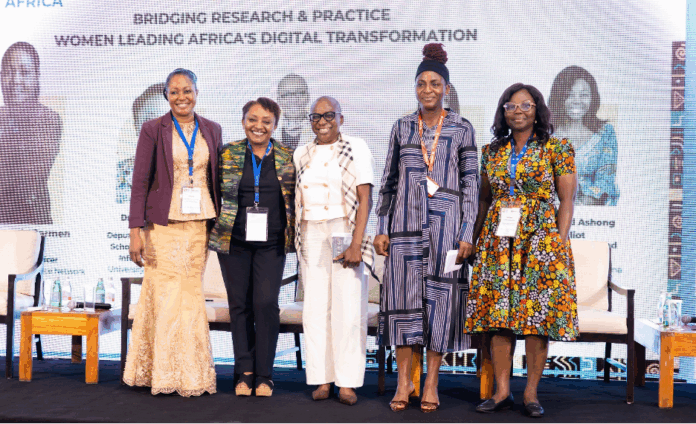
Ms. Bolarin made the call while speaking at the Future of Digital Countries (FDC) Africa Regional Summit in Accra. The panel discussion, themed “Bridging Research and Practice: Women Leading Africa’s Digital Transformation,” was held at the Kempinski Gold Coast City Hotel.
She argued that evidence-led innovation is hampered by a lack of collaboration between industry and academia. “Most research findings and reports sit on shelves in school libraries,” she stated. “To bridge this gap, we need a dynamic two-way collaboration to inform each other.”
According to Ms. Bolarin, telecom companies possess valuable anonymised data that can enrich research, while research findings, when shared with the tech industry, can ensure digital inclusion solutions are practical and effective.
She highlighted Telecel Foundation’s “Data for Good” partnership as a successful example, providing anonymised mobility insights during the COVID-19 pandemic and the Akosombo Dam spillage to support public health responses.
Addressing the need for greater female representation in shaping Ghana’s digital future, Ms. Bolarin emphasized that the digital agenda must be designed with deliberate gender inclusion at the policy-making level. “There’s nothing to celebrate when it’s the first time a woman gets a position. It’s rather a call to action to open the door for other women,” she said. “Until more women sit on policy boards, research councils, and strategy teams, our insights won’t shape national outcomes.”
Ms. Bolarin detailed Telecel Ghana’s internal initiatives to foster a gender-inclusive digital workforce. She revealed that women comprise 50 percent of the company’s senior leadership team. “We are helping to correct the structural and cultural imbalances, not just externally but internally as well, with supportive policies like the Reconnect initiative,” she added, explaining that Reconnect supports women returning to work after breaks for childbirth or personal reasons.
Externally, Telecel Foundation’s “GrowGirls in STEM” and “DigiTech Academy” programs aim to increase female participation in robotics and coding, achieving 70 percent female involvement in upper primary and junior high schools. The company’s Female Engineering Students Scholarship Programme (FESSP) has also provided financial aid, mentorship, and tech tools to over 100 female engineering students at the tertiary level.
Furthermore, Telecel introduced a “Women in Business” package last year, offering funding, insurance, training, networking, and market access to support female-led Small and Medium Enterprises (SMEs).
Ms. Bolarin stressed that addressing Ghana’s digital gender gap requires a collective effort. “Telecel is ready to collaborate with key stakeholders to build digital systems that are more inclusive and more relevant to Ghana’s digital future,” she concluded.
The summit, which brought together policymakers, telecom and tech executives, academic researchers, innovators, and civil society actors, also featured discussions on strengthening digital governance and cybersecurity, building robust digital infrastructure, and ensuring inclusive digital systems for socio-economic growth.
The panel also included Dr Azeb Tadesse, Deputy Director of the Graduate School of Education and Information Studies at the University of California, Los Angeles; Dr Olubunmi Ajayi, Chief Executive Officer of Maddison Pine; and Dr Maud Ashong Elliot, Lecturer at UPSA and President of the Internet Society Ghana Chapter.
Image Source: MYJOYONLINE