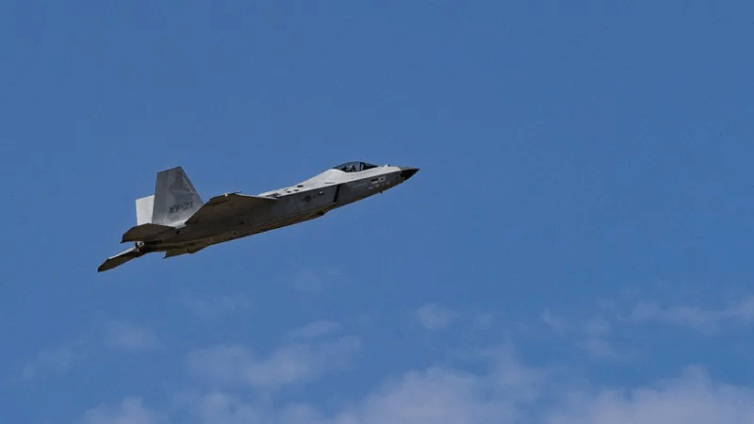
South Korea has formally protested to China and Russia after their military aircraft entered the Korean Air Defense Identification Zone (KADIZ) on Tuesday.
According to Seoul, seven Russian and two Chinese warplanes briefly entered the zone, prompting the South Korean military to scramble fighter jets as a precautionary measure. Officials clarified that the aircraft did not violate South Korean airspace.
The KADIZ, like similar zones established by other countries, requires foreign aircraft to identify themselves, but it does not represent sovereign airspace under international law. This latest incident follows a similar deployment of South Korean fighter jets in March, responding to Russian aircraft entering the zone.
A Joint Chiefs of Staff official, speaking to South Korean media, stated that the Russian aircraft entered the KADIZ near Ulleung Island and Dokdo, while the Chinese aircraft approached near Ieodo. The aircraft from both nations subsequently regrouped in the airspace close to Japan’s Tsushima Island.
South Korea’s Defence Ministry affirmed its commitment to actively responding to aircraft activity within the KADIZ, ensuring compliance with international law. “Our military will actively respond to aircraft activities from neighbouring countries in the Kadiz in compliance with international law,” the ministry said in a statement on Wednesday.
The incident occurs against a backdrop of ongoing territorial disputes. Both Japan and South Korea, as well as North Korea, lay claim to the Dokdo island grouping. Ieodo, a submerged rock south of Jeju Island, is also contested between South Korea and China, with both countries including it within their respective air defence zones.
China confirmed the joint air patrol with Russia, stating it was conducted in the East China Sea and Western Pacific airspace. A national defence spokesman explained that the exercise is a regular part of the annual cooperation plan between Beijing and Moscow, aimed at addressing regional challenges and maintaining stability.
Since 2019, Chinese and Russian aircraft have repeatedly entered the KADIZ without prior notification, often during similar joint exercises. Russia, however, does not recognize the validity of South Korea’s air defence zone, deeming it unilaterally established and therefore not legally binding.
Image Source: MYJOYONLINE