Teenagers Buried Alive in Mine Collapse While Seeking Gold
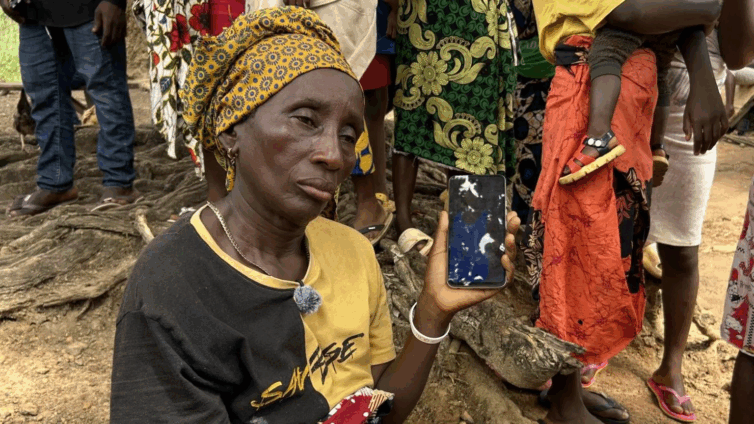
A wave of grief has engulfed the Sierra Leonean village of Nyimbadu following the tragic deaths of two teenage boys in a gold mining accident. Mohamed Bangura, 16, and Yayah Jenneh, 17, lost their lives when a makeshift pit collapsed on them while they were searching for gold.
The incident, which occurred on Tuesday, is the third fatal mine collapse in the Eastern Province in the last four years, bringing the total number of child fatalities to at least five. According to headteachers and community activists, an increasing number of children are abandoning their education to participate in the dangerous, yet potentially lucrative, artisanal gold mining trade.
Historically known for diamond mining, the Eastern Province has seen a surge in informal gold mining as diamond reserves dwindle. Locals are digging wherever they suspect gold deposits, often on farmland, in abandoned graveyards, and along riverbeds. While some areas are operated by formal companies, the majority of the landscape is scarred by unregulated pits, some reaching depths of 4 meters (13 feet).
The perilous conditions are driven by economic hardship. Most families in Nyimbadu depend on small-scale farming and petty trading, with limited alternative employment opportunities. The prospect of earning extra income is a powerful draw, despite the known risks.
Yayah Jenneh’s mother, Namina Jenneh, a widow and mother of six, spoke of her devastation. She admitted to introducing her son to mining but expressed regret, stating: “He didn’t tell me he was going to that site – if I had known I would have stopped him.” She recounted begging for an excavator to clear the debris after the collapse, but it was too late to save her son.
“She scrolls through pictures of her son, a boy with bright eyes who supported her,” a reporter observed, highlighting the emotional toll on the family.
Local child protection activist, Sahr Ansumana, emphasized the desperation driving parents to allow, and sometimes encourage, their children to mine. “If you ask some parents, they’ll tell you there’s no other alternative. They are poor, they are widows, they are single parents,” he said. “They have to take care of the kids. They themselves encourage the kids to go and mine. We are struggling and need help. It’s worrying and getting out of hand.”
Despite the tragedy, mining activity has resumed. The day after the funerals, children and adults were once again seen sifting through sand and excavating the earth in search of gold. Seventeen-year-old Komba Sesay, who dreams of becoming a lawyer, explained his predicament: “There is no money,” he said. “That is what we are trying to find. I am working so I can register and sit my [high school] exams. I want to return to school. I’m not happy here.” He earns a meager $3.50 (£2.65) per week, far below the country’s minimum wage, but hopes for a bigger find.
The situation extends beyond school children. Roosevelt Bundo, headteacher of Gbogboafeh Aladura Junior Secondary School in Nyimbadu, revealed that “teachers also leave classes to go to the mining sites, they mine together with the students,” driven by the superior earning potential.
The government, through Information Minister Chernor Bah, acknowledges the challenges and states its commitment to education. “We spend about 8.9% of our GDP, the highest of any other country in this sub-region, on education,” he said, outlining investments in teachers, school-feeding programs, and subsidies. However, on the ground, the immediate need for survival often outweighs long-term policy goals.
While charities and activists attempt to redirect children back to school, the lack of viable income alternatives keeps them returning to the pits. The loss of Mohamed and Yayah represents not just the death of two young men, but the erosion of hope for an entire generation. “We need help,” Mr Ansumana pleaded. “Not prayers. Not promises. Help.”
Image Source: MYJOYONLINE