Teenagers Buried Alive in Mine Collapse While Seeking Gold
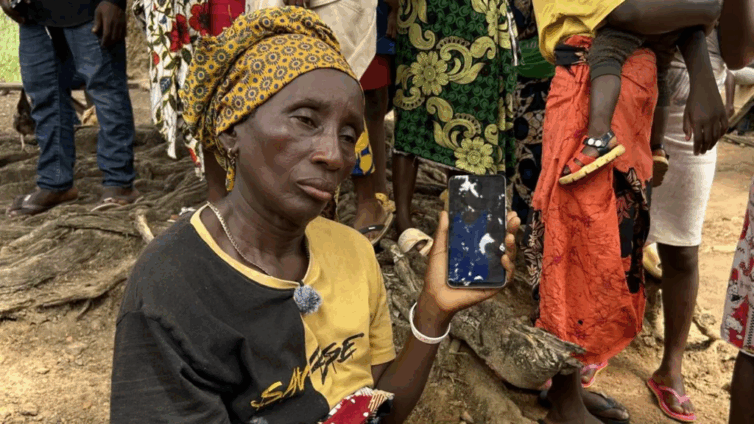
A wave of grief has descended upon the Sierra Leonean village of Nyimbadu, as residents mourn the deaths of two teenage boys killed in a gold mining accident.
Mohamed Bangura, 16, and Yayah Jenneh, 17, lost their lives after a makeshift gold pit collapsed on them while they were attempting to earn money for their families. The tragic incident occurred on Tuesday, leaving the community reeling.
This latest disaster marks the third fatal mine accident in the Eastern Province in the last four years, with at least five children now confirmed dead. The increasing number of children abandoning school to engage in the dangerous practice of artisanal gold mining is raising serious concerns among headteachers and community activists.
Historically, the Eastern Province was known for its diamond mines. However, with dwindling diamond reserves, informal gold mining has surged in recent years. These mining sites, often unregulated and unsafe, are appearing across the landscape – on farmland, in old graveyards, and even along riverbeds.
While formal mining companies are scarce in the region, the areas they deem unprofitable are now riddled with these perilous pits, some reaching depths of up to 4 meters (13 feet). Similar dangers exist in many African countries where unregulated mining is prevalent.
For families in Nyimbadu, who largely depend on small-scale farming and petty trading, the lure of quick money from gold mining is strong, despite the inherent risks. Yayah Jenneh’s mother, Namina Jenneh, a widow supporting five other children, admitted she had introduced her son to mining, but expressed her devastation. “He didn’t tell me he was going to that site – if I had known I would have stopped him,” she lamented.
According to Ms. Jenneh, she immediately pleaded with someone to call for help when she heard about the collapse. “When he arrived, he cleared the debris that had buried the children,” she recounted, her voice filled with sorrow. “But it was too late to save them.” She clutched her phone, scrolling through pictures of her bright and supportive son.
Sahr Ansumana, a local child protection activist, described the desperate situation facing parents. “If you ask some parents, they’ll tell you there’s no other alternative. They are poor, they are widows, they are single parents,” he explained. “They have to take care of the kids. They themselves encourage the kids to go and mine. We are struggling and need help. It’s worrying and getting out of hand.”
Despite the tragedy, the dangerous practice continues. The day after the funerals, children, including 17-year-old Komba Sesay, were back at the mining sites, sifting through sand and earth in search of gold. Komba, who dreams of becoming a lawyer, explained his predicament. “There is no money,” he said. “That is what we are trying to find. I am working so I can register and sit my [high school] exams. I want to return to school. I’m not happy here.”
His earnings are minimal – approximately $3.50 (£2.65) per week, less than half the country’s minimum wage. However, he persists, hoping for a lucky strike that could yield up to $35 on a good day. He is aware of the risks, having witnessed friends injured in similar collapses, but feels he has no other option.
The impact extends beyond the children themselves. Roosevelt Bundo, the headteacher of Gbogboafeh Aladura Junior Secondary School, revealed that even teachers are leaving classrooms to join the gold rush, mining alongside their students. “Their government pay cannot compete with what they may be able to earn from gold mining,” he stated.
The government acknowledges the issue. Information Minister Chernor Bah told the BBC that the state remains committed to education, highlighting that 8.9% of the country’s GDP – the highest in the sub-region – is allocated to education, including funding for teachers, school-feeding programs, and subsidies.
However, on the ground, the immediate need for survival often outweighs long-term policy goals. Charities and activists are working to remove children from the mines and return them to school, but without viable economic alternatives, the pits remain a powerful draw.
The families of Mohamed and Yayah are left with nothing but grief and a stark reminder of the price of desperation. The loss represents not just two young lives, but the erosion of hope for an entire generation. “We need help,” Mr. Ansumana pleaded. “Not prayers. Not promises. Help.”
Image Source: MYJOYONLINE