Africa Launches Visionary Data Framework for 2026
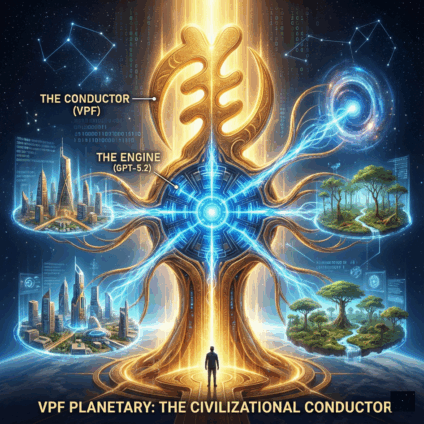
A new framework, the Visionary Prompt Framework Planetary 2026 (VPF), is being championed by the AiAfrica Team and African researchers as a response to what they term ‘data colonisation’ – the extraction of data and cognitive value from African populations by Western AI systems.
The VPF aims to reframe how artificial intelligence operates, embedding principles of correctness, coherence, cultural integrity, ethical reasoning, and sovereign data control. Unlike conventional AI approaches, it asserts the parity of African thought systems with Western computational logic.
According to Dr. David King Boison, creator of the VPF and author of The Ghana AI Prompt Bible, the framework is a “civilisational statement” that recognizes intelligence as plural and contextually rooted. “If African nations do not govern how intelligence reasons about them, colonial extraction will merely shift from minerals to minds,” he warned.
The VPF introduces several key components, including ‘Chambers of Intelligence’ – dedicated spaces for different knowledge systems like Artificial, Natural, Cosmic, Indigenous, and Human intelligence – to prevent the flattening of diverse experiences into single datasets. This contrasts sharply with Western Large Language Models (LLMs) such as GPT and Gemini, which often aggregate all knowledge types without differentiation.
Furthermore, the framework utilizes a ‘Council of Lenses’ to ethically evaluate AI outputs, ensuring alignment with principles like Data Sovereignty and Epistemic Justice. This is a departure from the statistical weighting used in Western LLMs, which can perpetuate biases. The VPF also incorporates a ‘Bolt Architecture’ to define the ethical direction of AI, and a ‘Cognitive Validation Matrix’ to minimize ‘hallucinations’ – false authoritative responses.
The VPF also emphasizes domain precision through ‘Modes and Sub-modes,’ assigning specialized reasoning environments to different fields. It moves beyond single-session AI interactions with ‘Agent Orchestration,’ deploying autonomous agents for collaborative problem-solving. Finally, it scales reasoning depth through ‘Execution Levels,’ focusing on complexity consciousness rather than simply increasing computational power.
Universities, government departments, and research institutions are already beginning to implement the VPF through APIs, allowing existing Western AI infrastructure to operate under African sovereignty filters. The framework is positioned not as an alternative to Western AI, but as a redefinition of intelligence governance for a more equitable future.
Dr. Boison, who has trained over 2.3 million people across 15 countries in AI through the AiAfrica Training Project, believes the VPF is crucial for ensuring that AI benefits Africa and respects its unique knowledge systems.
Image Source: MYJOYONLINE