Ghana Parliament Approves $1.6 Billion Budget Amid Concerns Over Insufficient Funding
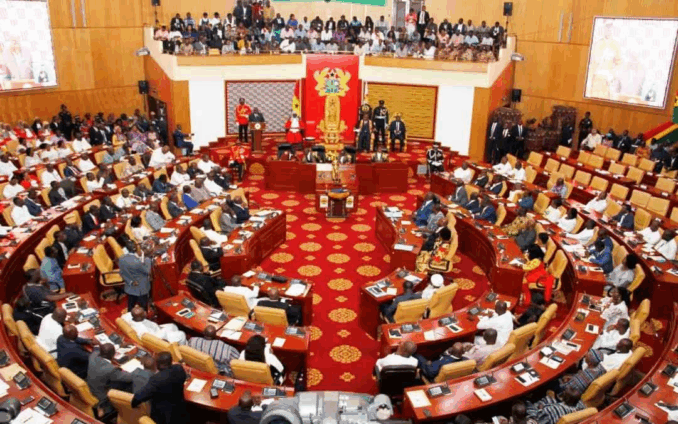
Parliament has approved GH¢1.619 billion for its 2026 operations, but lawmakers across the political divide are voicing concerns that the amount is insufficient to ensure the legislature functions effectively and independently.
The approved budget is intended to cover a wide range of expenses, including salaries and allowances for MPs and staff, goods and services, committee work, upgrades to ICT and the e-Parliament system, repairs and maintenance of facilities, research support, documentation, and activities related to constituencies.
During a debate on the Committee on Parliamentary Affairs’ report on Wednesday, December 11, 2025, MPs lamented persistent operational challenges. These include a lack of dedicated constituency offices, the deteriorating condition of facilities at Job 600, and inadequate resources for crucial oversight functions.
The Committee on Parliamentary Affairs, in presenting the motion, emphasized that the GH¢1.619 billion allocation falls significantly short of the GH¢4.6 billion originally proposed by Parliament. They argued that these cuts will hinder vital projects like establishing constituency consultancy offices and addressing the urgent need for repairs to facilities, including elevators and washrooms.
The committee further cautioned that continued underfunding will compromise the efficiency of Parliament and appealed to the Ministry of Finance to explore options for a dedicated revenue stream or increased mid-year budget allocation to safeguard the legislature’s independence.
Kojo Oppong Nkrumah, MP for Ofoase-Ayirebi, advocated for a fixed percentage of national revenue to be allocated to Parliament, mirroring the funding models for the GETFund and the National Health Insurance Fund. “Despite its central role in oversight, Parliament has chronically suffered from insufficient budgetary support,” he stated, highlighting the lack of proper constituency offices and the dilapidated state of Job 600.
Mr. Oppong Nkrumah explained that MPs are often compelled to hold meetings with constituents in unsuitable locations due to the lack of adequate facilities, pointing to deficiencies like poor ventilation and the absence of basic equipment like printers. He urged the Executive branch to prioritize parliamentary resourcing during the upcoming mid-year review.
Dr. Abdul Kabiru Tiah Mahama, MP for Walewale, expressed concern that Parliament is overly reliant on the Executive for funding, receiving approximately 40% of its requests. “Both the Minister and his deputy are members of this House. They witness firsthand what MPs go through,” he lamented. He also noted that Parliament lacks accessibility features for persons with disabilities, contrasting Ghana’s situation with that of Kenya and Nigeria, where he said lawmakers receive significantly better institutional support.
Isaac Adongo, MP for Bolgatanga Central, cautioned that resolving Parliament’s funding issues will require sustained effort over several years, as successive governments have failed to adequately address the problem. “Parliament of Ghana must be resourced over time, and we do believe that our own Finance Minister, who is a member and once a leader of this House, would ensure that the improvements we are seeing this year will continue in subsequent years,” Mr. Adongo said.
Defending the allocation, Deputy Minister of Finance and MP for Asuogyaman, Thomas Nyarko Ampem, described it as equitable, given the government’s current fiscal constraints. He pointed out that cuts were implemented across all ministries, departments, and agencies, including the Executive and Judiciary.
Mr. Ampem noted that Parliament actually experienced the highest percentage increase in allocation – over 45% from 2025 to 2026 – and that budget releases for 2025 were fully disbursed, a departure from previous years. He assured the House that the 2026 funds, including capital expenditure, would be released on schedule to address the identified institutional challenges and urged MPs to utilize the resources prudently.
Image Source: MYJOYONLINE