Northern Ghana Youth Digitize Local Languages Online
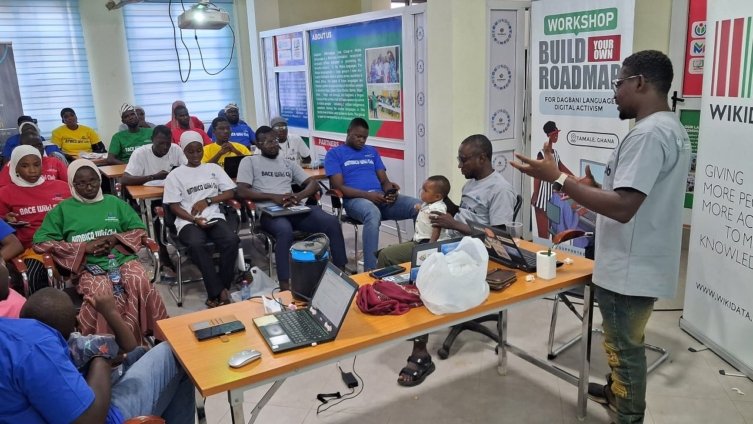
Digital‑savvy volunteers in northern Ghana are using the internet to digitise local languages such as Dagbani, Kusaal, Gurene, Dagaare and Waali, aiming to preserve cultural identity for future generations.
The effort began with the Dagbani Wikimedians User Group, a small collective determined to put Dagbani on Wikipedia. Executive Director Sadik Shahadu says the group started modestly but “with a big dream to make Dagbani visible on the internet and on Wikipedia.”
Today the initiative has expanded, inspiring similar communities across the region. “Our goal is to make sure future generations can read, learn, and communicate in Dagbani online,” Shahadu adds.
Advocacy Officer Rukaya Hamidu stresses that volunteering is open to all, regardless of gender, age or education. “Being a volunteer for Wikipedia doesn’t depend on your gender, age, or education level. Everyone is welcome,” she explains.
When people see their language online, they feel pride, she says. “It tells them they belong to something bigger.”
Project Coordinator Musah Fuseini highlights the importance of the digital space. “The digital space has come to stay. We must project our languages and cultures to the world,” he states.
Fuseini and his team train young people to create and edit Wikipedia articles in local tongues, noting that they are “building digital skills and at the same time protecting our heritage.”
Grant Manager Mohammed Kamaldeen Fuseini secures funding, acknowledging the Wikimedia Foundation as the main sponsor. “My job is to find grants and ensure the group has the funds to support its activities,” he says.
Social Media Manager Fuseini Mugisu Suhuyini spreads the group’s work via Facebook, X and YouTube, while volunteer recruiter Abdul‑Rafiu Fuseini adds, “I make sure our work reaches more people on social media so that others can learn to contribute.”
Success with Dagbani has encouraged other language groups to join. “Now, we have Gurene, Kusaal, Dagaare and Waali joining us,” Shahadu confirms, describing the movement as “a group of communities each keeping their ancestors’ voices alive.”
In Bawku, the Kusaal Wikimedians Community, led by co‑lead Engr. Mahmud Mohammed‑Nurudeen Winna’amzua, aims to preserve Kusaal digitally. “We want to make sure our language is preserved, maintained, and passed on digitally,” he says. Communications Lead Abande Isaac adds, “Our dream is that one day anyone in the world can learn Kusaal just by going online.”
Bolgatanga’s Gurene Wikimedians, headed by Daniel Abugri, and Wa’s Waali Wikimedians, led by Zakaria Bukari, are teaching volunteers to edit articles in their languages, keeping the heritage alive.
Challenges remain. Slow internet and limited technology sometimes disrupt training sessions, notes Engr. Winna’amzua. Additionally, the lack of standardised spelling in some languages hampers editing, according to Abugri: “Some languages don’t have standard spellings yet, and that makes editing a bit difficult.”
University students and community volunteers continue to collaborate, ensuring that the voices of their ancestors will be heard online for years to come.
Image Source: MYJOYONLINE