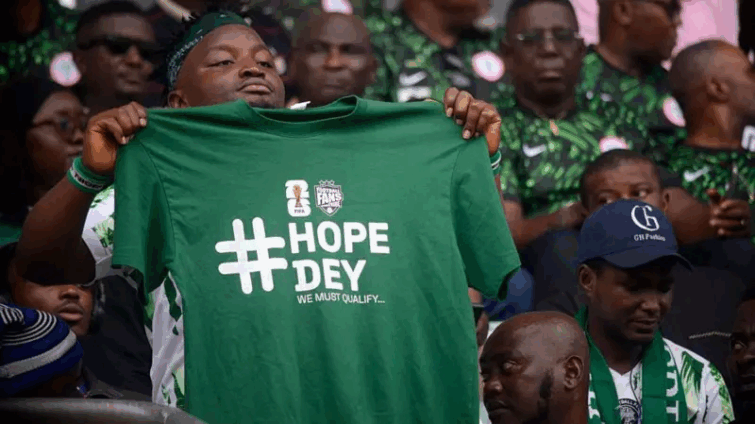
Nigeria’s hopes of qualifying for the 2026 World Cup are hanging in the balance as they lodge a formal complaint with FIFA alleging that the Democratic Republic of Congo (DRC) fielded ineligible players in their crucial play-off match last month.
The DRC secured their spot in the final qualifying round, scheduled for March, after defeating the Super Eagles on penalties. This intercontinental qualifier will determine two of the final teams to participate in the tournament hosted by Canada, Mexico and the United States.
The Nigerian Football Federation (NFF) alleges that several DRC players who recently switched their international allegiance were ineligible due to Congolese law prohibiting dual nationality.
Players like Aaron Wan-Bissaka and Axel Tuanzebe, who were part of the DRC squad, are at the centre of the dispute. According to NFF General Secretary, Mohammed Sanusi, “We contend that FIFA was deceived into clearing them. The Congolese rule (law) says you cannot have dual nationality, but some of their players have European and French passports. There is what we consider to be a breach of FIFA’s regulations. We are saying it was fraudulent.”
The NFF confirms it has submitted detailed documentation and legal arguments to FIFA in support of its protest.
However, the Congolese Football Federation (Fecofa) has swiftly dismissed the allegations, labelling Nigeria’s appeal as a desperate attempt to qualify through unconventional means. A statement on the Leopards’ official social media platform read: “The World Cup must be played with dignity and confidence. Not with lawyers’ tricks.” The post further described the Nigerian team as “bad losers” and their complaint as demonstrating poor sportsmanship.
FIFA statutes outline the process for players changing national associations, requiring a written, substantiated request approved by the Players’ Status Committee. While FIFA generally allows players to hold multiple passports, this conflicts with the stipulations of Congolese law.
FIFA could respond to the protest in several ways. They could dismiss the NFF’s claim, uphold the DRC’s qualification, investigate and impose administrative sanctions like fines, or, in more severe cases, impose sporting sanctions such as awarding the match to Nigeria. Recent precedents include FIFA deducting six points from Equatorial Guinea for fielding an ineligible player, Emilio Nsue, and overturning South Africa’s victory against Lesotho due to a suspended player.
The outcome of this case remains uncertain, but it has significant implications for both nations’ chances of appearing at the 2026 World Cup. The football world now awaits FIFA’s decision, with the Super Eagles’ World Cup dreams potentially resting on the interpretation of eligibility rules and national laws.
Image Source: MYJOYONLINE