Regional Agribusiness Leaders Discuss Inclusive Growth Strategies
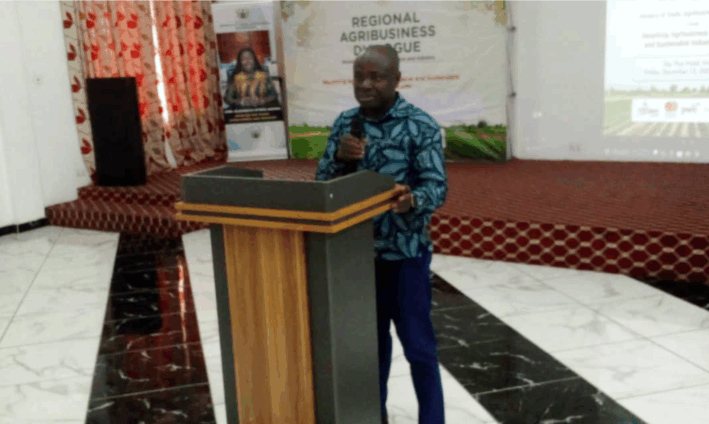
The Ministry of Trade, Agribusiness and Industry is collaborating with the Alliance for a Green Revolution in Africa (AGRA) Ghana and other partners to develop a new national agribusiness policy, following a Regional Agribusiness Dialogue held in Ho for stakeholders in the Volta and Oti Regions on Friday, December 12.
The dialogue, themed “Resetting Agribusiness for Inclusive and Sustainable Industrial Growth,” brought together farmers, processors, aggregators, agribusiness owners, policy actors, and development partners to discuss strengthening Ghana’s agribusiness sector.
Kwame Oppong-Ntim, Director of Agribusiness at the Ministry, emphasized the need to harmonize previously fragmented initiatives. “Successive governments have rolled out important agribusiness programmes, but they were scattered. Now that our Ministry has been tasked to lead agribusiness, a national policy is needed to guide our direction,” he explained.
The proposed policy aims to tackle key challenges such as post-harvest losses, inadequate storage and cold chain systems, and inconsistent raw material supplies. “After harvest, we experience glut, and months later scarcity. In between, a lot of produce gets spoiled. We want to strengthen cold storage facilities and processing units so that surplus produce can be preserved and processed,” Mr. Oppong-Ntim stated.
Government plans include reviving and expanding the One District, One Warehouse programme to boost regional storage and processing capacity. The policy will also focus on commodity specialization based on regional strengths, offering tailored support. “If tomatoes thrive in Agotime, we can establish tomato processing or storage facilities there. If rice performs well in the Volo or Aveyime enclave, rice mills can be sited in those areas,” the Director added.
Mr. Oppong-Ntim assured farmers that the policy would protect their investments and improve market access. It will prioritize technology adoption, youth participation, agro-processing expansion, and enhanced road infrastructure to reduce post-harvest losses exacerbated by poor transport networks.
Furthermore, the Ministry aims to reduce reliance on imports by boosting local production. “Imports occur largely because of shortages. Once production is stable and sufficient, we can gradually reduce imports without driving prices up,” he said, adding that innovative financing models are being explored to provide farmers with capital.
Dr. Betty Annan, Country Director of AGRA Ghana, highlighted their support for the policy development. “Our support is catalytic. We want to help government develop a national policy that will guide agro-industrial development, attract investment and provide incentives,” she said.
Dr. Annan stressed the importance of nationwide consultations in shaping the policy. “We cannot sit in Accra and design a policy for the entire country. We must listen to farmers, processors, traders and industry players in every region,” she noted, adding that feedback from Volta and Oti Regions will be essential.
Image Source: MYJOYONLINE