South Africans Fight to Reclaim Diamond-Rich Land
A stark contrast defines South Africa’s remote west coast, where breathtaking natural beauty gives way to a desolate, scarred landscape – a legacy of decades of diamond mining. The indigenous Nama community, whose ancestral lands lie within this region known as Namaqualand, are questioning where the riches from their land have gone.
The 800km journey north from Cape Town initially unveils stunning vistas, but these gradually dissolve into what many describe as a “pockmarked, lunar-like” terrain. While some of the hundreds of millions earned from diamond extraction contributed to national development, very little, it seems, has remained within the local communities.
The Nama people, whose heritage traces back to the Khoi and San – considered the original inhabitants of this part of the world – have long felt marginalized. Despite a significant legal victory in 2003 regarding land and mineral rights in the Richtersveld area, many maintain they have yet to experience substantial benefits.
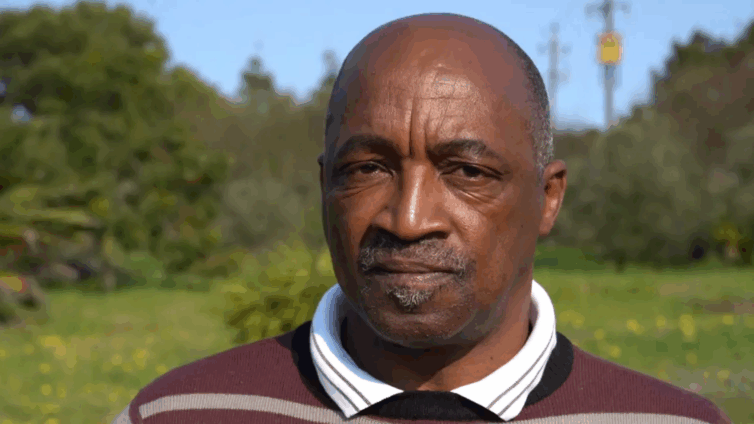
Standing amongst the ruins of a former mineworks in Alexander Bay, Andries Josephs, a former diamond industry worker, expressed his disillusionment. “There’s no work, that’s the problem. The people have stagnated and everything has gone backwards. The buildings have collapsed. Unemployment is sky-high,” he stated.
The decline of the diamond industry in recent years, with most readily accessible gems now extracted, has exacerbated socio-economic challenges in the area. Basic services are strained; a residential zone near the derelict mine consists of a few homes, a dilapidated church, and a hospital in need of repair.
Local authorities acknowledge the infrastructure deficiencies, citing “dilapidated” water and electricity systems, alongside poor road conditions that hinder access to essential healthcare.
The discovery of diamonds a century ago sparked a rush that fundamentally altered the land. However, the Nama were already aware of the gems’ presence. “In our family, they used to teach the children to count with diamonds,” recalls Martinus Fredericks, appointed as the Nama leader in South Africa in 2012.
Mr. Fredericks explains that the Nama were historically herders and traders until European settlers arrived and disrupted their way of life. Their land was annexed by the Cape Colony in the mid-19th century, and following the diamond finds in the 1920s, they were displaced from areas surrounding the Orange River.
This situation persisted through the apartheid era and continued even after the establishment of democratic rule in 1994. The African National Congress (ANC)-led government justified sharing the diamond wealth nationally, a decision that met with strong opposition from the Nama community.
“You go to an area like the Richtersveld… you see how destitute the people are,” Mr. Fredericks lamented. “They are unemployed, living from hand to mouth without any real prospects. I’m not against development, but it must benefit the community as partners.”
The Nama won a landmark legal battle against the state and Alexkor, a state-owned mining company, in 2003, with the Constitutional Court affirming their inalienable rights to their ancestral land and its mineral resources. However, this victory was followed by a controversial deal in 2007.
Alexkor secured an agreement with the Richtersveld Communal Property Association (CPA), granting the company 51% of the mineral rights, while the community and the Richtersveld Mining Company received 49%. Mr. Fredericks contests the legitimacy of this deal, arguing the CPA did not adequately represent the broader Nama community and that, after 20 years, the community has seen no financial return.
Alexkor maintains that payments have been made, totaling 190 million rand ($11m; £8.4m) as “reparation” and 50 million rand ($2.9m) as a development grant. However, Dineo Peta, the current Chairperson of Alexkor, has publicly acknowledged the community hasn’t received “the full economic benefit of the operations,” attributing this to “maladministration and malfeasance” within the company.
These claims of corruption tie back to investigations into “state capture,” as detailed in a 2022 commission report. Those findings are currently under investigation, but no convictions have resulted yet. During a recent parliamentary hearing, a lawmaker, Bino Farmer, revealed the Department of Rural Development described the CPA as “dysfunctional” and noted over 300 million rand had been paid without reaching the community.
Repeated attempts by the BBC to reach the CPA for comment have been unsuccessful. Mr. Fredericks emphasized, “We should have been in a much better position because we are the original custodians of the land.”
Beyond the financial concerns, the environmental impact of diamond mining is a major source of worry. “Big companies come in, they rip up the land, they take whatever they can, and they just move off without doing the rehabilitation, leaving the receiving community to deal with the after-effects of their mining,” he alleges. The Nama, he asserts, traditionally mined sustainably, understanding both resource utilization and land restoration.
Abandoned mines dot the coastline, with limited evidence of rehabilitation. Mining giants, Trans Hex and De Beers, have both sold their interests in west coast mines. Trans Hex stated they fulfilled their rehabilitation obligations before selling, while De Beers committed 50 million rand ($3m) to support remediation efforts in 2023 as part of their sale agreement.
There are growing concerns that environmental damage may spread southwards as mining companies expand their operations. Attempts to secure comment from the Department of Forestry, Fisheries, and the Environment were largely unsuccessful; the former minister was unavailable, and the new minister, Willie Aucamp, has only recently been appointed.
However, Mr. Fredericks remains resolute. “The government should return what is ours,” he demands. He has initiated legal proceedings against the CPA, challenging its legitimacy and seeking accountability for the missing funds. “A Nama people cannot be a Nama people without control of Nama land. A Nama person cannot be separated from Nama land because of the intrinsic link between the person and the land.”
Image Source: MYJOYONLINE