Lands Minister Promotes Green Mining to Combat Galamsey
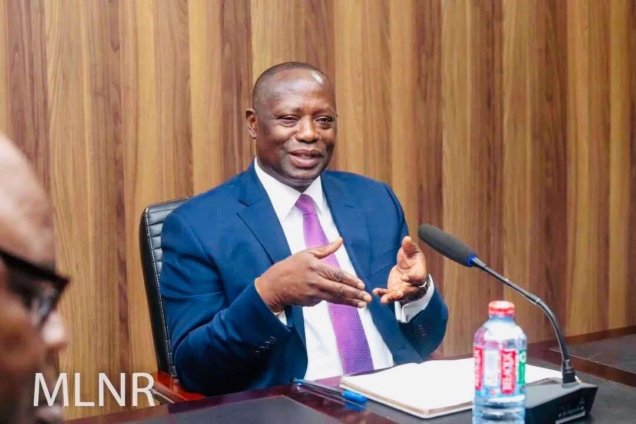
The Ministry of Lands and Natural Resources has declared “Green Mining” as the definitive strategy to combat the escalating threat of illegal mining, commonly known as galamsey, to Ghana’s sustainable development.
Speaking at a training workshop for journalists on “Green Mining: Best Practices for Responsible Reporting” held at Peduase on Thursday, December 11, 2025, Mr. Maxwell Klu, Deputy CEO of the Minerals Commission, representing the Lands Minister Emmanuel Armah-Kofi Buah, outlined the comprehensive approach needed to protect the nation’s resources.
Mr. Klu emphasized that Green Mining is not simply a regulatory hurdle, but a sustainable method of mineral extraction designed to significantly minimize environmental harm. He stated that this approach is a direct response to the severe ecological damage and widespread socio-economic challenges caused by galamsey.
Key elements of Green Mining include minimizing environmental impact through renewable energy use, waste reduction, water conservation, and eco-friendly extraction techniques. It also prioritizes maximizing efficiency via resource recovery, demonstrating social responsibility through community engagement and land rehabilitation, and actively reducing the carbon footprint of mining operations.
According to Mr. Klu, Ghana’s existing legal framework provides robust tools to tackle illegal mining and promote sustainable practices. The Mineral and Mining Act 2006 (Act 703, as amended by Act 995) prescribes penalties of 15 to 25 years imprisonment for mining without a license, and prohibits mining in protected areas, with measures like excavator import controls in place.
The Environmental Protection Act 2025 (Act 1124) further strengthens environmental safeguards. Ghana’s commitment extends to international agreements, having ratified the United Nations Framework Convention on Climate Change, the Paris Agreement, and the Vienna Convention.
The government is also actively pursuing legislative changes, with an instrument to revoke Legislative Instrument (LI) 2462 – which allows the President to grant mining licenses in forest reserves – having been laid before Parliament. This move is part of a broader strategy encompassing the Responsible Cooperative Mining and Skill Development Programme, and the work of the National Anti-Illegal Mining Operations Secretariat (NIMOS).
Mr. Klu highlighted the leading role of major international mining companies in Ghana in adopting world-class Green Mining standards. He cited the recent 11th Ghana Mining Industry Awards 2025, where Newmont Ghana Gold Limited (AHAFOSAF Mine) received the “Best Green Mine” award for its strong carbon reduction performance, effective land management, active reclamation, and biodiversity restoration efforts.
Anglogold Ashanti also received recognition for “Exceptional Performance” demonstrating a commitment to environmental compliance and sustainable technologies, while GoldFields Ghana Limited (Tarkwa and Damang) was similarly lauded for its focus on dry-brim tailings management and innovative sustainable mining practices.
The Ministry is now facilitating a mentorship program, pairing these award-winning companies with small-scale miners to help address the galamsey problem.
Addressing the journalists directly, Mr. Klu urged the “Fourth Estate of the Realm” to enhance their reporting on the mining sector. He stressed the need for technical knowledge of mining activities and enforcement, ethical and people-centred reporting, and a data-driven, investigative approach to uncovering illegal activities and reporting on reclamation efforts by the Ministry and NIMOS.
“Green mining is a shared mission,” Mr. Klu concluded. “I encourage you all to adopt a practical reporting checklist, regularly consult credible data sources, and foster multi-stakeholder conversations to keep the public informed, educated, and protected.”
Image Source: MYJOYONLINE