Ghana Loses Billions to Illicit Flows, Hurting Science Education
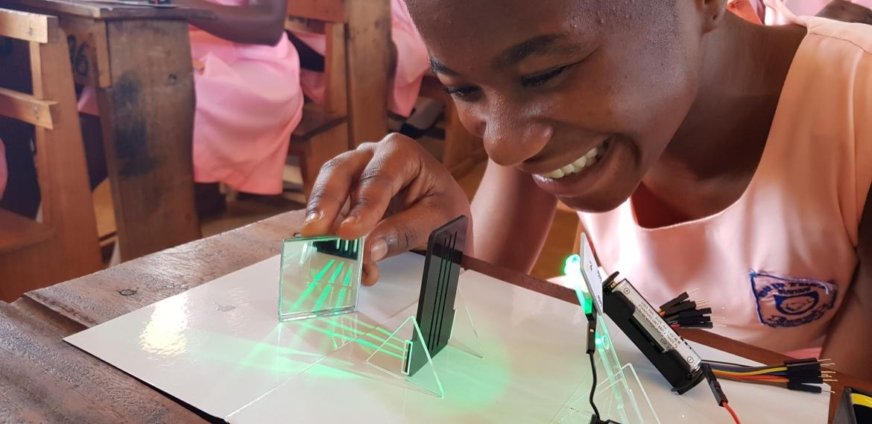
Mankranso Senior High School (SHS) and its surrounding community are celebrating a historic achievement after the school’s contestants secured a semi-final spot in the 2025 National Science and Maths Quiz (NSMQ).
The NSMQ, a highly competitive annual event, tests students’ knowledge in Biology, Physics, Chemistry, and Mathematics. Mankranso SHS, a Category C school in the Ahafo Ano Southwest District of the Ashanti Region, entered the tournament as underdogs but defied expectations to reach this milestone.
However, this success comes against a backdrop of severely limited resources. Within the school, science laboratories are described by teachers as “archaic” and are housed in what is commonly known as the “boys quarters.” Practical sessions are hampered by a lack of benches, stools, and essential apparatus.
“The facilities here are horrible. I decided to lift the school to a certain stage where we could get the platform to sell the school to the government, philanthropists and other stakeholders,” revealed Ibrahim Yussif Ofori, Quiz Coordinator for Mankranso SHS. “Some of the teachers call this place an advanced Junior High School. It doesn’t meet the criteria for SHS.”
The challenges faced by Mankranso SHS reflect a broader issue of underfunding in STEM education across Ghana. Despite successive governments prioritizing Science, Technology, Engineering, and Mathematics (STEM) for economic transformation, investment in research and development (R&D) remains inadequate.
Dr. Felix Frimpong, a Senior Research Scientist at the Council for Scientific and Industrial Research – Crops Research Institute (CSIR-CRI), highlighted the funding constraints hindering local research. “We need funds to escalate these works to the farms. We can’t only research them here and leave them on the field without the farmers benefiting. The government must invest more in research and development,” he stated, adding that his team recently grew Ghana’s first wheat grain despite a lack of governmental support.
A significant contributor to this funding shortfall is Illicit Financial Flows (IFFs), estimated to cost Ghana $1.4 billion annually. These flows, stemming from activities like money laundering and tax evasion, deprive the nation of crucial resources for development.
According to analysis, recovering these funds could dramatically increase investment in R&D and education. Recovering the $1.78 billion lost to trade-related IFFs in 2018 alone would be equivalent to 565 percent of Ghana’s current annual R&D budget. Similarly, reclaiming the $2.28 billion lost through gold smuggling annually would represent 724 percent of the current R&D spend.
Ing. Dr. Shadrack Kwadwo Amponsah, immediate past President of the Research Staff Association of CSIR, explained that the lack of funding forces researchers to rely on donor funding, often diverting them from their primary areas of expertise. “Any researcher that comes into the system that doesn’t get that support, they become prey to any of the donor funding. Some of us even end up switching from our main specialisation, and that is not good,” he noted.
The government has established a National Research Fund with a seed fund of GH₵50 million, expected to be operational in 2026. While welcomed as a step in the right direction, scientists argue that significantly more funding is needed to sustain local research.
Prof. Maxwell Darko Asante, Director of CSIR-CRI, emphasized the need for research funding to be integrated into the national agenda. “Research funding should fit into the national agenda so that we know exactly that we are all working towards one national goal. The ideal way is to have a budget for R&D because the world now is very competitive,” he said.
The success of Mankranso SHS in the NSMQ, therefore, serves as both a source of pride and a stark reminder of the urgent need for increased investment in STEM education and research in Ghana. Addressing IFFs and prioritizing local R&D are crucial steps towards achieving sustainable development and a brighter future for Ghanaian scientists and students.
This story received support from Oxfam in Ghana through DANIDA. Any financial assistance or support provided to the journalist has no editorial influence.
Image Source: MYJOYONLINE