Mahama Marks One Year of Accra Reset
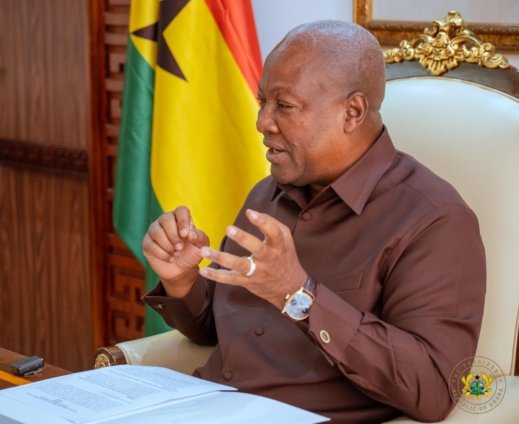
President John Dramani Mahama’s first year in office, beginning January 7, 2025, has been marked by significant economic recovery and structural reforms, signaling a departure from previous challenges.
Dubbed the “Accra Reset,” the administration has focused on streamlining government and restoring macroeconomic stability. Within 48 hours of his inauguration, President Mahama signed the Civil Service Executive Instrument 2025, reducing the number of ministries from thirty to twenty-three. This move is projected to save the nation approximately GH₵85 million over the next four years, according to officials.
The economic turnaround is evident in key indicators. The International Monetary Fund (IMF) concluded its Fifth Review of Ghana’s Extended Credit Facility in December 2025 with a “broadly satisfactory” verdict, releasing $385 million. More impressively, headline inflation has plummeted from 23.8% at the end of 2024 to 6.3% in November 2025 – the lowest since 2021.
The Ghana cedi has also demonstrated remarkable resilience, becoming one of the world’s strongest currencies in 2025. This is attributed to a substantial increase in gross international reserves, exceeding $11 billion – enough to cover nearly five months of imports. “The cedi’s stability is a testament to the prudent economic policies being implemented,” stated a Finance Ministry spokesperson.
Global financial institutions have acknowledged Ghana’s progress, with SP Global, Moody’s, and Fitch all upgrading the country’s sovereign credit rating, citing improved liquidity and reduced fiscal risks.
A cornerstone of President Mahama’s vision is the 24-Hour Economy, launched on July 2, 2025. This initiative, encompassing eight pillars, aims to unlock Ghana’s productive potential. The ‘Make 24’ component has already revitalized the Akosombo and Juapong textile plants, while ‘Connect 24’ focuses on improving transport infrastructure. The policy is expected to create 1.7 million jobs and reduce transportation costs by almost 18 percent.
The administration has also prioritized resource sovereignty, establishing the Ghana Gold Board in March 2025 to formalize and regulate the precious minerals trade, boosting foreign exchange inflows. Demonstrating a commitment to transparency, the Lithium Mining Agreement was withdrawn from Parliament for further review following engagement with civil society groups. “We want to ensure that any agreement regarding our natural resources benefits the Ghanaian people in the long term,” the President emphasized.
Social interventions have also been a key focus, including the removal of academic fees for first-year tertiary students and the distribution of over six million sanitary pads to schoolgirls. However, challenges remain. The 2025 WASSCE results showed a decline, and the energy sector debt stands at $8.4 billion, issues the government is addressing through audits and reforms. The illegal mining crisis, described by the clergy as an “ecocidal tragedy,” also requires urgent attention.
President Mahama’s first year in office represents a systemic approach to national development. Through the Accra Reset, the administration aims to build a resilient and self-reliant Ghana, founded on integrity, accountability, and excellence.
Image Source: MYJOYONLINE
New Posts

Advertisement
Trending