Lithuania Declares Emergency Over Belarus Balloons
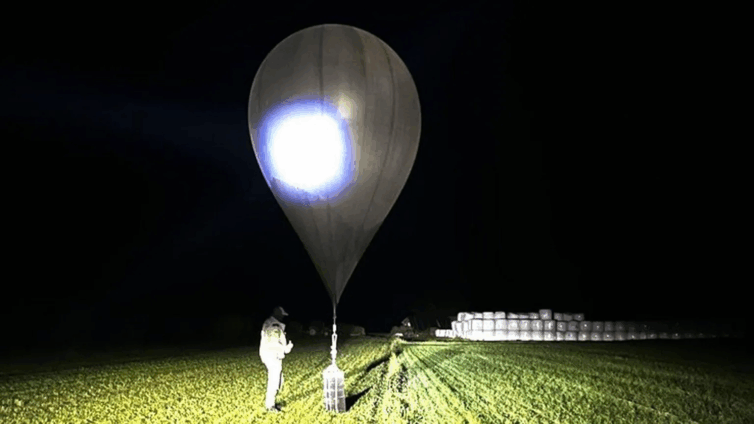
Lithuania has declared a nationwide emergency in response to repeated incursions of weather balloons carrying smuggled cigarettes from neighbouring Belarus, a move Prime Minister Inga Ruginiene has labelled a “hybrid attack.”
The Prime Minister strongly condemned the incidents, stating they pose a real risk to both national security and civil aviation. According to officials, approximately 600 balloons linked to smuggling and nearly 200 drones have violated Lithuanian airspace this year alone, leading to frequent closures of Vilnius Airport.
“We are talking about aviation security and international law and about the fact that such actions could be recognised as terrorism,” Ruginiene said last week, referencing both the balloon incursions and the subsequent blocking of Lithuanian trucks on Belarusian roads.
The emergency declaration, while stopping short of a full state of emergency – last invoked in 2022 following Russia’s invasion of Ukraine – grants Lithuanian armed forces expanded powers to respond swiftly and effectively.
Belarusian President Alexander Lukashenko, a key ally of Russian President Vladimir Putin, has denied any involvement, claiming the issue is politically motivated by Lithuania, a member of both the European Union and NATO. “What the Lithuanians are accusing Belarus of is impossible, it is unrealistic,” Lukashenko told Belarusian TV on Tuesday. He further questioned Lithuania’s intentions, asking, “Do they want to fight us?”
Lithuanian President Gitanas Nauseda, however, believes there is substantial evidence suggesting the balloon threat is a deliberate attempt to destabilize the country. This isn’t the first time Lithuania has accused Belarus of provocation; four years ago, thousands of migrants, primarily from the Middle East, crossed the Belarusian border into Lithuania.
In response to the latest threat, Lithuania closed two border checkpoints with Belarus for three weeks starting in late October. Belarus retaliated by barring Lithuanian trucks from its roads, leaving hundreds stranded.
The weather balloons, capable of reaching altitudes of 10km (6 miles), have caused Vilnius Airport to suspend operations for over 60 hours since October, impacting approximately 30,000 passengers. On Saturday night alone, 1,000 passengers were affected by brief disruptions, with authorities intercepting 11 balloons and seizing nearly 40,000 packets of cigarettes. Finnair has even cancelled all evening flights to Vilnius until the end of February due to the ongoing issue.
Last month, Admiral Giuseppe Cavo Dragone, head of NATO’s military committee, indicated the alliance was considering a more proactive stance against Russia’s hybrid warfare tactics, of which these incursions are seen as a part. The situation remains tense as Lithuania seeks to protect its airspace and deter further provocations.
Image Source: MYJOYONLINE