Joyce Bawah Says Progress Takes Time
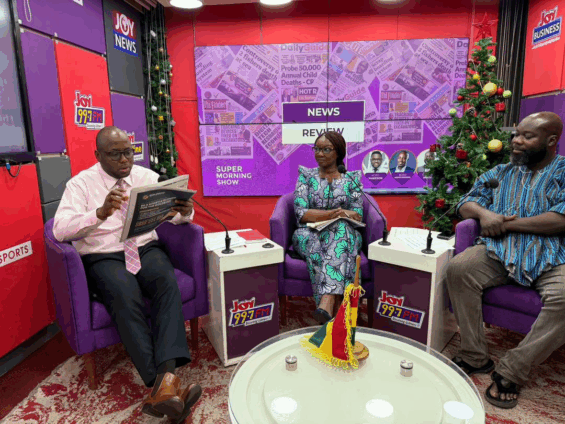
Presidential Advisor and aide to President John Dramani Mahama, Joyce Bawah Mogtari, has urged Ghanaians to exercise patience, stating that the full impact of current government policies may not be immediately visible, but the country is steadily progressing.
Speaking on Joy FM’s Super Morning Show on Friday, December 19, Ms. Bawah emphasized the need for collective support for government initiatives, particularly those focused on bolstering local production and enhancing livelihoods.
She highlighted the ‘Nkuko Nkitinkiti’ project launched in the Ashanti Region as an example of the government’s approach, explaining that the focus is on strengthening existing businesses rather than creating new ones. “When the ‘Nkuko Nkitinkiti’ was launched in the Ashanti Region, you saw the company that we visited. They are an existing poultry business. You saw the commissioning of the feed factory. It’s an existing business. It’s actually a private sector initiative,” she stated.
Ms. Bawah underscored that sustainable progress requires a gradual, incremental approach. “Rome wasn’t built in a day. I am convinced that we are on the right track. But like I keep saying, all of us must support these initiatives,” she added.
She identified the high cost of animal feed as a significant obstacle for poultry and fish farmers, advocating for increased local feed production to alleviate the financial burden. “It starts from a certain point. My brother used to run a huge fish farm. One of the biggest challenges was finding feed. The poultry farmers will tell you the cost of importing feed,” she explained.
According to Ms. Bawah, local feed production could drastically reduce costs, potentially halving them and providing farmers with greater operational flexibility. “If we start to manufacture feed here, half of the cost is gone. What it means is that it even gives more latitude to these farmers.”
Addressing concerns about the direct beneficiaries of these projects, she encouraged a broader perspective, noting that supporting existing businesses already provides a foundation for growth. “Instead of focusing on the number of persons who are benefiting at this time, in any case, an existing poultry farmer has resources already. His business is in motion.”
Ms. Bawah also expressed concern over Ghana’s reliance on imported chicken, questioning the quality of these products. “Have you asked yourself how much we import of chicken cuts that people in other countries don’t want?” she asked. “The most valuable part of chicken in Europe and the Americas is the chicken breast. Everything else nobody wants.”
She stressed that national development is a shared responsibility, requiring collaboration across all sectors of society. “We all have a certain responsibility. There will be overlaps between what the government can do, what the judiciary can do, what the media can do, and what civil society can do.”
Ms. Bawah noted a growing consensus on the need for collective action to address issues like illegal mining, environmental protection, and improving living standards. “For the very first time, we are all agreeing that we must all stand up and support government in this endeavour.”
On the economic front, she lauded the recent stability of the Ghana Cedi, describing it as a crucial development for economic planning. “One of the best things lately is that our currency, for the very first time in many years, has remained consistent, which allows people to plan.”
Concluding her remarks, Ms. Bawah reaffirmed her confidence in President Mahama’s leadership and vision for Ghana. “I have always believed in President Mahama’s intentions for Ghana. All he has to do now is create the policies, ensure there’s an enabling environment, and be sure that the individuals you send to undertake these duties will do so in absolute faithfulness to the people of Ghana.”
Image Source: MYJOYONLINE
New Posts

Advertisement
Trending