Joyce Bawah Mogtari: Akufo-Addo Should Have Stepped Down
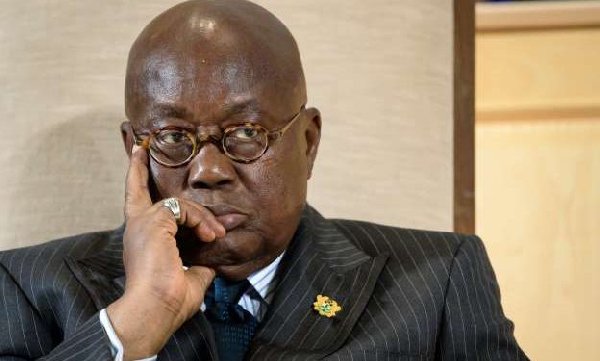
Presidential Advisor and aide to former President John Dramani Mahama, Joyce Bawah Mogtari, has voiced agreement with growing public calls for former President Nana Akufo-Addo to have relinquished office after his initial term.
Speaking on Joy FM’s Super Morning Show on Friday, December 19, Ms. Bawah argued that despite arriving with considerable public goodwill, the Akufo-Addo administration quickly lost focus, dedicating significant time to critiquing the policies of his predecessor.
“I do believe, as many have actually come to conclude, that maybe after his first term, he really should have left office,” she stated.
“I remember he spent a lot of the first few years literally attacking everything that his predecessor had done or hadn’t done,” Ms. Bawah added, suggesting a pattern of negative campaigning early in his presidency.
She specifically highlighted the Meridian Port Services (MPS) project at Tema Port, an initiative initially subjected to heavy criticism from the Akufo-Addo government, but which has subsequently demonstrated its worth.
“That investment didn’t even make sense to them. There were a lot of criticisms of that project. But today, it is the one project that I believe actually symbolises what a leader can achieve when they set their mind to it,” she explained.
According to Ms. Bawah, strong leadership is fundamentally rooted in responsibility and accountability – qualities she believes were lacking during the previous administration.
Turning her attention to former Finance Minister Ken Ofori-Atta, she criticized what she characterized as his reluctance to accept accountability for decisions made during his tenure, especially regarding Ghana’s current debt predicament.
“There is a certain latitude that you ought not to give your appointees. There is a certain level of responsibility that they must also feel,” she asserted.
Ms. Bawah pointed to the substantial borrowing undertaken by the Finance Ministry under Mr. Ofori-Atta’s leadership. “Under your tenure, Ghana had huge debts, literally very high debts, we bought at very high rates, very high commercial rates. Sometimes you hear some of those coupon rates, and you marvel,” she said.
She questioned the sustainability of these debts, stating, “So what are we going to do with this money? If it were your private business, irrespective of what you invested in, you might never be able to recoup, even to pay off these debts.”
Ms. Bawah expressed concern over Mr. Ofori-Atta’s apparent avoidance of scrutiny. “We had somebody who was responsible, someone who was tasked to do this. Why would such an individual even want to refuse to come and respond to whatever investigations or questions are raised?”
She emphasized the immense responsibility associated with the position of Finance Minister. “If you serve as a finance minister, it is actually one of the highest levels of responsibility. And then you leave the office, and successive governments come in and say, ‘Look, we need to take a second look at these things,’” she added.
Ms. Bawah further noted that public office should be viewed as a solemn duty to the citizenry rather than merely a position of authority. “If a minister feels responsible, not just for the authority reposed in them, but for the duty also placed on them, imagine how they undertake their duties,” she stated.
This accountability should extend beyond one’s term in office, she argued. “When they are no longer ministers, they should feel the need either to clear your name or to explain to the citizens why you actually took certain decisions, or why some actions were taken,” Ms. Bawah said.
She reminded former ministers that they take an oath similar to that of the President. “Ministers are also committed in pretty much the same way as the President. They swear an oath of office. It is one that binds you in all faithfulness and diligence to the people that you are there to serve.”
Accountability, she stressed, must continue even after government officials leave office. “When a minister is in office, he must always remember that the buck starts and stops with him. Even when there are questions to be answered when you leave, it is also your responsibility. It behoves you to be present to answer.”
Concluding her remarks, Ms. Bawah reiterated that genuine leadership is defined by unwavering consistency in taking responsibility. “We wake up every day to our responsibilities, and that is how it should be.”
Image Source: MYJOYONLINE