GWCL Says 24/7 Water Supply Unrealistic Due to Galamsey Costs
The Ghana Water Company Limited (GWCL) has warned that the recently approved 15.92% tariff increase is insufficient to address the growing gap between water demand and supply, exacerbated by the devastating impact of illegal mining, commonly known as galamsey.
Speaking on Joy News’ PM Express, GWCL’s Public Relations Officer, Stanley Martey, explained that while the tariff adjustment provided some temporary relief, it falls far short of the substantial investment needed to secure a reliable water supply for the country.
“He himself [the PURC Chairman] has admitted that the tariff given to us this time around is inadequate,” Martey said, referring to the Public Utilities Regulatory Commission’s (PURC) acknowledgment of the shortfall. “And he also admits that he knows that it will be very difficult for us to operate, but then, under the circumstances, this is what they can give.”
The GWCL, according to Martey, has been managing under constrained tariffs for some time, but the situation is approaching a breaking point. “It is woefully inadequate, but we will have to work and ensure that we serve our consumers efficiently,” he stated.
Mr. Martey further lamented the PURC’s practice of reducing the GWCL’s proposed tariff increases, even after the company has provided all the necessary parameters. “Every time there’s a formula for calculating the tariff, we input in all the parameters and come out to the figure,” he clarified. “But then the PURC in its wisdom will also come out with some other parameters and then slash it down to a very low figure.”
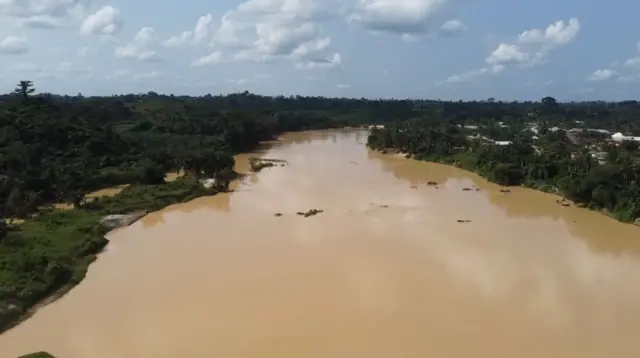
The relentless activities of galamsey pose a significant financial burden on the GWCL. Contamination of water sources requires extensive and costly treatment processes, as well as ongoing maintenance of infrastructure. “The cost implications are enormous and have pushed GWCL far beyond its limits,” Martey said.
He emphasized that achieving a 24/7 water supply across the country is currently impossible under the existing financial constraints. “Okay, so for now we have admitted every time that there’s a gap between demand and supply,” Martey explained. “To enable us to bridge that gap, we need to do a lot of investments, including building new infrastructure like treatment plants, extending pipelines, and all that.”
The current tariff is insufficient to fund these vital expansions, clear existing debts, or even secure loans for future projects. “These are capital‑intensive, and is this 15.9% adequate to enable us to save enough money or to clear our books, to enable us even to go for a loan facility, to expand our facility? That is impossible,” he stressed.
Martey concluded by stating that a consistent all-day water supply can only be guaranteed once new treatment plants are constructed and pipelines extended. “Let’s admit that we can only keep the taps on 24/7 when we have built new treatment plants, when we have extended pipelines and all that,” he said. “This tariff cannot do that.” To mitigate the issue, the GWCL will focus on demand management programs to ensure the efficient distribution of available water.
Image Source: MYJOYONLINE