Vice President Leads First IMCC Meeting
Accra – The Government of Ghana has reaffirmed its commitment to decentralisation as a cornerstone of national development and good governance.
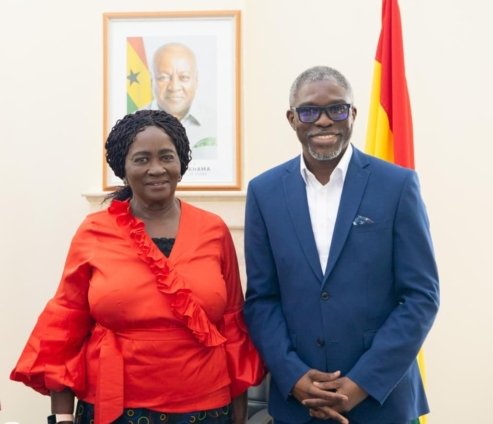
This commitment was underscored at the maiden meeting of the Inter-Ministerial Coordinating Committee (IMCC) on Decentralisation, convened on December 10, 2025, at Adu Lodge, Castle Drive, Accra. The meeting, chaired by the Vice President, Prof. Jane Naana Opoku Agyemang, brought together key Ministers, Institutional Heads, and stakeholders mandated by the Local Governance Act, 2016 (Act 936) to drive decentralisation reforms.
Addressing the committee, Vice President Opoku Agyemang emphasized the urgency of completing administrative and functional devolution, particularly in crucial sectors like Health, Education, and Roads. “The credibility of our decentralisation programme hinges on demonstrable progress in these key areas,” she stated.
The IMCC focused on three primary objectives: reactivating and operationalizing the committee itself as the central coordinating body for decentralisation; considering and endorsing the National Decentralisation Policy and Strategy (NDPS) for 2026-2030, which encompasses reforms in political, administrative, fiscal planning, local economic development, and popular participation; and establishing clear policy direction regarding the IMCC Secretariat’s financing, sectoral alignment, and necessary legislative changes.
The Vice President further urged Ministries, Departments, and Agencies – with a specific call to the Ministry of Finance – to prioritize the implementation of decentralisation reforms within their respective mandates. “A unified and determined government approach is essential to attract support from Development Partners and ensure funds are allocated effectively to where they are needed most,” she explained.
Presentations were delivered on the NDPS, fiscal decentralisation, local economic development, and ongoing legislative reforms. Discussions also centered on aligning ministerial roles for enhanced local governance. The committee agreed to prioritize the decentralisation of the Education, Health, and Road sectors, aiming for significant achievements within the first year of the NDPS implementation.
“Decentralisation must directly benefit the people of Ghana,” a member of the IMCC stated, reflecting the committee’s dedication to improving service delivery, strengthening local democracy, and fostering inclusive national development.
Notable attendees included the Minister for Local Government, Chieftaincy and Religious Affairs, Hon. Ahmed Ibrahim; the Minister for Education, Hon. Haruna Iddrisu; the Minister for Health, Hon. Kwabena Mintah Akandoh; the Minister for Food and Agriculture, Hon. Eric Opoku; the Minister for Gender, Children and Social Protection, Hon. Agnes Naa Momo Lartey; the Head of the Local Government Service, Prof. Lord Mensah; the Head of the Civil Service, Dr. Evans Aggrey-Darkoh; and the Chairperson of the National Development Planning Commission, Dr. Nii Moi Thompson. Chief Directors from member institutions and representatives from the Ministry of Finance and Economic Planning and the Attorney-General’s office were also present, alongside the Chief of Staff at the Office of the Vice-President, Mr. Alex Segbefia, and policy consultants Prof. Kwamena Ahwoi and Dr. Esther Ofei Aboagye.
Image Source: MYJOYONLINE