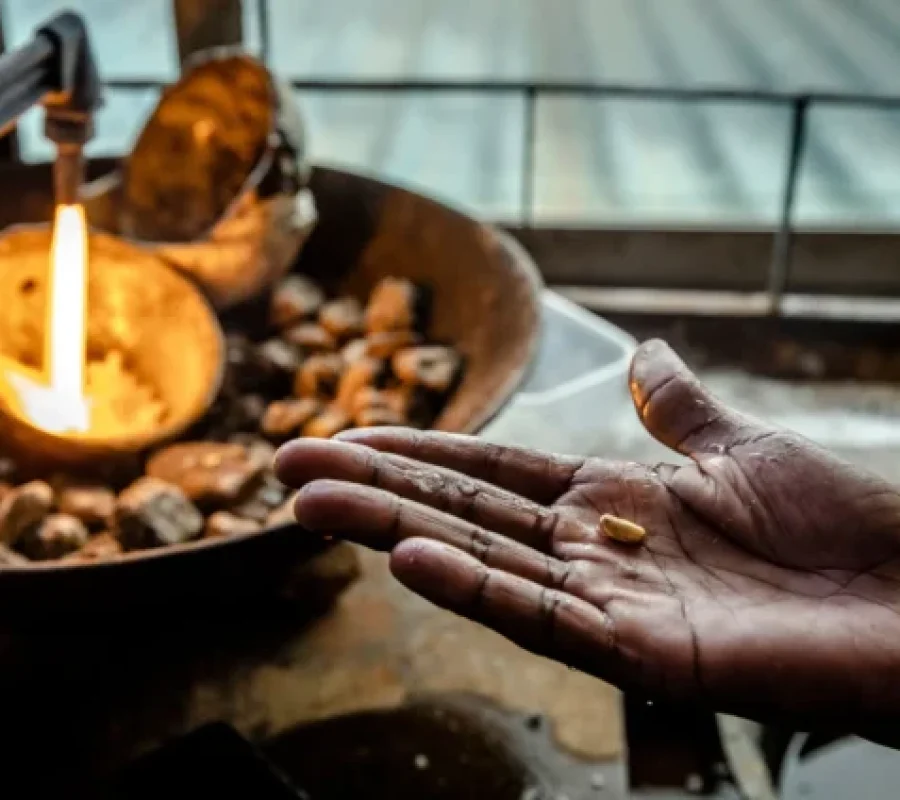
The government has presented the Minerals and Mining Royalty Regulations, 2025, to Parliament, a new law set to introduce variable royalty bands for key minerals like gold and lithium.
The proposed regulations establish a sliding-scale royalty framework, meaning royalty rates will automatically adjust based on global commodity price fluctuations. This aims to maximize state revenue during price booms while providing relief to investors during downturns.
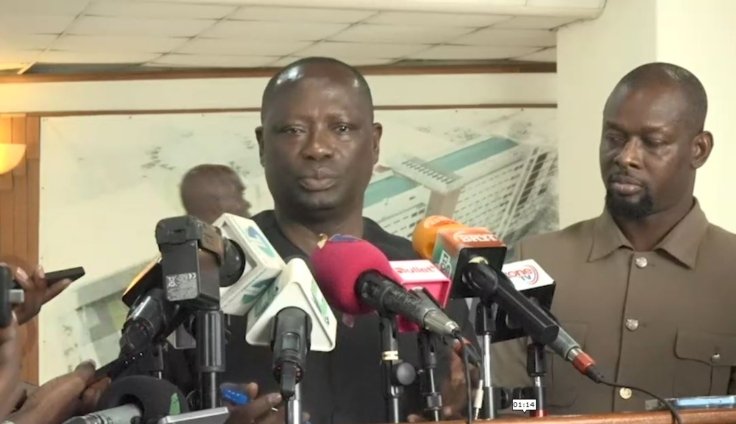
Lands and Natural Resources Minister, Emmanuel Armah-Kofi Buah, explained that the current lithium royalty rate of 7 per cent could rise to 12 per cent if prices increase. “Today, I’m proud to say that I have brought a regulation that gives us a sliding scale agreement,” Mr Buah said. “The advantage is that it allows the state to capture the benefit in good times, like in the gold sector, and we’ve done it across the mineral sector.”
He highlighted that previous lithium agreements were based on a price of around $3,000, resulting in a 10% royalty. The new system will trigger higher returns even above that level. “But today, with the sliding scale I’ve brought, even when we get to 2,500, which achieved 10%, when we get to 3,000, because of the sliding scale, 3,000 plus will go to 12%. In fact, if you do the calculation at that point, it means that 3,000, government is saving almost over 500 million,” the minister noted.
The framework isn’t solely about increasing revenue; it also offers protection to mining companies. “This sliding scale also gives the companies consideration when prices tumble in difficult times. Then the adjustment will automatically also favour lower royalties,” Mr Buah stated.
According to the Minister, the regulations will provide investors with greater certainty. “What is important for investors? It gives them certainty. They are very sure that in Ghana, when the price tumbles, we will not be in trouble because the government automatically will reduce royalties. When prices go up, the government will also take advantage and capture the benefit,” he explained.
In addition to royalty adjustments, the regulations introduce a one per cent Community Development Fund specifically for infrastructure projects in the Mfantseman Municipality. “I’m very happy today that we’ve strengthened it. We’ve even had provision in the lithium agreement that I’ve laid today. Infrastructure provisions was not in the 2023 agreement. It is in now,” Mr Buah added.
The Legislative Instrument (L.I.) applies to all mining agreements and is expected to boost transparency, balance investor interests, and ultimately increase revenue for the state. However, Kwaku Ampratwum-Sarpong, the Ranking Member on the Lands and Natural Resources Committee, has voiced concerns that the deal could harm public interest and erode confidence in Ghana’s resource governance.
Image Source: MYJOYONLINE