Medical Trust Fund Seeks Ghana Partners to Upgrade Hospitals Nationwide
The Ghana Medical Trust Fund (GMTF) has issued an urgent appeal to Corporate Ghana, urging businesses to partner with the government in equipping hospitals nationwide. The Fund warns that failing to address the critical shortage of medical equipment could have devastating consequences for healthcare delivery.
This call to action follows a comprehensive nationwide assessment of Teaching and Regional Hospitals conducted by GMTF Head, Adjoa Obuobia Darko-Opoku. The assessment revealed a deeply concerning lack of essential diagnostic and life-saving tools.
Established by former President John Mahama, the GMTF aims to alleviate the financial burden of chronic illnesses – including cancer, kidney failure, and heart disease – on Ghanaians, particularly those conditions not fully covered by the National Health Insurance Scheme. The Fund’s core objectives are to bridge gaps in specialized care, bolster health infrastructure, and prevent families from falling into poverty due to medical expenses.
However, Madam Darko-Opoku described the situation on the ground as “alarming.” “Multiple facilities are operating without essential diagnostic and life-saving equipment, a situation that poses severe risks to patients nationwide,” she stated.
The Greater Accra Regional Hospital (Ridge), for instance, serves approximately 1,000 patients daily but lacks a CT scanner, MRI machine, mammography unit, and fluoroscopy equipment – all considered fundamental for accurate and timely diagnosis of a wide range of conditions, from non-communicable diseases to trauma and obstetric emergencies.
Similar deficiencies were identified in the Western Region, where the Effia Nkwanta Regional Hospital is without a functional CT scan, MRI machine, or reliable ventilators. The Cape Coast Teaching Hospital faces comparable challenges, lacking an MRI, functional mammogram, and radiotherapy machines.
“The system is stretched. The patients are desperate. The doctors are doing their best, but they cannot do magic,” Madam Darko-Opoku emphasized.
The situation is particularly critical in the northern sector. At the Tamale Teaching Hospital – the primary referral center for all five northern regions and parts of Bono East and Oti – the MRI machine has been out of service for a decade. The hospital also has only a limited 16-slice CT scan available at the Accident and Emergency Unit, with no mammogram or fluoroscopy machines.
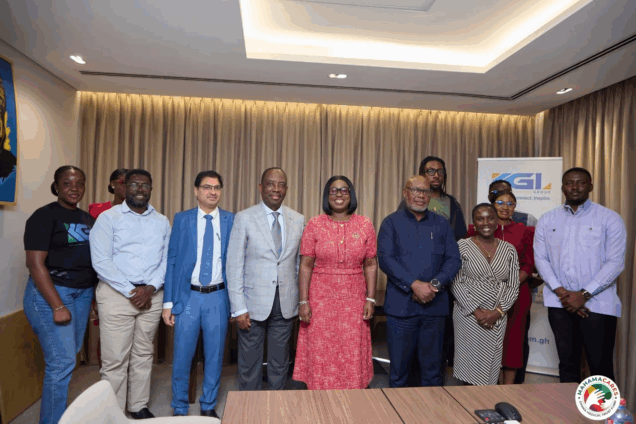
During a meeting with the KGL Group’s CEO, Alex Dadey, on Thursday, Madam Darko-Opoku highlighted these widespread issues and appealed for their partnership in procuring vital equipment for hospitals across the country.
Mr. Dadey responded with a firm commitment to support the GMTF, emphasizing the company’s dedication to expanding patient assistance, enhancing specialist training, strengthening health infrastructure, and ensuring equitable access to healthcare. “We reaffirm our readiness to take bold, meaningful, and actionable steps aligned with the Fund’s priority projects,” he said.
The engagement with KGL is expected to pave the way for a long-term collaboration aimed at mitigating the growing impact of non-communicable diseases in Ghana.
Image Source: MYJOYONLINE