Ghanaian Journalist Wins Top Africa Science Journalism Prize
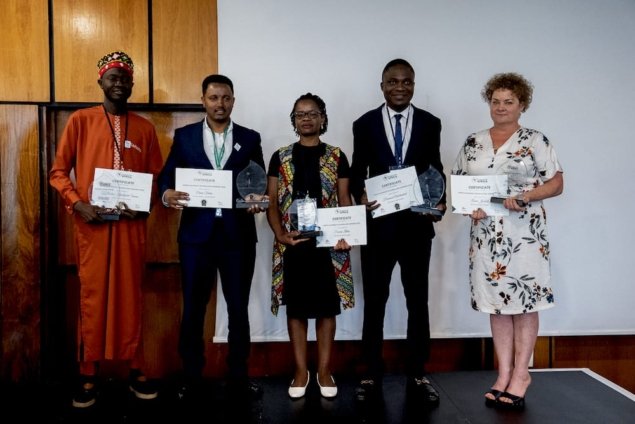
Ghanaian investigative science journalist, Ibrahim Khalilulahi Usman, has been honoured with the Best News Story / Feature award at the Africa Science Journalism Awards.
The awards, currently in its second phase, are organised by the Science For Africa Foundation to recognise journalists who excel in making science accessible to the public and combating misinformation across the continent.
The announcement was made at the 13th World Conference of Science Journalists in Pretoria, South Africa – a historic event as it marked the first time the conference was hosted on African soil.
Dr. Evelyn Gitau, Chief Scientific Officer of the SFA Foundation, emphasized the significance of the awards. “These awards recognize more than excellence. We celebrate the vital forces behind it,” she stated. “The courage to investigate, the persistence to verify, and the creativity to translate – these are the qualities our finalists exemplified. Each winner has used their talent not just to report, but to ignite public curiosity, safeguard factual discourse, and demonstrate that science is not locked away in institutions. It is a living, breathing part of Africa’s daily life and future.”
Receiving the award, Mr. Usman addressed the evolving challenges facing science journalism in the age of Artificial Intelligence (AI). He referenced the foundational text, “The Elements of Journalism” by Tom Kovach and Rosenstiel, highlighting journalism’s core obligation to the truth.
“Twenty-five years ago, that statement addressed traditional verification challenges,” he explained. “Today, with AI generating and assisting in content creation, science journalists face dual verification requirements.”
Mr. Usman stressed the need for journalists to responsibly leverage AI while upholding the highest standards of accuracy. “As science journalists, our responsibility is to prioritize truth, leveraging AI responsibly to enhance our work. This means we have two tasks: verifying information created with AI by humans and verifying information created by humans using AI,” he noted. “It’s a challenging task, but it presents an opportunity to use AI responsibly and enhance our reporting.”
His award-winning investigation, which focused on coastal erosion in Ghana, was supported by Dialogue Earth and Wits University. The research and fact-checking process spanned four months, a timeline Mr. Usman believes is crucial for responsible science journalism, particularly given the potential for AI to generate inaccurate information quickly.
Image Source: MYJOYONLINE