Ghana Sees 5.5% Economic Growth in Q3 2025
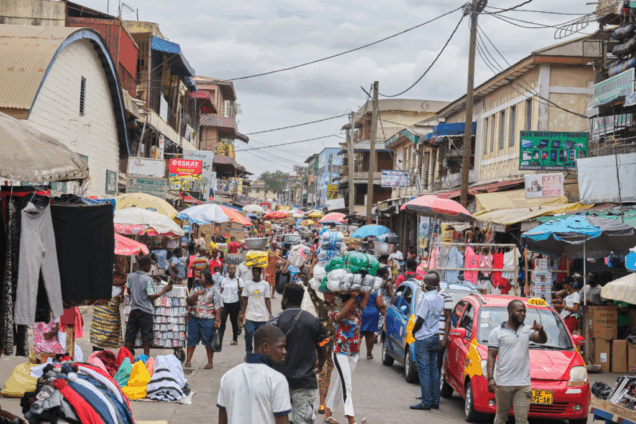
Ghana’s economy demonstrated continued resilience in the third quarter of 2025, expanding by 5.5 percent, according to provisional data released by the Ghana Statistical Service (GSS). This growth signals stability across key sectors despite ongoing global economic pressures.
The GSS report indicates that the non-oil economy – encompassing all sectors excluding petroleum production – grew by 6.8 percent. While slightly lower than the growth recorded in the same period last year, this figure confirms a steady improvement in underlying economic activities.
A standout performance came from the Agriculture sector, which surged by 8.6 percent, a significant increase from the 2.5 percent recorded in the third quarter of 2024. The crops sub-sector was the primary driver of this growth. “This strong outturn suggests increasing productivity, particularly among our small- and medium-scale farmers,” noted an economic analyst who wished to remain anonymous.
The Industry sector showed signs of recovery, posting a modest 0.8 percent growth after a contraction last year. Manufacturing and food processing activities were instrumental in lifting the sector. However, the oil and gas sub-sector’s poor performance – a sharp 14.1 percent contraction – continued to weigh on overall industrial growth.
Meanwhile, the Services sector remained the cornerstone of the Ghanaian economy, expanding by 7.6 percent and contributing approximately 40 percent to the country’s GDP. Strong performances in ICT, trade, transport, storage, and education-related services underpinned the sector’s significant influence on overall growth.
The GSS highlighted that ICT, crops, trade, transport, storage, manufacturing, and education collectively accounted for nearly 86 percent of total GDP growth in the quarter, emphasizing their central role in Ghana’s economic trajectory.
Seasonally adjusted data further reveals a quarter-on-quarter improvement, with real GDP rising by 1.3 percent compared to 1.0 percent in the same period of 2024.
Several sub-sectors experienced remarkable expansion. Fishing led the way with a substantial 23.1 percent growth, while ICT continued its upward trend, increasing by 17 percent. Growth was also recorded in health and social work, transport and storage services, and crop production.
However, the economy faced contractions in certain areas, including oil and gas, mining and quarrying, accommodation and food services, and other personal service activities. These contractions signal persistent challenges within the extractive and hospitality industries.
The GSS stated that the third quarter results underscore the importance of non-oil sectors, particularly agriculture and services, in sustaining Ghana’s economic growth. As the country enters the final quarter of the year, policymakers and businesses will be closely monitoring whether these gains can be maintained and built upon in 2026.
Image Source: MYJOYONLINE