DStv price hikes split Ghanaians amid anti-piracy push
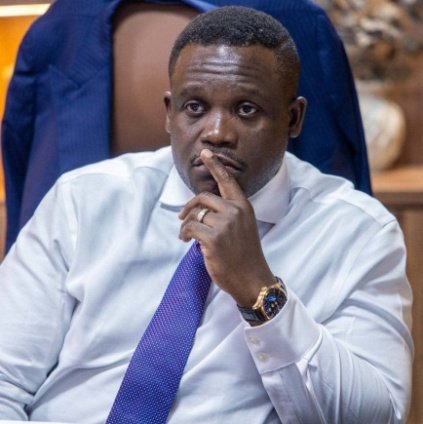
Following the National Communications Authority statement on December 31, 2025, the Ghanaian government has officially transitioned its approach to pay-TV piracy from a standard copyright dispute to a matter of national economic security.
By integrating the Cybersecurity Authority into a high-level Working Group, the state intends to dismantle the digital infrastructure supporting illegal streaming. This strategy aims to reclaim lost tax revenues and protect a creative sector currently losing millions of dollars to illicit actors.
The NCA confirmation serves as a critical progress report following the successful stabilisation of MultiChoice Ghana’s pricing. The regulator has officially confirmed that the enhanced value offerings implemented on October 1, 2025, remain in force following a positive review of their impact.
Officials report that these packages have already triggered a significant surge in legal subscriptions, indicating that price sensitivity was a primary driver for consumers moving toward the grey market of illegal IPTV.
The current crackdown is the culmination of a year-long standoff between the government and MultiChoice Africa. In early 2024 and again in April 2025, MultiChoice implemented significant price hikes, citing inflation and currency volatility.
These increases saw Premium packages climb to GH865, approximately $82.32, sparking public outcry and a direct ultimatum from the Minister for Communications, Digital Technology and Innovations, Samuel Nartey George.
The conflict reached a peak in August 2025 when Sam George directed the NCA to prepare for license suspension and imposed a daily fine of GH10,000, approximately $95.16, for non-disclosure of pricing data.
A compromise was reached on October 1, 2025, where the parties agreed to an unprecedented value upgrade. Under this arrangement, subscribers automatically moved to higher-tier bouquets at existing rates.
Paddy users paying GH59, approximately $5.61, gained access to content valued at GH99, approximately $9.42.
Family users paying GH190, approximately $18.08, received Compact content valued at GH380, approximately $36.16.
Compact Plus users paying GH570, approximately $54.24, were upgraded to Premium content valued at GH865, approximately $82.32.
The reception of these reforms has been deeply divided, reflecting the complex economic reality of Ghanaian households. For some, the value upgrades are a welcome relief.
"I used to pay for Family, but missed the big Premier League games," says Yoofi Forson, a Cape Coast-based shop owner. "Now I have Compact content at my old price. It feels like the government finally squeezed something back from the big corporations."
However, others remain unimpressed, viewing the value upgrade as a distraction from the lack of a direct price cut.
A popular analogy shared on social media compared the deal to a street food vendor. "It’s like the Waakye price stayed the same, but they just gave us extra Shito. We wanted a lower price for the Waakye because the money in our pocket is small."
This sentiment is echoed by those who have already migrated to illegal streaming boxes. "I don’t care about the upgrades," says Abena, a university student. "Even at GH59, it’s money I could use for data. The ghost boxes are a one-time cost, and until the legal price drops to GH30, I’m not coming back."
Despite upgrades, significant disparities remain when comparing Ghana’s pricing to its neighbours. Honourable Sam George highlighted that before the intervention, a Premium package in Ghana cost approximately $83.00, approximately GH872.33, compared to $29.00, approximately GH304.79, in Nigeria.
This gap fueled a massive grey market of Nigerian decoders smuggled into Ghana, which Hon Sam George has vowed to deal with ruthlessly.
Ghanaian subscribers historically paid $54.30, approximately GH570.69, for DStv Compact Plus, while Nigerians paid $19.60, approximately GH205.99, and Angolans paid $27.00, approximately GH283.77.
While MultiChoice cites Ghana’s 28% effective tax on subscriptions, compared to Nigeria’s 7.5%, as justification, the government maintains this disparity is unsustainable.
The October compromise, offering 33 to 50% more value, is a unique concession aimed at bridging this regional affordability gap.
Ghana’s aggressive stance reflects a broader West African struggle against digital content theft. Competitors like France’s Groupe Canal, which recently acquired a controlling stake in MultiChoice, are also watching these developments.
However, illicit Android TV boxes remain the primary threat to all legitimate players.
To counter this, a specialised multi-agency Working Group has been established to design a coordinated national response.
Led by the Ministry, it includes the Customs Division of the Ghana Revenue Authority (GRA), the Ghana Police Service, the National Information Technology Agency (NITA), and the Ghana Domain Name Registry.
Hon Sam George recently disclosed that DStv deactivated nearly one million ghost boxes in a sweeping crackdown on cross-border piracy.
The financial implications of this war are substantial. According to the NCA, illegal streaming causes significant loss of tax revenue and reduces income for players in the creative industry.
While some consumers, like Enoch Nyindam, preferred direct price cuts, many have welcomed the added content.
One local business owner noted that regional parity is essential for fair competition.
The Cybersecurity Authority’s involvement highlights the triple threat of piracy, tax loss, industry decline, and consumer risk.
Officials warn that users of illegal platforms are frequently targeted by malware and phishing. Cybercrime losses in Ghana exceeded GH19 million, approximately $1.81 million, in the first nine months of 2025 alone.
The NCA remains firm that pricing structures and anti-piracy initiatives will involve continued engagement to ensure objectives are fully achieved.
The upcoming parliamentary review of the National Communications Authority Bill 2025 and the Electronic Communications Bill 2025 will codify these measures.
These bills seek to repeal the 2008 Acts to better align with the 2026 digital landscape.
They will grant the NCA and Cybersecurity Authority expanded legal powers to block illicit domains and IP addresses in real-time.
Legislators are expected to debate converged regulation models that bridge content standards and technical enforcement.
This legal overhaul aims to create a sustainable 24-hour economy for the digital sector.
The Minister stated the reform is necessary to ensure the media landscape remains inclusive, competitive, and secure, with new frameworks to prosecute individuals responsible for cybercrime.
The success of Ghana’s war on piracy depends on maintaining the balance between enforcement and affordability.
By securing value upgrades, the government has addressed immediate financial strain on households.
Long-term sustainability will be tested during the upcoming quarterly reviews by the stakeholder committee.
Ultimately, steering Ghanaians toward legal avenues requires both the stick of cybersecurity blocks and the carrot of a market where premium content remains within reach of the average citizen.
Image Source: MYJOYONLINE