Ghana Cocoa Communities Fight Galamsey to Protect Livelihoods
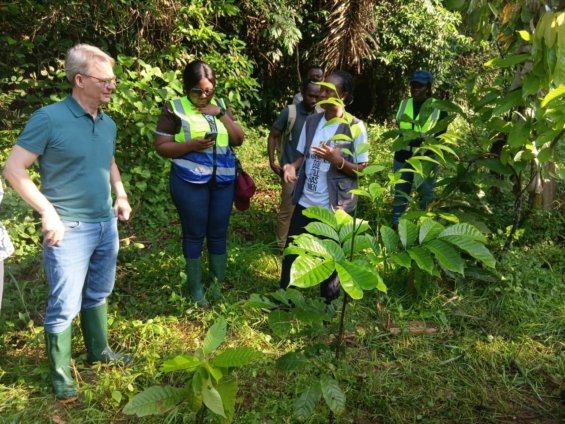
Awakwai, a cocoa farmer in the Sika Nti community near Asankragua in the Western Region, faces a grim choice. He risks losing his livelihood as the land he farms under a tenure arrangement has been sold for mining, forcing him to consider illegal gold mining, known as ‘galamsey’, to survive.
The situation highlights a growing crisis in Ghana where the lure of quick riches from galamsey is displacing farmers and threatening the country’s cocoa industry. Nana Kwame Ketebu II, Chief of Jomoro, warned that “any survival that affects the environment is unsustainable.”
He further observed, “the current situation of galamsey is seen like our rivers; like our forests; like destruction of the environment.”
A new five-year initiative, “Turning the tide: Mobilising cocoa communities against galamsey destruction for long‑term livelihoods and health,” aims to address this challenge. Launched with support from the Civil Society in Development (CISU) Denmark, the project will target 3,000 farmers – 1,500 women and 1,500 men – across 12 communities in three districts.
Preferred by Nature, a global non-profit, initiated the Wassa Amenfi Cocoa Landscape Initiative (WACLI) two years ago to support cocoa farmers grappling with low incomes, climate change, and declining yields. Jakob Nordborg Ryding, Senior Director of Strategic Projects at Preferred by Nature, explained, “In doing so, the same question always kept coming back to us from many different actors across many different sectors; how can you work with cocoa without addressing the issue of galamsey?”
“Galamsey is currently one of the most severe risks to farmers, communities and Ghana’s cocoa future,” Mr. Ryding stated. “It’s contaminating rivers, it’s degrading soils, it’s dividing communities.”
The project estimates that over 30,000 hectares of cocoa farms have already been lost to illegal mining, contributing to socio-economic collapse, farmer displacement, and increased school drop-out rates as young people seek employment in galamsey.
Rikolto, partnering with Preferred by Nature, will employ a three-pronged approach: community mobilization, alternative livelihoods, and rehabilitation of degraded lands. “Together with Rikolto, we will strengthen communities to advocate and organize against galamsey; we will create income and business opportunities that help vulnerable farmers resist galamsey and improve the long‑term viability of cocoa farms; and we will begin the phytoremediation and agroforestry to restore the damaged mining areas and ensure the land is productive again,” Mr. Ryding explained.
Abdulahi Aliyu, Global Director, Sustainable Cocoa and Coffee Programme at Rikolto, noted the communities are aware of galamsey’s negative impacts, citing the need to purchase sachet water for irrigation due to contaminated water sources. “Children are abandoning school to look for jobs on galamsey sites,” he observed. “If we want to talk about decent income for smallholder farmers, do we factor in the issue that farmers buy water to apply chemicals on their farms, which adds to the cost of production?”
Mr. Aliyu emphasized the threat to Ghana’s cocoa industry, stating, “Ghana is losing its pride in the golden bean as cocoa is under the threat of illegal mining, known popularly as ‘galamsey’, hence the need for urgent action.”
The initiative will introduce citronella cultivation and establish three pilot processing plants to foster resilient local economies. Ms Rikke Enggaard Olsen, Head of Cooperation of the Danish Embassy in Ghana, believes the project is vital. “For a country that supplies around 20% of the world’s cocoa, the stakes couldn’t be higher faces by an issue such as galamsey. Cocoa is not just an export commodity; it represents jobs, community identity and multi‑generational aspirations.
“When farmlands are destroyed and water sources contaminated, communities lose the resources that they need for sustainable growth,” she stated.
Image Source: MYJOYONLINE
New Posts


Advertisement
Trending