Benin Rebel Soldiers' Failed Coup: What Went Wrong
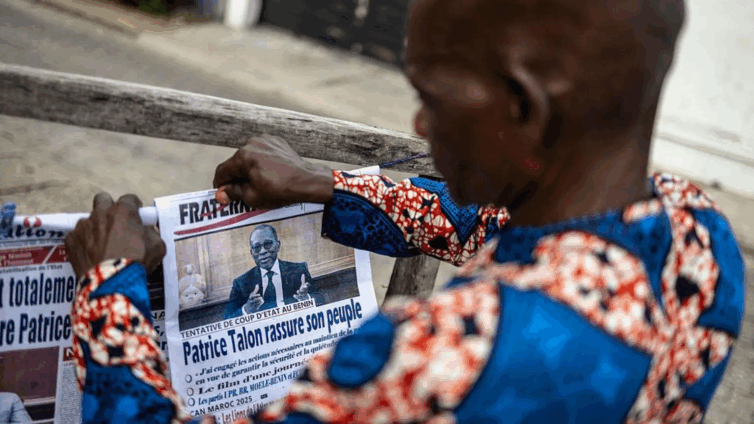
A swift response from the Economic Community of West African States (ECOWAS) and Nigeria helped thwart a coup attempt in Benin on Sunday, May 12th, averting what would have been the ninth successful overthrow of a government in West Africa since 2020.
Just days after a military takeover in Guinea-Bissau during a presidential election count, ECOWAS leaders deemed the situation in Benin a line too far. Nigerian warplanes swiftly bombarded mutinous soldiers at the national broadcaster and a military installation near Cotonou airport.
ECOWAS immediately announced the dispatch of ground troops from Ghana, Nigeria, Ivory Coast, and Sierra Leone to bolster the defence of Benin’s constitutional order. This decisive action marks a shift in the regional bloc’s approach to recent political instability.
The recent withdrawal of Mali, Burkina Faso, and Niger from ECOWAS – all following coups – had raised concerns about the grouping’s ability to maintain stability. Faced with the potential loss of another democratically elected government, ECOWAS presidents resolved to prevent a similar outcome in Benin.
Loyalist forces had earlier regained control of President Patrice Talon’s residence and the presidential offices following early morning attacks. However, pockets of rebel resistance persisted, demonstrating a willingness to employ lethal force.
Nigeria’s President Bola Tinubu, whose nation shares a border with Benin and possesses the largest military in the region, authorized the air strikes. The prompt deployment of troops reflects a determination to uphold democratic principles.
Ghana, under President John Mahama, is contributing forces to the mission, despite Mahama’s recent diplomatic engagements with the military regimes in the Sahel. According to sources within the Ghanaian government, this demonstrates Ghana’s commitment to ECOWAS principles and a desire for regional stability. The President stated, “We cannot stand idly by while democracy is undermined in our neighborhood.”
This intervention differs significantly from ECOWAS’s response to the 2023 coup in Niger. On that occasion, the bloc struggled to organise a timely military intervention following President Mohamed Bazoum’s detention, allowing the coup leaders to consolidate power and gain popular support. Eventually, ECOWAS opted for sanctions, which proved ineffective.
In Benin, President Talon, still in full control, legitimately requested support from ECOWAS member states. This appeal appeared to resonate with the Beninese populace, many of whom hold a strong commitment to democratic processes.
While concerns exist regarding the exclusion of the Les Démocrates opposition party from the upcoming presidential election, Benin, in general, has a notable history of fostering political and civil society engagement as routes for positive change. “Beninois are proud of their democratic pioneering role,” said Dr. Elsie Kauffman, a political analyst from the University of Ghana.
Security forces are continuing their search for Lieutenant Colonel Pascal Tigri, the alleged coup leader, and other participants. Reports also indicate the rescue of two top military officials who were initially abducted during the attempted takeover. Sadly, at least one civilian – the wife of one of President Talon’s key advisors – lost her life in the violence.
The attempted coup underscores the ongoing fragility of West Africa, grappling with Islamist violence, disillusionment with political elites, and a youth unemployment crisis. However, analysts emphasize that the drivers of instability are context-specific.
The situation in Benin contrasts sharply with the coup in Guinea in 2021, where widespread public discontent met the overthrow of President Alpha Condé. Condé’s rule was marred by allegations of electoral irregularities and abuses of power. Talon, while facing criticism, has overseen economic growth and improvements in public services.
The unrest in Guinea-Bissau and Benin highlights the region’s susceptibility to political upheavals, driven by a mix of local grievances and broader regional pressures. ECOWAS’s swift action in Benin, however, signals a renewed commitment to defending constitutional rule in West Africa.
Image Source: MYJOYONLINE